Desert Online General Trading LLC
Dubai, United Arab Emirates
Desert Online General Trading LLC
Dubai, United Arab Emirates

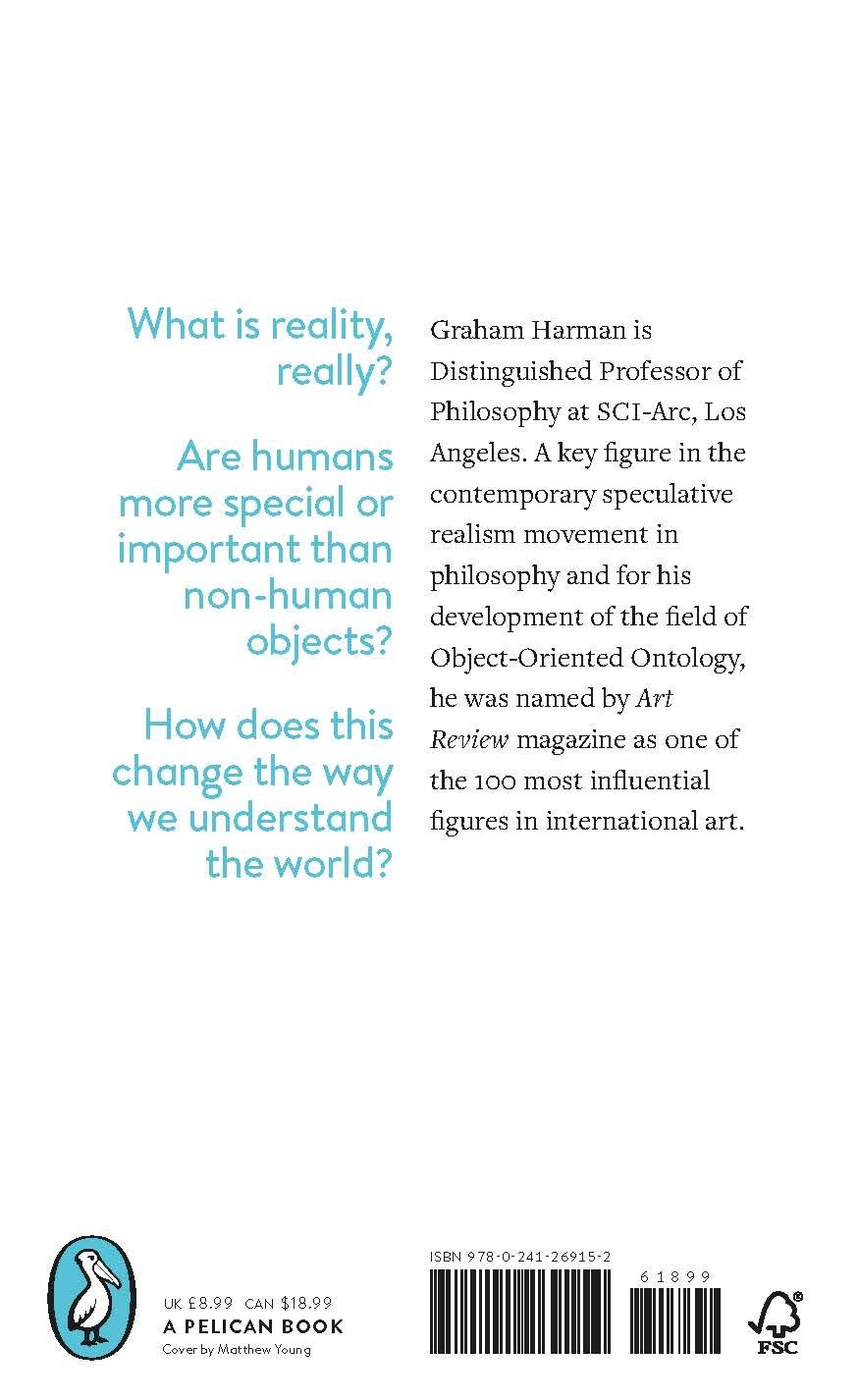
Full description not available
M**H
Unprecedentedly Clear & Fun Metaphysics
I had already read most of this philosopher’s work and was expecting a redux and review of his previous work. While this works as an intro, I was surprised to find new arguments and illustrations that rank as some of his best, clearest, and most fun to read. Would recommend to anyone interested in the state of serious philosophy today, whether they tend toward the continental or analytic side or are just beginning.
C**R
What do I know?
When reading the forward, I had an image of a distinguished gentleman in his early 80s, possibly with a touch of "Doc Brown" flair. Imagine my surprise when I discovered the author is 2 years younger than myself. I'm not sure what my assumption says about my bias to assume a cliche / stereotypical professor type, or about my lack of attachment to my actual age? Either way I found the book interesting and written in a way that I could easily grasp being neither a philosopher or physics major. If you're into "this type of thing" you should enjoy this book.
T**R
Useful Introduction to a Popular New School of Thought.
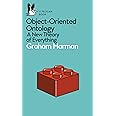
A well-written and useful book. For those of us who’ve been hearing about OOO for a few years now, and couldn’t quite get what it was all about, this book should clear things up.On the positive side, it is great to see that there is some movement attempting to resume metaphysics, and get out of the dismal swamp of reductivism and extreme relativism. When we forget that “objects” really do have essences and structures that are more than just their enabling conditions, we forfeit any real hope of agency.However, I’m not convinced at all that OOO is really going to overcome the reductivist-relativist problem.For one thing, it is quite clearly just another form of Romanticism, recycling the same approach with new terminology and pretending to ground-breaking novelty. I mean, it’s not just the laments about the barren meaninglessness of reductive science, and not just the idea that all knowledge of reality is ultimately sublime aesthetics. Although this is enough to see this is nothing new, right? Of course, Harman seems blissfully unaware of the history of aesthetics, and so believes that his idea that the aesthetic experience of the unpresentability of the thing-in-itself is a radically new idea. It’s just the Romantic sublime. And we’ve known for decades (centuries?) that such aesthetic experiences are really just the mistaking of culturally-produced meanings for the object’s own deep essence. Such “sublime” effects are the misrecognition of ideology for deep ontology…and sure, they give us a “thrill” and all, but they don’t help us out of the trap of empiricism.What’s even more strikingly Romantic is the section on “Society and Politics,” which is mostly made up of a discussion of the American Civil War. The war is discussed as an “object,” in the OOO sense. But what we can talk about, in OOO, is generals and battles and the importance of the Emancipations Proclamation. What is ruled out is discussion of the effects of economic practices or of the struggles and practices of masses of oppressed people. I can see, I suppose, why OOO might function as a useful heuristic, calling attention to feature of a thing we might otherwise miss. But it also seems designed to discourage attention to things Harman would rather not think about—like oppression, poverty, human struggles, and most of all capitalism.The one thing that gets him irate is the suggestion that we humans might be able to work to make the world a better place. As he says in a YouTube video made just when he was finishing this book, he has no patience for “whining about capitalism”; after all, it is, he says, the same old complaint for hundreds of years now—with no imagination at all. Hmm, why would this be?He does rely on some clever sophistry…in fact, relies on it a bit too much. As when he says that any suggestion that human thought is a different kind of thing than a non-human object is tantamount to dividing ontology in half, and insisting that human thought makes up half of all existing reality. Well, no, it isn’t. One thing can be different from all others without therefore counting as half of all things.And many of his claims are just assertions of the form “OOO says that,” with no real convincing argument why we should believe what this personified entity tells us. Not all claims are mere assertions—he makes arguments for some of them. But why, for example, should we accept that an “object” can have only five or six “symbiotic” objects that constitute it? How do they arrive at that number? And why should we believe that humans can have no effect on politics, only objects like catastrophes or technology can (he insists on this, but doesn’t make a case for it).The goal seems to be to insist, like Romanticism (see, for instance, Schopenhauer) that we shouldn’t bother to act in the world, and all we can do is have profound sublime aesthetic experiences. Haven’t we heard the call to aestheticize politics enough in the last two centuries?I would suppose that any thinking person reading this book will be spared the time trying to engage with other OOO texts. So as an introduction, it seems to me exemplary.
C**N
Great Intro to OOO
An amazing introduction to the thought behind OOO and Graham Harman’s thought specifically. Builds your knowledge of not only what Harman believes but the opposition to OOO as well as an introduction to all the thinkers in the field, would recommend it to anyone interested in this field of philosophy
G**A
Un libro necesario pero insuficiente.
Un libro necesario pero insuficiente. Es necesario porque te muestra un camino, pero insuficiente porque el camino se ve desdibujado por ciertas actitudes del autor. Recomiendo no perder de vista que una de esas actitudes es declarar la guerra a grandes hombres y mujeres para llamar la atención.
D**.
Distinctly American philosophical voice of reason
Graham Harman's distinctly American voice emerges as a leading gadfly in philosophical conversations that wind their way through architectural, thing/broken-thing, mathematics, metaphysical theories of what does/does not exist. The list marches on–and Harman loves lists. This book lays down, in replete detail, with admirable clarity, Harman's theory of everything. The author argues cogently against scientific popularizers who explain all via, what Object Oriented Ontology brackets as, "under- (versus over-) mining" operations. This pits Harman against formidable foes in all philosophical camps. The nimble vigor the author exhibits is daunting, as he parries and advances on continental as well as analytical philosophical fronts. Although better known for his contribution to the speculative realism movement, this book stakes claims on turf that Harman alone defends, positioning himself, hand-to-hand combat style, amidst underminers (atomists, quantum-mechanical adherents) and over-miners (decontructivists, critical theorists, correlationists, et al.). This is an ambitious score-settling treatise–not crafted for the intellectually squeamish.
M**N
Lucid
Very clear prose, full of examples, easy to follow without feeling basic at all. Great introduction to OOO
L**S
Very well written
Harman provides to his lector a very good presentation of OOO’s movement. He starts by giving a very concise structural description of his realistic ontology, to then expand it towards its social and political implications, finalizing by exhibiting the wider reach of this movement among philosophers and artists.
Trustpilot
1 month ago
3 weeks ago