
DOWNLOAD THE APP


Customer Services
Copyright © 2025 Desertcart Holdings Limited
DOWNLOAD THE APP
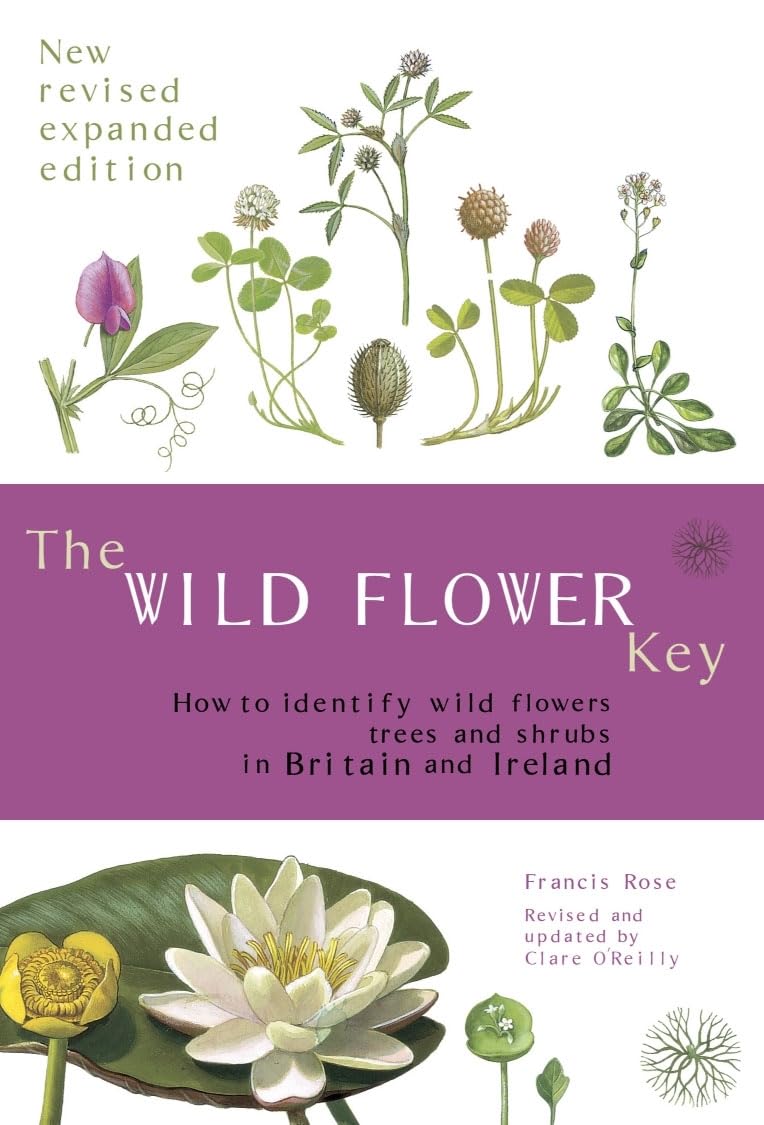
Buy The Wild Flower Key (Revised Edition) - How to identify wild plants, trees and shrubs in Britain and Ireland Rev Ed by Francis Rose, Clare O'Reilly (Author updated edition) (ISBN: 9780723251750) from desertcart's Book Store. Everyday low prices and free delivery on eligible orders. Review: The latest edition of a standard popular field guide to flowers of the British Isles - The first edition of Rose's "Wild Flower Key" appeared 25 years ago, immediately becoming one of the handiest illustrated plant guides ever produced and about the best available for British flowering plants. It covered all native and long-naturalised flowering plants of the British Isles except for grasses, sedges and rushes in addition to the commoner plants of NW Europe. That added up to 1450 species covered. The second edition is similar to the first in most respects and builds on the strengths of the previous edition. In fact, it is so similar that I think I could have got by with my old, well-thumbed first edition copy. As one would guess from the title, this guide has a strong emphasis on keys, and they are meant to be used in plant identification - together with the text and illustrations, of course. There is a 23 page general key to families at the beginning of the book and additional keys throughout that treat important families and genera. In this edition, some groups are provided with entirely new keys. However, the 51 pages of vegetative keys by habitat remain unchanged. I used the keys of the first edition a lot and found them to be very good indeed. As for the plates, most of them are unchanged, although the quality of printing appears to have improved somewhat. The illustrations are simple, clear, detailed and ideally suited to plant identification. In some cases there are new line drawings comparing the key features of similar species. The succinct text is set opposite the illustrations, so that all information on a species is found on a single page spread. The text has been revised and there are new "ID tips" boxes to highlight differences between similar species. Over 1600 species are now treated and the coverage has changed slightly to focus exclusively on the British Isles. The species selected include all native flowering plants except for grasses, sedges and rushes, plus the commoner introduced species. The extremely difficult complexes such as Alchemilla, Rubus, Sorbus, Euphrasia, Taraxacum and Hieracium are partially treated. Scarcer introduced plants, widely planted conifers and non-flowering plants are not covered. The only other similar guide to the British flora would be Blamey, Fitter & Fitter's "Wild Flowers of Britain & Ireland", published in 2003. At the end of the day, the choice comes down to personal preference, since both guides are authoritative. Rose perhaps has the technical edge and is often recommended for use on university field courses. The following points may be helpful in deciding between the two:- *both cover the British Isles *both include the plants you are likely to see - basically all native flowering plants plus the widely established exotics *both sell for approximately the same price - about £15 Rose... *excludes grasses, sedges & rushes (that's fine as these are well-treated in other works) *excludes ferns, horsetails & clubmosses (fair enough, since they are not flowering plants) *emphasises the use of keys as the principal means of identification *includes textual range information Blamey, Fitter & Fitter... *includes all grasses, sedges & rushes *includes ferns, horsetails & clubmosses *employ few keys *include maps If you can afford it, but both these books - you won't be disappointed. If you are serious about identifying British plants, you should also get hold of Stace's "New Flora of the British Isles" or its compact edition, the "Field Flora of the British Isles". Review: A review from a complete beginner - The original edition of this book was released when I was only a 1 year-old. As a young girl, growing up near to a forest, surrouded by lovely countryside, I remember taking a passing interest in the wildlife and the flowers. For a time, this interest left me, and I began to forget all the knowledge my mum had passed onto me about the wild plants. Recently, I have longed to get this knowledge back, and to expand on it. Finding this book on desertcart, I felt I could not pass it by. Although it is not meant as a handy field book - the sheer size of it prevents this - this is a great book both for the beginner (like me) and for those who already have a fair bit of knowledge. The book is organised well, with lovely drawings of the plants. There is also a good introduction to the book, followed by lots of information about how to use the book, the equipment you may want to get, a guide on flower structure, where to find out more, along with other titbits of info. For the true beginner, there is also a list of abbreviations, as well as an illustrated glossary at the back of the book. The general key to plant families is a valuable asset to this book; beginners could not be without it. This is an excellent edition, of what I understand to be a classic text on wild flowers and their identification. I am very pleased with my choice in beginning with this text to guide me on discovering more about wild flowers, trees and shrubs. Although I have a long way to go, I think this will help me immensely; now, as a beginner, I would not be without it.
| Best Sellers Rank | 48,548 in Books ( See Top 100 in Books ) 12 in Horticulture 149 in Earth Sciences & Geography References 228 in Nature References |
| Customer reviews | 4.7 4.7 out of 5 stars (526) |
| Dimensions | 13.5 x 3.2 x 19.5 cm |
| Edition | Rev Ed |
| ISBN-10 | 0723251754 |
| ISBN-13 | 978-0723251750 |
| Item weight | 1.05 kg |
| Language | English |
| Print length | 576 pages |
| Publication date | 30 Mar. 2006 |
| Publisher | Warne |
| Reading age | 12 - 18 years |
C**E
The latest edition of a standard popular field guide to flowers of the British Isles
The first edition of Rose's "Wild Flower Key" appeared 25 years ago, immediately becoming one of the handiest illustrated plant guides ever produced and about the best available for British flowering plants. It covered all native and long-naturalised flowering plants of the British Isles except for grasses, sedges and rushes in addition to the commoner plants of NW Europe. That added up to 1450 species covered. The second edition is similar to the first in most respects and builds on the strengths of the previous edition. In fact, it is so similar that I think I could have got by with my old, well-thumbed first edition copy. As one would guess from the title, this guide has a strong emphasis on keys, and they are meant to be used in plant identification - together with the text and illustrations, of course. There is a 23 page general key to families at the beginning of the book and additional keys throughout that treat important families and genera. In this edition, some groups are provided with entirely new keys. However, the 51 pages of vegetative keys by habitat remain unchanged. I used the keys of the first edition a lot and found them to be very good indeed. As for the plates, most of them are unchanged, although the quality of printing appears to have improved somewhat. The illustrations are simple, clear, detailed and ideally suited to plant identification. In some cases there are new line drawings comparing the key features of similar species. The succinct text is set opposite the illustrations, so that all information on a species is found on a single page spread. The text has been revised and there are new "ID tips" boxes to highlight differences between similar species. Over 1600 species are now treated and the coverage has changed slightly to focus exclusively on the British Isles. The species selected include all native flowering plants except for grasses, sedges and rushes, plus the commoner introduced species. The extremely difficult complexes such as Alchemilla, Rubus, Sorbus, Euphrasia, Taraxacum and Hieracium are partially treated. Scarcer introduced plants, widely planted conifers and non-flowering plants are not covered. The only other similar guide to the British flora would be Blamey, Fitter & Fitter's "Wild Flowers of Britain & Ireland", published in 2003. At the end of the day, the choice comes down to personal preference, since both guides are authoritative. Rose perhaps has the technical edge and is often recommended for use on university field courses. The following points may be helpful in deciding between the two:- *both cover the British Isles *both include the plants you are likely to see - basically all native flowering plants plus the widely established exotics *both sell for approximately the same price - about £15 Rose... *excludes grasses, sedges & rushes (that's fine as these are well-treated in other works) *excludes ferns, horsetails & clubmosses (fair enough, since they are not flowering plants) *emphasises the use of keys as the principal means of identification *includes textual range information Blamey, Fitter & Fitter... *includes all grasses, sedges & rushes *includes ferns, horsetails & clubmosses *employ few keys *include maps If you can afford it, but both these books - you won't be disappointed. If you are serious about identifying British plants, you should also get hold of Stace's "New Flora of the British Isles" or its compact edition, the "Field Flora of the British Isles".
B**A
A review from a complete beginner
The original edition of this book was released when I was only a 1 year-old. As a young girl, growing up near to a forest, surrouded by lovely countryside, I remember taking a passing interest in the wildlife and the flowers. For a time, this interest left me, and I began to forget all the knowledge my mum had passed onto me about the wild plants. Recently, I have longed to get this knowledge back, and to expand on it. Finding this book on Amazon, I felt I could not pass it by. Although it is not meant as a handy field book - the sheer size of it prevents this - this is a great book both for the beginner (like me) and for those who already have a fair bit of knowledge. The book is organised well, with lovely drawings of the plants. There is also a good introduction to the book, followed by lots of information about how to use the book, the equipment you may want to get, a guide on flower structure, where to find out more, along with other titbits of info. For the true beginner, there is also a list of abbreviations, as well as an illustrated glossary at the back of the book. The general key to plant families is a valuable asset to this book; beginners could not be without it. This is an excellent edition, of what I understand to be a classic text on wild flowers and their identification. I am very pleased with my choice in beginning with this text to guide me on discovering more about wild flowers, trees and shrubs. Although I have a long way to go, I think this will help me immensely; now, as a beginner, I would not be without it.
M**E
I never used to really like flowers !
Yep never really had much interest in them as some one with degrees in zoology and freshwater fauna, plants where always just "those green things" yes I always knew they where important and I did try to get interested in them a few times but just couldn't keep any interest. A little bit of a career change where I did need to know a little more about them or at least be able to identify particular ones brought me back to trying to get interested again and so I purchased a copy of The Wild Flower Key and set off on some self study and exploration of the botanical world. Why did I never buy this book before and use that to help me push back the verdant green foliage that was blocking my view ? I don't know but I'm glad I bought this. I have found it so simple and easy to work through the keys and the first couple of times I used the vegetative key I thought I would be hopelessly lost - yes I took the odd wrong turn but the detail in this book quickly let me know I had and a quick back track and continuation put me back on the right track again. To me identifying a plant with no flower and using the vegetative key should be like trying to read Sanskrit - fortunately it's anything but ! I now find myself walking in the park or countryside or even down the leafy streets where I live and being able not only to identify a good deal of the plants I see there but also to recall their binomial latinised names - absolutely amazing and I owe it all to this little book! It really is very well set out the pictures/drawings are amazingly detailed, there is really good detail in the text describing the various characters of the plant that helps you to really double check that you have followed the key correctly or if you've just "jumped in" as you know the common name of the plant or you think that you are pretty sure of what it is again it helps you to quickly confirm you are correct or that you've made an error. The only slightly annoying thing about this book from a beginners point of view is the amount of abbreviations that it uses e.g. fl for flower etc but there is a glossary explaining these and it covers these at the start as well and you do very quickly get used to them and soon recognise the abbreviations as words without even thinking about it. The tight fitting plastic dust jacket is also great as it not only keeps the cover clean but also keeps it dry when using it in the field! the book is also reaonably light in weight and easily slips in to a small rucksack pocket or even the pocket on a pair of field trousers, depending on the type you are wearing obviously ! All in I would highly recommend this book to a beginer but also to a botanist/ecologist that has a good deal of experience and expertise as well - I now know quite a few more experienced botanists that also swear by this book for taking it in to the field.
Trustpilot
2 weeks ago
2 weeks ago