We remain fully operational. Our teams are working around the clock to ensure your deliveries continue safely.

DOWNLOAD THE APP


Customer Services
Copyright © 2025 Desertcart Holdings Limited
DOWNLOAD THE APP
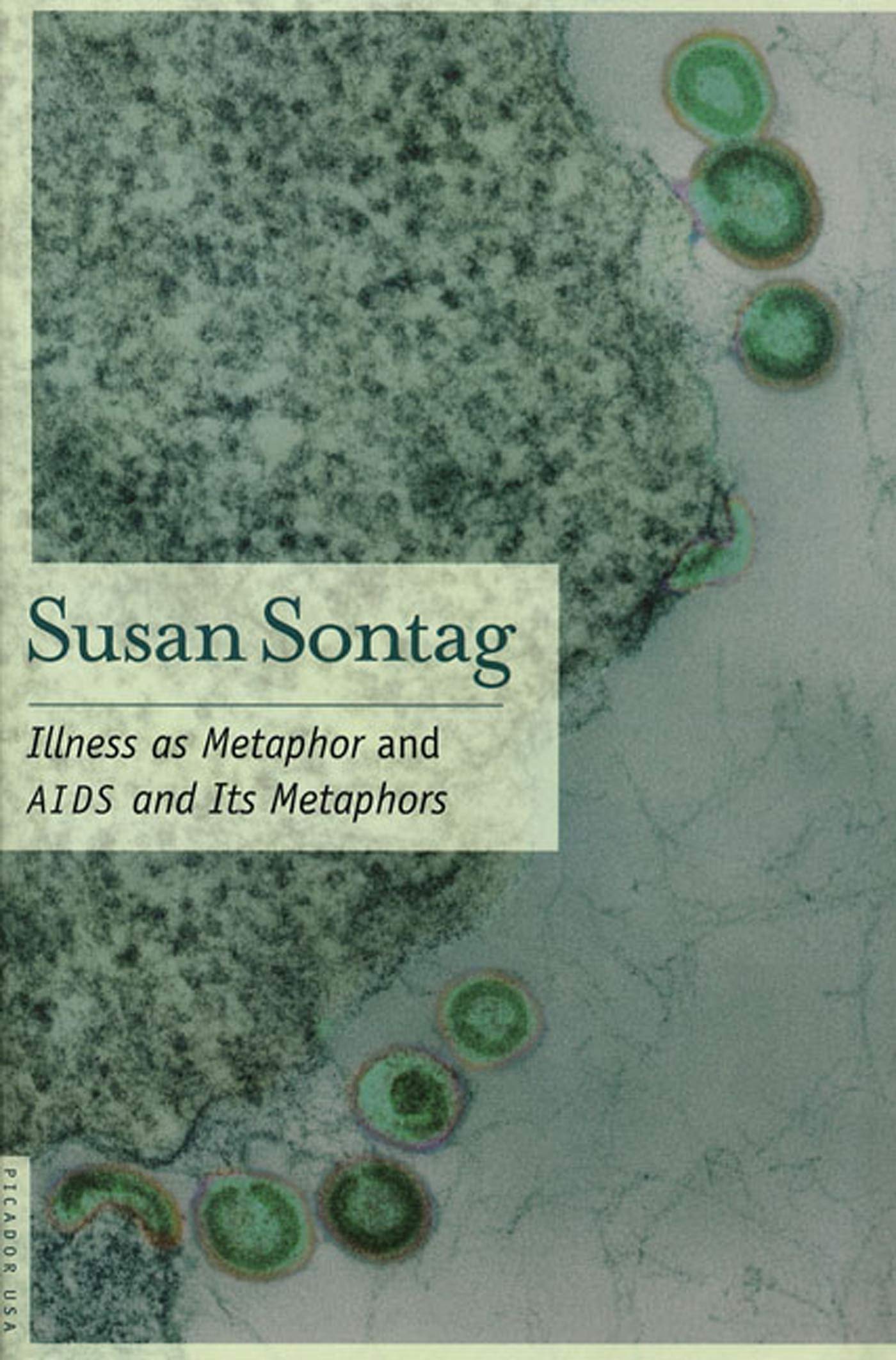
Illness as Metaphor and AIDS and Its Metaphors [Sontag, Susan] on desertcart.com. *FREE* shipping on qualifying offers. Illness as Metaphor and AIDS and Its Metaphors Review: Good book - Exactly as described Review: The far reaching metaphors of illness - A good reference book for understanding the human condition. Illness and ubiquitousness of it take us To a sometimes unreadable place. As Susan puts words to her experience and ponders, it researches it and rereads it herself 10 years later she put illness in perspective and should us how we make metaphors out of it that are far reaching. TB ,cancer and then AIDS.
| Best Sellers Rank | #45,540 in Books ( See Top 100 in Books ) #2 in AIDS & HIV (Books) #31 in Sociological Study of Medicine #67 in Literary Criticism & Theory |
| Customer Reviews | 4.5 4.5 out of 5 stars (427) |
| Dimensions | 5.5 x 0.46 x 8.25 inches |
| Edition | First Edition |
| ISBN-10 | 0312420137 |
| ISBN-13 | 978-0312420130 |
| Item Weight | 2.31 pounds |
| Language | English |
| Print length | 192 pages |
| Publication date | August 25, 2001 |
| Publisher | Picador |
S**E
Good book
Exactly as described
A**R
The far reaching metaphors of illness
A good reference book for understanding the human condition. Illness and ubiquitousness of it take us To a sometimes unreadable place. As Susan puts words to her experience and ponders, it researches it and rereads it herself 10 years later she put illness in perspective and should us how we make metaphors out of it that are far reaching. TB ,cancer and then AIDS.
D**N
Publisher finish lacking
The book did not have a glossary or an index at the back to identify concepts in the book and I believe this was unprofessional. The publishers should have sorted that out. Any reader of serious authors expects these niceties for easy reference. However as a scholar, follower and disciple of Sontag for a life time, I believe she has few peers. She cuts through the facades of life, finding the kernel of truth. She is worth reading again and again. Every student of philosophy and English should read everyone of Sontag's works. Each time I read her I find something I have missed - a nuance, deliberate ambituity and confrontation with our beguiling evasion of what is really happening in our society. I write this decades on from her first publication and obervation of 'life' and yet I notice it could be a rendition of modern life.
J**N
Still relevant
An important concept is discussed in this book: the idea that diseases come with a set of what Sontag calls metaphors, but what I would term associations, that have little if any relevance to the true nature of the disease. I can think of many current examples of diseases that are freighted with non-medical associations. Addiction is one that comes to mind. Another is the “epidemic” of gun violence, which, like AIDS, is being blamed on a marginal group, the mentally ill. Other less politically fraught include obesity & chronic fatigue syndrome, which, like cancer as discussed in the book, have the metaphorical baggage of somehow being rooted in the character of the sufferer. We would, according to Sontag, be better off with a medical model for these conditions, so that appropriate knowledge about them can be sought & cures secured.
R**R
None suggested
Compared to the original (of death knell diseases before AIDS) which I would give a "5". Too much political correctness and lack of promotion of individual responsibility taints this new edition. Sontag should get credited for her sympathies exemplary for such catastrophic diseases. From this we can all learn. Sexual mores are complex and are common knowledge. It should be remembered that the advanced Greek culture, and the most liberal in Western civilization, ruled boys must start looking for a wife by 19 and be married by 30. Failing that they were kicked out of its society and deported. The majority of Westerners accept this life style, but should not be persuaded by the politics of the gay movement from 3% to the 10% promised by Kinsey. (The 3% is from NHI and CDC who deal with the spread of HIV Aides and 15 other sexually transmitted diseases closely to gay sexual practices.)
W**L
Amazingly well-written and researched.
Fascinating. I had heard of Ms. Sontang over the years, but this is the first time I've ever read one of her works. Siddhartha Mukherjee mentions her a lot in The Emperor of All Maladies, so I thought I'd give it a read. She really knew how to write. Very well-researched work on the history of how society conceptualizes illness.
S**R
Compelling and Insightful
Because the two pieces were written 40 and 30 years ago, they are a bit dated in terms of medical advances. But other than that, a giant intellect at work in a very readable and compelling manner.
E**O
interesting
Disease manifests itself for many reasons, this book is a masterful telling of how, one can receive and live through the effects of several, my heart pounded as I read and I even felt I had tB, powerful!
七**一
昨年亡くなった、スーザン・ソンタグの、病気とその比喩の社会的意味連関に関する有名な論考。ロマン主義の時代には、ラ・ボエームのミミやショパンに見られるように、肺結核が「洗練」や「繊細」の表象として機能していたが、癌は「侵略」するものとして表象されていた。前者はやがて白血病に取って代わられた。ナチスは、帝国から「癌」を一掃することに心血を注いだ。現代では、グローバル化の到来とともに、疾病や病気を特定の文化や民族と結びつける表象は機能しえない。全てが、発生とともに直ちに世界全体の問題として認識される。ソンタグは、エイズや環境問題を、この文脈で論じているが、今ならさしずめテロリズムもそれに加えたいところだ。一種の、表象文化論であり、一読に値する。英語は概ね平易だが、非常に長い挿入句が多い、典型的なアカデミック英語なので、やや意味の取りにくいところもある。しかし、全く難解ではない。2度、3度と読み直せば、そのたびに新しい発見をもたらしてくれるであろうし、受験生なども読むと良いと思う。
B**R
Item received in a timely manner and as described.
J**N
Prompt delivery. Item as described
A**E
Sontag explains how, when faced with diseases we do not understand and for which we lack a real causal explanation, we are tempted to construct a myth which effectively places the blame on the person's pscyhe or personality. Once the real physical causes of a disease are understood, the stigma and the myth evaporate. She uses the case of TB to illustrate perfectly the myths of the TB personality that were created and evaporated once it was understood that TB was caused by the tubercolosis bacterium and cured by antibiotics. The upshot for patients today of such diseases is that they must resist the myths. Even today you will find alternative medicine practicioners blaming cancers on the repressed personality of the patient, rather than a virus or hormones over which the patient lacks complete control. Even saying that stress brings on the disease is really failing to provide an explanation and suggesting that the patient failed to control their stress. Ultimately these myths serve the people who construct them to maintain their false belief that they can avoid such diseases and that perfect health and perfect bodies are within their control. In other words, the mythology helps the lucky well to maintain their false belief in their invulnerability rather than their common vulnerability as human beings.
P**E
"one of the most liberating books of our time" SO TRUE...
Trustpilot
4 days ago
3 weeks ago