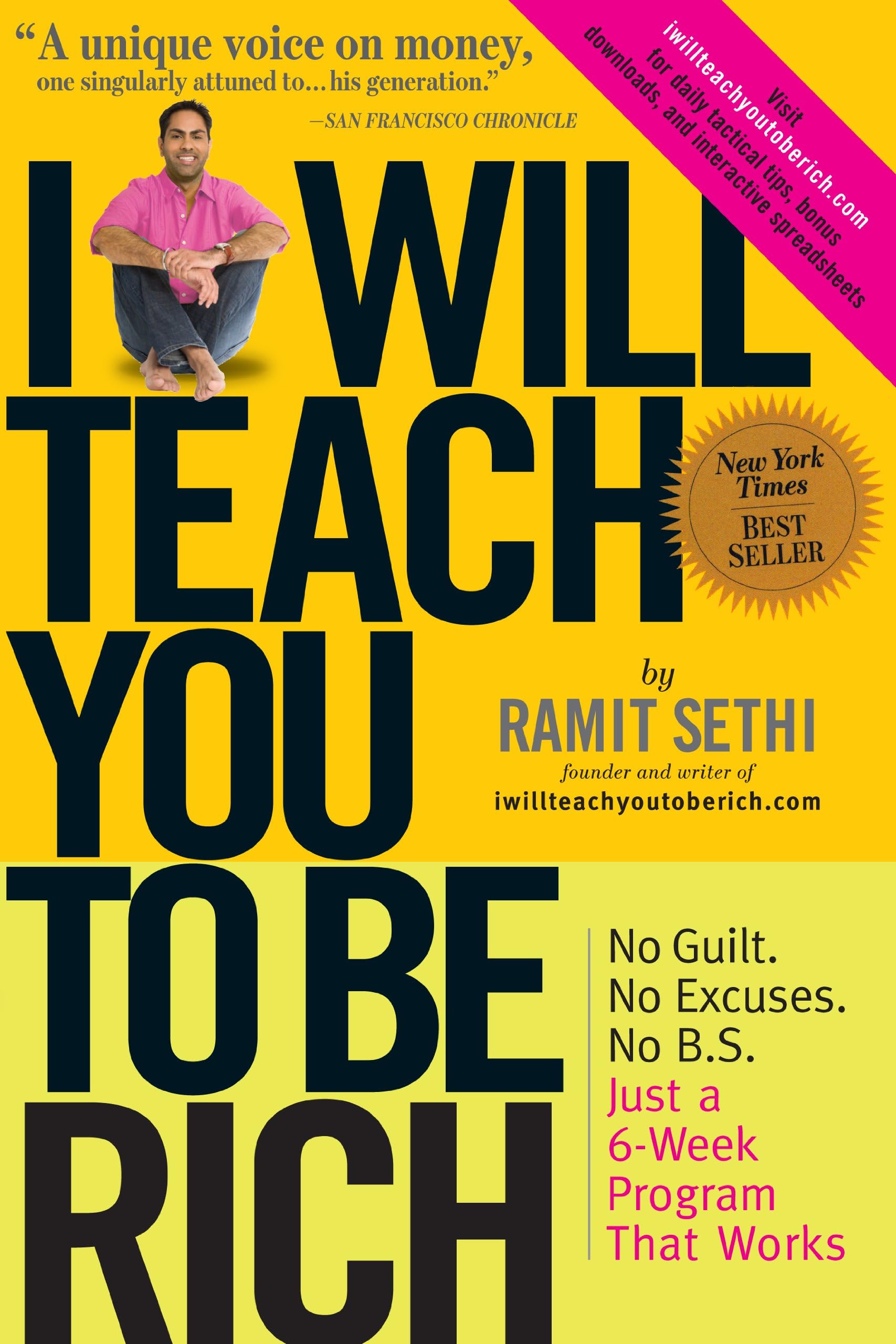
I Will Teach You To Be Rich
Product ID: 2518838
Desertcart purchases this item on your behalf and handles shipping, customs, and support to Spain.
At last, for a generation that's materially ambitious yet financially clueless comes I Will Teach You To Be Rich, Ramit Sethi's 6-week personal finance program for 20-to-35-year-olds. A completely practical approach delivered with a nonjudgmental style that makes readers want to do what Sethi says, it is based around the four pillars of personal finance- banking, saving, budgeting, and investing-and the wealth-building ideas of personal entrepreneurship. Review: 'I Will Teach You To Be Rich' Should be Required Reading - I didn't like this book - I loved it. I hardly love anything and find most books covering finances and 'how to be better off' to usually be a bit contrived and poorly written. They hype complicated methods that are guaranteed to get results and it doesn't seem to apply to those who aren't making a lot of money. That's not the case for 'I Will Teach You to be Rich'. Sethi has written a book that not only offers great advice for people of every income level but he seems to crafted a book on finances and improving your condition that goes against the usual recommendations and advice you get from financial experts and gurus. As a young adult who is pretty early in his career and who is interested in investing in his future, this book was perfect for me. This book covers it all - from looking at your monthly expenses and creating a spending/allocation plan, investing and tons of more. The Good: This book covers a lot ground in a short amount of pages. Unlike a lot of books, I liked that Sethi didn't waste time or pages repeating himself. From the first chapter, he hits the ground running and does a great job of describing his plan to make you rich. His plan really isn't a gimmick or ridiculous because it's basically all about educating you about how to manage your money, showing and describing how to do it and then giving you steps and a plan to actually get it done. Even though I'd heard of some of the things he mentioned in the book (Roth IRAs, high yield savings accounts, 401(k)), he explained each a step further than anybody or piece of literature I've heard before. I liked that the book is structured in a way to really take you from knowing little about managing your money to leaving you feeling more confident and inspired to get your financial life in order. By following his simple suggestions, I took a hard look at my own budget and where my money goes and managed to restructure my spending habits so that I will (hopefully) manage to save twice as much as planned, start investing and start aggressively paying down my student loan debts - all on my salary which isn't by any means huge. That's what I liked about the book - it was written more so for those with time on their side who are younger and haven't made too many mistakes. Yes, if you're 30 and older, you can still pick up this book and get some great advice but I feel some of the advice and tips offered would be scoffed at by older readers while younger ones would be more willing and inclined to follow Ramit Sethi's advice. The Bad: There really isn't much to complain about. His snarky/casual tone throughout the book can be a bit annoying or eye-roll inducing (he takes on the tone of a frat guy at times with countless references to hot babes and dining at Taco Bell), but once you get into the book, you get used to his style and look past this annoyance. As I said, I felt the book was written more for those in their 20s and early 30s than the older crowd. This isn't necessarily bad but I think an older audience isn't going to like some of his advice. Some may take it as being overly frugal and being young and a bit foolish (such as his statement about how investing in real estate or buying a house is a bit of an old school, outdated, belief). I'd caution some readers that this isn't for the financial faint of heart - there's a lot of great advice offered but if you read this with the belief that you're an expert or have little room for improvement, you're not going to get much out of this book and will argue with him in each chapter. In all, if you're looking for a book that's all about getting your financial life in order, this book is for you. The book covers a variety of topics including (but not limited to) investing, savings accounts, restructuring your spending habits to save for things you want to buy or enjoy, how to negotiate a raise, getting a deal on a new car, then really, you should pick up this book. It was very easy to get through but far more informative than most finance 'get rich' books out there on the market. A must-read for anyone serious about their money. Review: This is definitely the best personal finance book I've read so far - This is my new #1 recommendation for anyone seeking personal finance advice. This is definitely the best personal finance book I've read so far. It's a logical, step-by-step, practical handbook for financial success, specially written for people in their 20's. Sethi gives advice on “automatically enabling yourself to save, invest, and spend - enjoying it, not feeling guilty...because you’re spending only what you have.” His main point: automate your finances so you effortlessly save and invest, leaving you money to spend on things you love without feeling guilty. Automatic saving and investing helps overcome psychological barriers and laziness. In addition to his emphasis on automation, I agreed with Sethi’s recommendation for long-term, passive, buy-and-hold investing instead of speculative, market-timing investing. I also liked Sethi’s 85 Percent Solution, which states that it's better to act and get it 85% right than to do 0%; sometimes good enough is good enough, and it’s always better than doing nothing. Another good message is "spend extravagantly on the things you love, and cut costs mercilessly on the things you don't." That's valuable because everyone defines being "rich" differently, and it's not all about money. Money is just the tool we use to acquire the material possessions and experiences we want. That's the difference between being cheap and being frugal; being cheap is trying to cut spending on everything, and being frugal is cutting costs on the things you don't care about so that you can splurge on the things you do. I liked the concept of making a Conscious Spending Plan instead of a budget. Almost no one actually makes a budget, and even fewer follow it. Instead, consciously decide how you'll spend your money. I especially like this idea of guilt-free spending, because too often the recommendation is to limit all spending. But people in their 20s want to live it up, not sit at home and pinch every penny! The Conscious Spending Plan lets you spend a certain percentage of your money on whatever you want, without feeling guilty, since you’re paying yourself and your bills first. The book is written in the form of a 6-week action plan. Each chapter describes the tasks and reasoning behind them, and ends with a checklist of steps to take. Here are the weeks: Week 1: Credit Cards. Check your credit, pick a good credit card, set up automatic payments, pay off debt. Week 2: Bank Accounts. Open or assess your checking account, open and fund a high-interest savings account. Week 3: Investing Accounts. Open a 401(k), make a plan to pay off debt, open a Roth IRA and set up automatic payment. Week 4: Conscious Spending. Create a Conscious Spending Plan, track spending, and cut in the right places. Week 5: Automatic Money Flows. List and link accounts, then set up an Automatic Money Flow to automatically fund the 4 categories of your Conscious Spending Plan. Week 6: Investing Choices. Figure out your investing style, research investments, and buy funds. The book gives a fairly in-depth explanation of the concepts and fundamentals of personal finance, but also contains plenty of examples of actual bank accounts and funds. There are many references to the 2008 recession and other events, so those parts of the book didn't age well. Notes Personal Finance Ladder Rung 1: invest enough in 401(k) to get company match Rung 2: pay off debt Rung 3: invest as much as possible in Roth IRA Rung 4: put more into 401(k), as much as possible Rung 5: invest in non-retirement (taxable) account Conscious Spending Plan recommended percentages (save and invest more if possible) 50-60% on fixed costs 10% on long-term investments 5-10% on savings goals 20-35% on guilt-free spending Investing Use target-date funds or index funds. Invest aggressively in retirement accounts, since retirement is so distant. Recommended financial institutions: Vanguard, T. Rowe, Schwab Rebalance every 12-18 months by investing more in underperforming assets (not selling outperforming assets). Hold tax-inefficient (income-generating) assets like bonds in tax-advantaged accounts. Hold tax-efficient assets like index funds in taxable accounts. Choose funds based on: 1. Expense ratio 2. Asset allocation 3. 10-15 year return Model your portfolio after David Swenson’s Yale Endowment portfolio: 30% US stocks 15% developed international stocks 5% emerging market stocks 20% REITs 15% government bonds 15% TIPS Buying a house Houses are a poor investment compared to stocks; they’ve historically returned 0% after inflation. Before buying a house, determine the total monthly payment including mortgage, taxes, insurance, and maintenance. It should be less than 30% of your gross monthly income. The total house price should be less than 3 times your annual gross income. Buy a house only if you can live in it for 10 years. Make a 20% down payment and get a 30 year fixed rate mortgage. To be fair, I probably should have listened to this one, but I did many of the other things Sethi points out. Additional notes Use savings for goals less than 5 years away. Set your accounts for automatic deferrals, transfers, and payments to automatically direct money into retirement accounts, savings, bills, and a spending allowance. Negotiate a higher total compensation (salary plus benefits) by researching compensation for comparable jobs and proving the value you bring to the company. One thing I did was that I continuously talked to my friends about the book and we sat down together and completed a lot of the actions in sequence. By having those around me also aligned it made easier for me not to be tempted to go out. For example, we decided only to go out to eat for lunch once a week to stick to our plan. Sethi also gives many tools and recommendations throughout the book to help you accomplish your goals.
| Best Sellers Rank | #66,894 in Books ( See Top 100 in Books ) #902 in Personal Finance (Books) |
| Customer Reviews | 4.5 out of 5 stars 4,478 Reviews |
A**D
'I Will Teach You To Be Rich' Should be Required Reading
I didn't like this book - I loved it. I hardly love anything and find most books covering finances and 'how to be better off' to usually be a bit contrived and poorly written. They hype complicated methods that are guaranteed to get results and it doesn't seem to apply to those who aren't making a lot of money. That's not the case for 'I Will Teach You to be Rich'. Sethi has written a book that not only offers great advice for people of every income level but he seems to crafted a book on finances and improving your condition that goes against the usual recommendations and advice you get from financial experts and gurus. As a young adult who is pretty early in his career and who is interested in investing in his future, this book was perfect for me. This book covers it all - from looking at your monthly expenses and creating a spending/allocation plan, investing and tons of more. The Good: This book covers a lot ground in a short amount of pages. Unlike a lot of books, I liked that Sethi didn't waste time or pages repeating himself. From the first chapter, he hits the ground running and does a great job of describing his plan to make you rich. His plan really isn't a gimmick or ridiculous because it's basically all about educating you about how to manage your money, showing and describing how to do it and then giving you steps and a plan to actually get it done. Even though I'd heard of some of the things he mentioned in the book (Roth IRAs, high yield savings accounts, 401(k)), he explained each a step further than anybody or piece of literature I've heard before. I liked that the book is structured in a way to really take you from knowing little about managing your money to leaving you feeling more confident and inspired to get your financial life in order. By following his simple suggestions, I took a hard look at my own budget and where my money goes and managed to restructure my spending habits so that I will (hopefully) manage to save twice as much as planned, start investing and start aggressively paying down my student loan debts - all on my salary which isn't by any means huge. That's what I liked about the book - it was written more so for those with time on their side who are younger and haven't made too many mistakes. Yes, if you're 30 and older, you can still pick up this book and get some great advice but I feel some of the advice and tips offered would be scoffed at by older readers while younger ones would be more willing and inclined to follow Ramit Sethi's advice. The Bad: There really isn't much to complain about. His snarky/casual tone throughout the book can be a bit annoying or eye-roll inducing (he takes on the tone of a frat guy at times with countless references to hot babes and dining at Taco Bell), but once you get into the book, you get used to his style and look past this annoyance. As I said, I felt the book was written more for those in their 20s and early 30s than the older crowd. This isn't necessarily bad but I think an older audience isn't going to like some of his advice. Some may take it as being overly frugal and being young and a bit foolish (such as his statement about how investing in real estate or buying a house is a bit of an old school, outdated, belief). I'd caution some readers that this isn't for the financial faint of heart - there's a lot of great advice offered but if you read this with the belief that you're an expert or have little room for improvement, you're not going to get much out of this book and will argue with him in each chapter. In all, if you're looking for a book that's all about getting your financial life in order, this book is for you. The book covers a variety of topics including (but not limited to) investing, savings accounts, restructuring your spending habits to save for things you want to buy or enjoy, how to negotiate a raise, getting a deal on a new car, then really, you should pick up this book. It was very easy to get through but far more informative than most finance 'get rich' books out there on the market. A must-read for anyone serious about their money.
T**S
This is definitely the best personal finance book I've read so far
This is my new #1 recommendation for anyone seeking personal finance advice. This is definitely the best personal finance book I've read so far. It's a logical, step-by-step, practical handbook for financial success, specially written for people in their 20's. Sethi gives advice on “automatically enabling yourself to save, invest, and spend - enjoying it, not feeling guilty...because you’re spending only what you have.” His main point: automate your finances so you effortlessly save and invest, leaving you money to spend on things you love without feeling guilty. Automatic saving and investing helps overcome psychological barriers and laziness. In addition to his emphasis on automation, I agreed with Sethi’s recommendation for long-term, passive, buy-and-hold investing instead of speculative, market-timing investing. I also liked Sethi’s 85 Percent Solution, which states that it's better to act and get it 85% right than to do 0%; sometimes good enough is good enough, and it’s always better than doing nothing. Another good message is "spend extravagantly on the things you love, and cut costs mercilessly on the things you don't." That's valuable because everyone defines being "rich" differently, and it's not all about money. Money is just the tool we use to acquire the material possessions and experiences we want. That's the difference between being cheap and being frugal; being cheap is trying to cut spending on everything, and being frugal is cutting costs on the things you don't care about so that you can splurge on the things you do. I liked the concept of making a Conscious Spending Plan instead of a budget. Almost no one actually makes a budget, and even fewer follow it. Instead, consciously decide how you'll spend your money. I especially like this idea of guilt-free spending, because too often the recommendation is to limit all spending. But people in their 20s want to live it up, not sit at home and pinch every penny! The Conscious Spending Plan lets you spend a certain percentage of your money on whatever you want, without feeling guilty, since you’re paying yourself and your bills first. The book is written in the form of a 6-week action plan. Each chapter describes the tasks and reasoning behind them, and ends with a checklist of steps to take. Here are the weeks: Week 1: Credit Cards. Check your credit, pick a good credit card, set up automatic payments, pay off debt. Week 2: Bank Accounts. Open or assess your checking account, open and fund a high-interest savings account. Week 3: Investing Accounts. Open a 401(k), make a plan to pay off debt, open a Roth IRA and set up automatic payment. Week 4: Conscious Spending. Create a Conscious Spending Plan, track spending, and cut in the right places. Week 5: Automatic Money Flows. List and link accounts, then set up an Automatic Money Flow to automatically fund the 4 categories of your Conscious Spending Plan. Week 6: Investing Choices. Figure out your investing style, research investments, and buy funds. The book gives a fairly in-depth explanation of the concepts and fundamentals of personal finance, but also contains plenty of examples of actual bank accounts and funds. There are many references to the 2008 recession and other events, so those parts of the book didn't age well. Notes Personal Finance Ladder Rung 1: invest enough in 401(k) to get company match Rung 2: pay off debt Rung 3: invest as much as possible in Roth IRA Rung 4: put more into 401(k), as much as possible Rung 5: invest in non-retirement (taxable) account Conscious Spending Plan recommended percentages (save and invest more if possible) 50-60% on fixed costs 10% on long-term investments 5-10% on savings goals 20-35% on guilt-free spending Investing Use target-date funds or index funds. Invest aggressively in retirement accounts, since retirement is so distant. Recommended financial institutions: Vanguard, T. Rowe, Schwab Rebalance every 12-18 months by investing more in underperforming assets (not selling outperforming assets). Hold tax-inefficient (income-generating) assets like bonds in tax-advantaged accounts. Hold tax-efficient assets like index funds in taxable accounts. Choose funds based on: 1. Expense ratio 2. Asset allocation 3. 10-15 year return Model your portfolio after David Swenson’s Yale Endowment portfolio: 30% US stocks 15% developed international stocks 5% emerging market stocks 20% REITs 15% government bonds 15% TIPS Buying a house Houses are a poor investment compared to stocks; they’ve historically returned 0% after inflation. Before buying a house, determine the total monthly payment including mortgage, taxes, insurance, and maintenance. It should be less than 30% of your gross monthly income. The total house price should be less than 3 times your annual gross income. Buy a house only if you can live in it for 10 years. Make a 20% down payment and get a 30 year fixed rate mortgage. To be fair, I probably should have listened to this one, but I did many of the other things Sethi points out. Additional notes Use savings for goals less than 5 years away. Set your accounts for automatic deferrals, transfers, and payments to automatically direct money into retirement accounts, savings, bills, and a spending allowance. Negotiate a higher total compensation (salary plus benefits) by researching compensation for comparable jobs and proving the value you bring to the company. One thing I did was that I continuously talked to my friends about the book and we sat down together and completed a lot of the actions in sequence. By having those around me also aligned it made easier for me not to be tempted to go out. For example, we decided only to go out to eat for lunch once a week to stick to our plan. Sethi also gives many tools and recommendations throughout the book to help you accomplish your goals.
A**R
Good for beginners or advanced savers
This book is helpful even if you're already saving money and managing your retirement finances. Ramit cuts through the complexity of personal finance management and gets you started on the things you should be doing RIGHT NOW to get on track. His writing style is also very accessible and makes topics like dollar cost averaging amusing and relevant. He also provides scripts on how to negotiate prices, interest rates, and fees down. Before reading the book, I had already implemented many of Ramit's teachings... manually. Not good enough. I was afraid of incurring overdraft fees or running into shortages in my accounts that I was actually paying tons in late fees on things like rent. (I'm REALLY bad at writing paper checks and using the mail.) 4 points stand out to someone who is already saving more than the book recommends: * AUTOMATE your saving process -- use savings and investment accounts from places like (Capital One 360 (formerly ING Direct)), schedule withdrawals from the account that receives your paycheck into savings and retirement accounts, schedule and automate ALL regular bills so you don't have to lift a finger to pay on time * Allocation method: allocate your future incoming cash flow 30-50% for fixed costs of living (e.g. rent, gas, etc.), 10% to retirement investing, 5-10% to savings (e.g. vacations, house down payment, etc.), and 20-35% in guilt-free spending (e.g. eating out, clothes, gadgets, etc.) * FOCUS ON BIG WINS -- Find ways to cut $4,000 of spending/year instead of shifting savings accounts around between institutions offering a 0.1% higher interest rate. The former is a MUCH better use of your time. * Hack your psychology to save more by setting goals and tweaking your savings rates up slowly over time while weaning yourself off of things that aren't important. Seeing how much you spend on something should NEVER surprise you or cause you to shrug your shoulders. Ramit also offers good advice on why you should be concerned about your credit score and how to improve it. I'm working through that process at the time of writing this review. Thanks, Ramit. Your book is fun, easy to read, and super-relevant. I guess I'll go check out your blog now!
W**R
This is Where you Start
This is the perfect book for people of any age that haven't optimized their finances yet. If you haven't taken the basic steps this book lays it out. Stylistically it is written for people in their twenties but if you're 30 or 40 and haven't taken these steps yet then this book is great for you. The book gives specific recommendations for companies/accounts to use which are now out of date but thats ok a little research will get you the best up to date info and I'll fill you in on my accounts here. The most important aspect of this book is the recommendation to START INVESTING NOW!!!!! It doesn't matter how old you are or how much money you have, just start putting some money in the market NOW, as you save more you can invest more. The problem a huge portion of the population has is doing nothing with your savings for fear of "not doing it right." I cant tell you how many 35 year olds have $50k sitting in a savings account because they have this fear issue. If they had just taken some simple steps at age 25 instead of age 35 they'd have $70k instead of $50k. It is very simple to get started "doing it right" and this book will teach you how, and also why its the right thing. This book teaches you the very simple steps and the most simple investing strategies. But guess what 98% of the population should only do these simple things and nothing else. The book will teach you how to: Get your financial accounts organized you need: Regular Checking/Savings with physical branches near you, online high interest savings account, investment account. The book will teach you how to set up these accounts, and automate sending money from one account to the other. This way you don't really need a detailed budget to control spending, you send your savings away from your checking account and only spend what you have left in checking every month. Figure out where you might be wasting money - The book teaches you how to stop wasting money on bank fees, high cable bills etc, but also just tells you to figure out where you might be spending money that you don't really care about and stop it. If you loooove your lattes and never go to the gym, then keep buying your lattes but stop paying your gym for nothing! If you buy lattes but you don't really care about them then stop, etc. Ok here are the best specific accounts I use (2017). Local Bank - Bank of America (yes they are evil but sometimes you need a local branch, and don't worry they have a very small portion of my money). This one doesn't really matter just pick one with branches near you. When you get money (paycheck etc) it goes here. Once a month you send a specific amount of $$ to Online High Interest Savings. Pay your credit card bills using this account. Online High Interest Savings -- Ally Bank has the best rate right now, Capital One 360 (used to be ING Orange), is the other main one. You keep a set amount in here that is your reserve funds (2-3 months of expenses). If possible pay your car payment, and mortgage/rent using auto draft from this account. Then every month a set amount of $$ gets sent from here to your true long term savings which is your investment account. Investment Account -- CHARLES SCHWAB!!!! -- Right now I think Chuck is the best investment house. I have been using them for years and I have literally never paid them a single penny in fees for making trades or anything else. They have the best array of no fee ETFs. Use their "ETF Porfolio Builder" to help you pick your Index ETF's and you are off and running with investing in the stock market! You can also get a real person on the phone now and then for no cost if you want to ask questions. Also when you have an investment account with them you can get a checking account where they pay you back for every single penny in ATM fees! So if you're in Vegas and the ATM charges you $10 to withdraw cash, Chuck gives that money back to you! Never again feel stupid for pulling money from an ATM! Credit Cards – Stop with the points and the miles. It’s a shell game, its kinda fun and it seems like you’re winning but you’re not. Cash back the best way to optimize Citi Double Cash – 2% cash back on every single purchase you make. No revolving categories etc. No annual fee. This is the best cash back card on the market. Amex Blue Cash Preferred -- $75 fee per year, 3% back at gas stations, 6% back at grocery stores (with a cap), 1% on everything else. For families where gas and groceries are large expense items this card is very much worth it. Ok go buy this book and start optimizing your finances! Once you have all this done, then maaaybe think about buying specific stocks. But probably not, its just gambling.
D**S
He Will Teach You To Be Rich
I was trying to come up with an attention-grabbing title for this book to make sure nobody skimmed past. Frankly, I couldn't decide between "great personal finance book" or "the greatest personal finance book." Then I realized, the title sells itself: Ramit Sethi will teach you to be rich. Ramit Sethi is a brilliant guy (he hired me once or twice) and there's no doubt in my mind that he is, indeed, rich (you have to be to live in San Francisco). Insert one more joke here about him being Indian. Seriously, I've been a long time reader of his blog, aptly titled, I Will Teach You To Be Rich and couldn't wait to get my hands on this book. MORE THAN JUST A BOOK This book serves as a six week, step-by-step guide to: reducing debt, using credit cards, eliminating fees, maximizing earnings, automating finances, allocating assets, and reducing spending. If these all sound like scary things, don't worry, Ramit will hold your hand the entire time. His cheeky, informal writing style sounds more like your best buddy chatting about money than some writer on a soapbox trying to impress you with big words. This book is easy to read, follow-along with and teaches you all the things about finance you wish you had known when you were in your 20s. CRASH COURSE IN MONEY I took two personal finances classes in academia: one in high school and one in college. The former taught me lessons like: how to write checks (I don't use paper checks anymore) and how to balance a checkbook (I use Mint to track that information). The latter taught things like: the importance of owning real estate (we all know how that turned out) and how to manually complete your 1040 form (I use TurboTax for that). Point being: traditional finances courses and books aren't doing you a lot of good. I Will Teach You To Be Rich cuts through the noise (Jim Cramer, anyone?) and gives it to you straight: start saving now, don't invest in individual stocks, real estate isn't the best investment, banks sucks, but despite all of this, feel free to spend lots of money (on the things you love). If you disagree with any of the previous statements, you'll love this book. BOTTOM LINE Though I'm biased, I do think this is a must-read for anyone, especially anyone under 30. Plus, I have the benefit of hindsight: the book already hit Amazon's #1 best seller and is still #1 in personal finance. If I could walk up to each of my friends and slap them with a copy of this book I know it would make a huge difference in their lives. Seriously, I want all of my friends from school to read this book now. Pick up this book and start acting today. It's not hard stuff, and even the simple things like setting up automatic monthly payments have huge benefits: you'll never ever pay a late fee again. You'll never have to remember to set aside money for investing. Simply asking for an increase in your existing credit lines means you can raise your overall credit score saving you hundreds of thousands of dollars in financing (if you buy a house or car).
J**R
I normally don't write reviews - BUT!
I want to start out by saying that I am 59 years old. Over the past holiday season I was catching up on all the magazines I subscribe to and came a cross a small article in an Oprah (July 2012) magazine that I was getting ready to toss - I know I'm a little behind in my reading and decluttering - but, hey, what can I say? Anyway - there was this small article about "The 7 Money Mantras Experts Live By" whereby Remit Sethi talks about scrimping and saving, and why so many people neglect the possibility of making more money, whether negotiating a raise or finding a way to bring in extra income using a valuable skill. My interest was peaked immediately. I stopped what I was doing and Googled Remit Sethi. The title alone - I Will Teach You To Be Rich - was intoxicating - to say the least. I spent the rest of the day on Google, You Tube and the internet researching who in the world was Remit Sethi? I purchased the book on Amazon also at this time. Through my research I began to be mesmerized by this young man who's parents must be busting at the seams with pride on what he has accomplished in his short lifetime. Way to go Remit! After receiving the book from Amazon I spent two days reading, ear-marking pages and highlighting areas that I didn't want to miss when I came back to implement his advice. Obviously this book is targeting young people in their 20's and 30's - BUT! - we are never too old to learn new ways to improve on how we can make more money on the the hard earned money we make. I just wish there had been a no nonsense financial road map book written for me back in the day because I would have been miles ahead by now. Having a distinct road map with how to understand credit cards, 401k's, Roth IRA's, Stocks, Bonds, Life Cycle Funds, Index Funds, Mutual Funds and various other types of investing - while knowing where to find them, what to say and how to implement them would have proven to be invaluable to me - to say the least. Every example he uses about what we were taught back in the day about saving, investing and making your money work for you is exactly what happened to me - and my mother was a banker! I have learned how to "ladder" my CD's but I consistently asked "Isn't there something better?" My mother was my only adviser - which Remit will tell you in this book to be wary of following your parents advise on finances - rightfully so - if they are opposed to investing in the stock market because they came from a time that all they can remember is the stock market crash of 1929! Suffice to say - In good years I have made as much as 6% on my CD's, but in bad year's only 2%. I am not proud of this paltry gain but as Remit says - doing something is better than not doing anything. This book is not for 59 year old people - except if you are wise enough to buy it for your children to read and help them set this up properly - BUT! - this book is for people in their 20's and 30's - for sure! I would say this book should be MANDATORY for all young people - starting as young as Juniors/Seniors in High School - so they will be prepared for what lies ahead when they get to college and beyond. I was not prepared - nor are our children - to handle the onslaught of Credit Card companies when they get to college. Remit's book is a must read for those who do not want to end up where I am and haven't had the guidance or mentor's - like he did - to make MORE out of the money you earn - because like it or not - YOU WILL BE WHERE I AM TODAY AND SAYING TO YOURSELF - I shoulda, coulda, woulda - if I had only known! To all people who read this book, I have one final thought - FOLLOW REMIT'S ADVICE AND YOU WILL BE ON THE PATH TO BEING RICH! Buy the book - take it one chapter at a time - implement his teachings - and when everyone is getting laid off and they don't know how they will make their next car payment because they haven't saved for the unexpected hiccups that life throws their way - believe me, this will happen to you no matter what you say or think - you will be smiling all the way to the bank, your anxiety level will be nonexistent and you will then write a review for Remit's book that will rival mine!
J**D
Great Tips around Credit Card and 401K , but not a Pure Honest book , examples are exaggerated
I was looking for some financial help book. The reason i was looking for this kind of book . 3 years back i moved to US and i was not aware of personal finance in US. I mean i know the credit card and 401K and all . Still there were some problems like i could not manage my credit cards , bills properly. I think in general i never paid attention to this mess. But just to let you know that - i never carried any balance in my credit card . So i was never on debt. i always paid my bills in full. I missed one of my credit card payment of 6$ and i have 5 cards . If this is your profile then you should read this book as "TIPS for Personal Financial" and some are infact great tips. Ramit is now days doing some cheap kind of marketing like he will do some talking and end his video with question mark then ask you to sign up and he will send you email everyday. OK - about the book. i did learn things around 401, Roth IRA and Credit Card. some of them were very helpful 1)I had my first credit card in 2004 in India and i remember citibank changed my billing period from 5th of month to 12, then 18 then 22 then 28 and i infact send a email to them to change it - they said no. So I thought it same here too...but after reading Ramit's book - this is the best thing i liked. i called each company which sends me bill to change my billing date to 1st of month. i infact tried GOOGLE calendar and tied it up to send alerts . but this was the best TIP from the book. 2) Automatic payment , so i get all the bills and then on 2nd i pay the most , because automatic payments generally waits for payment due my AMEX and chase are good banks they checks the statement balance on due date. but above all on 2nd of month i done with all the bills. NO MORE HEADACHE - great tip Life on automatic payment. 3) Tie up your account to MINT.com /Good tip - to see the budget and spending tracking. it works "simply" only if your budget and credit cards are done by 1st otherwise it is complicated. 4) Also his book pointed me to GetRichSowly.org blog - awesome blog - i read this blog everyday and if you read it then you may not require this book. 5)I also called my credit card companies to increase my credit - this did increase my credit score. 6)Also there is good amount of info about credit score which is very valuable - you can get same info in GRS (Get rich slowly blog) 7)Also there is some good info about the 401K and ROTH IRA ( but after reading GRS (Get Rich Slowly) i think GRS format is better and more understandable) but this book - not very honest about it claims . when you see the Reviews , it seems ot of people saved quite a bit of money ( yes if have credit card debt - then there are some good tips ) otherwise if your profile is like mine . NO DEBT then this is "Good" tips book. if you are not following any blogs like GRS or if you have no idea about 401K and credit score. Some "BLACK dots" Ramnit compares ING 3% interest rate to other bank 0.5 . but ING Bank is offering 0.90 APR since oct 2011. So he has not updated that in his book. Other examples are also little exaggerated. the investment chapter is good for nothing. i have read couple books on investment . if you are new then it might add some value. But this book pointed me to another great book - The Millionaire Next Door by thomas J Stanely check this out - i mean this book will change your behavior towards money and a great blog (GetRichSlowly.org) So bottomline this book is good and have some great tips around credit card and 401K- but this not pure honest book.
L**E
I really liked the methods and insight this book conveyed
I really liked the methods and insight this book conveyed. Nothing obscure or tricky to manage. Many writers like to recommend actions without providing methods. Methods are the key to actionable goal-setting. This author provides his methods to garner the outcomes he has --so there is some potent, time-saving information here. My only challenge was with the guidance to virtually link multiple financial accounts, vendor accounts and bank accounts together where any one of them is used with an auto-bill-pay service and/or auto-savings/investing -- as this can really risk exposure in a way this writer doesn't seem to appreciate. If you have vendors who make a gross error that taps your bank account for automatic payment and from which any funds shortage will grab from a linked account, you are out access to your own funds (from possibly multiple accounts) until the vendor navigates their error and decides it should refund you. Why would you risk that? Setting up vendors to be paid on auto-pilot works *only* if you trust that every business you pay on auto-draft will *never* make an error and *never* have employees who misappropriate funds and *never* get hacked or allow your info to get hacked. House of cards if one account gets drained and another account is used to supplement shortages as back-up bc that one gets drained too. It has the same risky exposure assigned as using a bank-debit card to pay for everything rather than a credit card. Do your due diligence and review your bills, correct errors *before* issuing payment and don't let others communicate what you owe without verifying. We live in times that medical vendors will rebill the same services after rearranging how they bundle billable services on the re-bill to patient/client to get them to pay something they don't owe even after having been issued the EOB advising they cannot bill the patient. Utilities arbitrarily change due dates to garner add'l funds from late fee assessments, billing period to billing period. Contract terms change, interest rates and fees change and notifications are all done subtlety --small print in a billing statement, a spam-looking text or robocall. If you don't read your statements and stay on top of your own money, when you discover you have issues, you will be in a bigger dilemma than had you caught it thru active reviewing of statement data. On another note, I did like the wisdom of allocating funds based on one's personal priorities and preferences. Not everyone works for the end-goal of a big house or a large wedding or a luxury vacation. The wisdom to figure out your goals, short-term and long-term, prepare, make a strategy, determine what you are willing to reduce spending to advance savings for meaningful goals seems breaks it down to less formidable practice by providing method to calibrate priorities, interests, career goals, etc. The guidance explains that sacrificing in those areas of less importance to achieve the things that are important requires the same self-discipline it takes to save and invest and allows you to work with what you have and outlines what to do if you need to make changes.Sensible, tangible info that will be helpful to many readers.
S**L
Essential book for everyone in thier twenties and early thirties. Fun to read but eye opening. You don't have to suffer be rich.
I kept putting off buying this book because, as so many people do, money, planning and investing is "I have time, I'll figure it out later". One night at 2am I was watching Ramit's videos on negotiation due to an impending job discussion I would be having as I start my career after transitioning from Grad School. I bit the bullet and bought the book, which incidentally is extremely cheap. His advice is extremely well written, it is funny and enjoyable to read. He tackles the root causes of peoples inaction and attitudes towards money. In this book, his key principals are to automate your money flow so your saving, investing, retirement all happens on its own and you don't see it. He also teaches to spend extravogantly on the things you love, and cut mercilessly on things you don't. When he says "teach you to be RICH" he doesn't just mean in the monetary sense, he means lead a rich life as well. Sure you can make a tiny bit more money by being painfully frugal, but you won't be happy. If you are in your twenties or early thirties this is an essential book. It's delightful to read, contrary to what you'd think a finance book would be, and contains extremely useful, practical, and easy to implement advice. He also discusses how to approach big money decisions and save tons of money on cars, homes, and weddings. There is even advice on dealing with family and having the money talk with a significant other. It's a six week "course" but really it just breaks down the tasks into manageable bites. You could implement all of his advice within a few weeks without issue if you are in a good position already. Note, if you are in your forties or fifties, not all of this is targeted at you, however if you feel the need to have money advice it would still be extremely useful to see the money automation, debt management, etc. Just know going in that you aren't the target audience and take it with a grain of salt. In closing, don't delay, Under 20 dollars will pay for itself hundreds of times over compared to continuing to coast along for years.
Y**O
⭐️⭐️⭐️⭐️⭐️ klar, umsetzbar, wissenschaftlich fundiert und kulturell einflussreich.
⭐️⭐️⭐️⭐️⭐️ (5/5) „I Will Teach You to Be Rich“ – modernes Handbuch für persönliche Finanzen, praxisnah und direkt 📌 Kurzfazit Ramit Sethi vermittelt in seinem Buch einen systematischen, pragmatischen Ansatz zum Umgang mit Geld: von Kontostruktur, Schuldenabbau und Investitionen bis hin zu psychologischen Barrieren. Anders als viele klassische Finanzbücher ist es sehr hands-on, humorvoll und auf junge Berufstätige zugeschnitten. 📚 Inhalt in Kürze Automatisierung von Finanzen (Daueraufträge, Kontensysteme) Schulden tilgen und Kreditkarten verantwortungsvoll nutzen Frühzeitig in Indexfonds investieren Verhandeln lernen (z. B. bei Gehalt, Gebühren, Fixkosten) Fokus auf „Big Wins“ statt auf kleine Verzichtsstrategien (Latte-Debatte) Psychologie des Geldes: Überwindung von Aufschieberitis und Geldängsten 🔬 Wissenschaftliche Relevanz Stärken: Deckt viele Kernideen der Behavioral Finance ab (Automatisierung, Defaults, Mental Accounting). Seine Ratschläge zur passiven Geldanlage (Indexfonds, langfristig) sind empirisch durch moderne Finanzforschung gestützt (vgl. Fama/French, Vanguard-Studien). Schwächen: Stark US-zentriert (Kontosystem, Kreditkarten, Investmentprodukte). Kein tiefes Finanzlehrbuch, sondern praxisnaher Ratgeber. 👉 Fazit Wissenschaft: Methodisch solide, viele Empfehlungen sind mit moderner Finanzforschung vereinbar, aber eher praxisnah als akademisch. 🌍 Kulturelle Relevanz Hat eine ganze Generation von Millennials für persönliche Finanzen sensibilisiert. Besonders durch Sethi’s Blog und Podcast als „Finanzcoach für junge Leute“ einflussreich. Teil der „New Wave“ der Finanzliteratur – weniger trocken, mehr direkt und alltagsnah. Kulturell bedeutsam, weil es Finanzwissen populär macht und Barrieren abbaut. 💭 Meine persönliche Meinung Positiv: Sehr praxisnah, direkt, ohne unnötigen Jargon. Man kann sofort Maßnahmen umsetzen. Kritisch: Wer tiefe Investmenttheorie sucht, wird es zu oberflächlich finden. Für Nicht-US-Leser ist nicht jedes Beispiel übertragbar. Für mich: eines der besten Einsteigerbücher in die Welt der Finanzen, weil es Psychologie und Praxis verbindet. 🎯 Fazit I Will Teach You to Be Rich ist ein hochwirksamer Finanzratgeber, der klug, humorvoll und praxisnah geschrieben ist. Wissenschaftlich solide im Kern, kulturell relevant als Generationenbuch. ⭐️⭐️⭐️⭐️⭐️ – 5 von 5 Sternen Weil: klar, umsetzbar, wissenschaftlich fundiert und kulturell einflussreich.
A**E
Soy fan
Me gustan los sistemas que propone Ramit, no todos son aplicables a todos los países y servicios financieros, pero son muy útiles. Soy fan.
P**R
Wakes you up from just day dreaming
I bought first edition to see what it says about managing finance in 2008 time. This book is simple and crisp to the point. Not much technical jargons like other books and clearly shows how to achieve more with what you’ve. I’m impressed with this book and will give a shot for next one. Thanks and All the best Ramiti 👍🏻
A**A
Love it!
I loved this book! Really practical step by step advices that you can incorporate into your life! I would recommend it definitely!
Trustpilot
1 week ago
1 month ago