
DOWNLOAD THE APP


Customer Services
Copyright © 2025 Desertcart Holdings Limited
DOWNLOAD THE APP
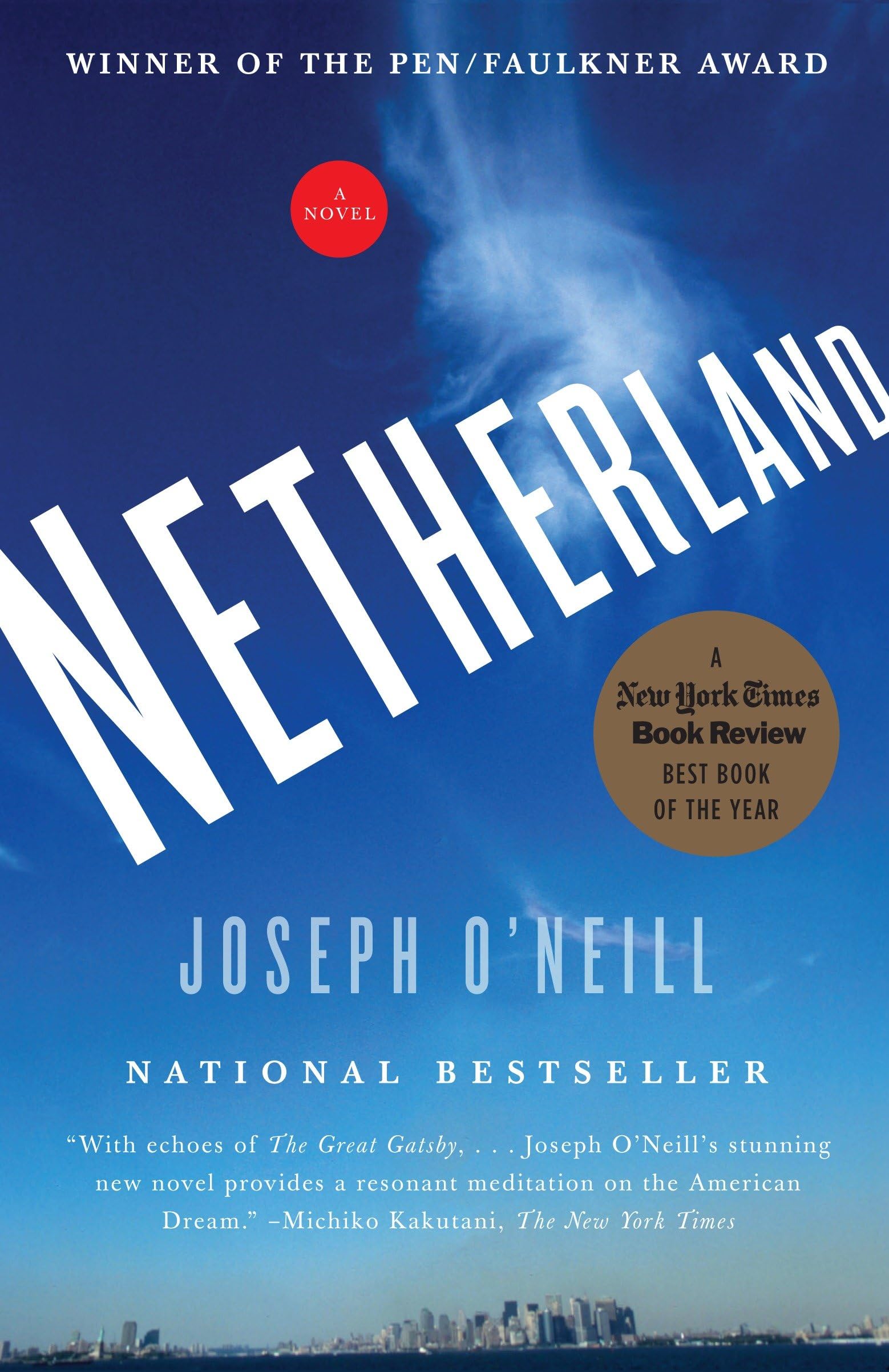
desertcart.com: Netherland (Vintage Contemporaries): 9780307388773: O'Neill, Joseph: Books Review: Calamitous events often cause us to reassess our lives - Netherland could have easily been written after any major catastrope. The point of the book is that after a horrific event such as 9/11, people are often moved to reevaluate their lives in the context of what is important and what is trivial. This reassessment if often colored by ones background and upbringing and can highlight incompatibilities between husbands and wives. Hans is a tall, quiet, intelligent, upwardly mobile Dutchman, married to Rachel, an Englishwomen and a high powered, eloquent lawyer. Rachel is a "doer". She is emotional and very vocal about her feelings. She is, for Hans, a "human flashlight" whereas Hans "naturally associates loves with a house fallen into silence" - a result of his Dutch upbringing in a single parent home. In the midst of this tension between Rachel and Hans is Chuck Ramkisoon, a Trinidadian and a naturalized American citizen who is essentially Hans' only (and unlikely) friend in New York - essentially Hans' lifeline after Rachel leaves Hans and moves back to London after 9/11. Chuck is easily the most interesting character in the book. He is typical of the immigrant who comes to the U.S. in search of the American Dream - an intelligent, self taught man who questions Hans about his business in the same way as a professional fund manager. He umpires cricket games, has a kosher sushi restaurant with a Jewish partner and runs a wei wei ring -illegal gambling. He's a petty crook with big dreams and big ideas about starting a cricket club in new York that will solve the world's ills. He has a wife and a mistress. He has businesses both legal and illegal. He's a messy guy with a messy life but as his partner says, he has enough life in him for ten people. Without giving away the entire story, I believe the author's point is that while we are all, of course, a product of our environment and upbringing, the one thing we ultimately all seek is love and human connections. One word of caution for people who have read the "one star" comments. Yes, there are come sentances that may come off as convoluted. That said, these are few and far between. Overall, this is a well written book that deserves it's cricital acclaim. Review: Beautiful but understated, rather like cricket - Hans van den Broek is a pleasant chap: observant, often witty, cricket-loving, and kind to the strangest of strangers. This characterization of the narrator, along with some beautiful and perceptive prose, is what gives Netherland its special appeal, for this is a retrospective novel of sparse drama and little suspense. Another attraction is the unusual milieu: the New York cricket scene, and its largely South Asian and West Indian membership. A second milieu, the famously offbeat Chelsea Hotel, is a tad predictable as an urban microcosm (as is the amiable eccentricity of its inhabitants) but O'Neill refreshes the device with gentle humor. Passages set in Holland and London add further cosmopolitanism, quite fitting to this story of global migrants. Chuck Ramkissoon, Hans's driven and ethically suspect friend, is a Trinidadian Gatsby for our times, a self-centered dreamer with a shady fortune who still inspires affection and loyalty. And there's much of Nick Carraway about Hans: a level-headed outsider both drawn to and wary of his exotic friend, a capable man who makes a decent living in the city but opts to follow his heart and leave. Where Netherland differs most from Gatsby is in its embrace of New York. This is a "post-9/11 novel," or so Michiko Kakutani described it in the New York Times. While there's some discussion of the malaise that followed the attacks - the strain threatens to scupper Hans' marriage to Rachel (a smart but shrill Brit) - O'Neill is more interested in celebrating New York's endless power to create possibility for new generations of immigrants. NYC is a vortex of enthusiasm, and though Hans is rather unhappy there, he warms to its energizing, regenerating effect on others. Without overdoing it, O'Neill peppers his tale with arresting imagery. The Staten Island cricket field where Hans plays is surrounded by houses with elaborate gardens. "For as long as anyone can remember, the local residents have tolerated the occasional crash of a cricket ball, arriving like a gigantic meteoritic cranberry, into their flowering shrubbery." O'Neill does a fine job of explaining cricket to the American majority without boring the initiated. The story has a meandering structure, switching back and forth in time, a fractured chronology that encourages connections and contrasts. But it's overdone. It's self-consciously literary. The main effect is to de-emphasize drama and keep the focus on observation, yet O'Neill could have struck a better balance between action and thought. We have the makings of a much more emotionally compelling story - What will happen to Chuck and his dream of a first-class Brooklyn cricket ground? What will happen to Hans and Rachel's marriage? - but these outcomes are revealed within the first two pages. Rather like a five-day game of cricket between teams unafraid of a draw, the novel is an exercise in understatement, eliciting only moderate emotional investment, mildly pleasurable with occasional flashes of brilliance. Since critics (NYT, New Yorker) consider Netherland exemplary, it seems to me that Tom Wolfe's complaint of 20 years ago is still valid: modern fiction remains too concerned with literary effect and intellectual contemplation and too little interested in enthralling stories. I'm not arguing for gratuitous pushing of readers' buttons, or for catharsis, but for the kind of alternately unsettling and inspiring storytelling that Wolfe advocated when he called for a return to the spirit of Dickens. The "post-9/11 novel" surely deserves as much.
| Best Sellers Rank | #93,799 in Books ( See Top 100 in Books ) #293 in Cultural Heritage Fiction #616 in Contemporary Literature & Fiction #3,762 in Literary Fiction (Books) |
| Customer Reviews | 3.9 3.9 out of 5 stars (808) |
| Dimensions | 5.19 x 0.68 x 8 inches |
| Edition | Reprint |
| ISBN-10 | 0307388778 |
| ISBN-13 | 978-0307388773 |
| Item Weight | 7.1 ounces |
| Language | English |
| Print length | 256 pages |
| Publication date | May 7, 2009 |
| Publisher | Knopf Doubleday Publishing Group |
L**B
Calamitous events often cause us to reassess our lives
Netherland could have easily been written after any major catastrope. The point of the book is that after a horrific event such as 9/11, people are often moved to reevaluate their lives in the context of what is important and what is trivial. This reassessment if often colored by ones background and upbringing and can highlight incompatibilities between husbands and wives. Hans is a tall, quiet, intelligent, upwardly mobile Dutchman, married to Rachel, an Englishwomen and a high powered, eloquent lawyer. Rachel is a "doer". She is emotional and very vocal about her feelings. She is, for Hans, a "human flashlight" whereas Hans "naturally associates loves with a house fallen into silence" - a result of his Dutch upbringing in a single parent home. In the midst of this tension between Rachel and Hans is Chuck Ramkisoon, a Trinidadian and a naturalized American citizen who is essentially Hans' only (and unlikely) friend in New York - essentially Hans' lifeline after Rachel leaves Hans and moves back to London after 9/11. Chuck is easily the most interesting character in the book. He is typical of the immigrant who comes to the U.S. in search of the American Dream - an intelligent, self taught man who questions Hans about his business in the same way as a professional fund manager. He umpires cricket games, has a kosher sushi restaurant with a Jewish partner and runs a wei wei ring -illegal gambling. He's a petty crook with big dreams and big ideas about starting a cricket club in new York that will solve the world's ills. He has a wife and a mistress. He has businesses both legal and illegal. He's a messy guy with a messy life but as his partner says, he has enough life in him for ten people. Without giving away the entire story, I believe the author's point is that while we are all, of course, a product of our environment and upbringing, the one thing we ultimately all seek is love and human connections. One word of caution for people who have read the "one star" comments. Yes, there are come sentances that may come off as convoluted. That said, these are few and far between. Overall, this is a well written book that deserves it's cricital acclaim.
A**N
Beautiful but understated, rather like cricket
Hans van den Broek is a pleasant chap: observant, often witty, cricket-loving, and kind to the strangest of strangers. This characterization of the narrator, along with some beautiful and perceptive prose, is what gives Netherland its special appeal, for this is a retrospective novel of sparse drama and little suspense. Another attraction is the unusual milieu: the New York cricket scene, and its largely South Asian and West Indian membership. A second milieu, the famously offbeat Chelsea Hotel, is a tad predictable as an urban microcosm (as is the amiable eccentricity of its inhabitants) but O'Neill refreshes the device with gentle humor. Passages set in Holland and London add further cosmopolitanism, quite fitting to this story of global migrants. Chuck Ramkissoon, Hans's driven and ethically suspect friend, is a Trinidadian Gatsby for our times, a self-centered dreamer with a shady fortune who still inspires affection and loyalty. And there's much of Nick Carraway about Hans: a level-headed outsider both drawn to and wary of his exotic friend, a capable man who makes a decent living in the city but opts to follow his heart and leave. Where Netherland differs most from Gatsby is in its embrace of New York. This is a "post-9/11 novel," or so Michiko Kakutani described it in the New York Times. While there's some discussion of the malaise that followed the attacks - the strain threatens to scupper Hans' marriage to Rachel (a smart but shrill Brit) - O'Neill is more interested in celebrating New York's endless power to create possibility for new generations of immigrants. NYC is a vortex of enthusiasm, and though Hans is rather unhappy there, he warms to its energizing, regenerating effect on others. Without overdoing it, O'Neill peppers his tale with arresting imagery. The Staten Island cricket field where Hans plays is surrounded by houses with elaborate gardens. "For as long as anyone can remember, the local residents have tolerated the occasional crash of a cricket ball, arriving like a gigantic meteoritic cranberry, into their flowering shrubbery." O'Neill does a fine job of explaining cricket to the American majority without boring the initiated. The story has a meandering structure, switching back and forth in time, a fractured chronology that encourages connections and contrasts. But it's overdone. It's self-consciously literary. The main effect is to de-emphasize drama and keep the focus on observation, yet O'Neill could have struck a better balance between action and thought. We have the makings of a much more emotionally compelling story - What will happen to Chuck and his dream of a first-class Brooklyn cricket ground? What will happen to Hans and Rachel's marriage? - but these outcomes are revealed within the first two pages. Rather like a five-day game of cricket between teams unafraid of a draw, the novel is an exercise in understatement, eliciting only moderate emotional investment, mildly pleasurable with occasional flashes of brilliance. Since critics (NYT, New Yorker) consider Netherland exemplary, it seems to me that Tom Wolfe's complaint of 20 years ago is still valid: modern fiction remains too concerned with literary effect and intellectual contemplation and too little interested in enthralling stories. I'm not arguing for gratuitous pushing of readers' buttons, or for catharsis, but for the kind of alternately unsettling and inspiring storytelling that Wolfe advocated when he called for a return to the spirit of Dickens. The "post-9/11 novel" surely deserves as much.
S**B
A book which tries to answer CLR James's rhetorical question: "What do they know of cricket who only cricket know?"
X**S
About one year after I read this novel I noticed that the President of the United States had praised this superb novel. I don't know what President Obama thought of the cricket scenes that are important to the main protagonist, Hans van den Broek, , but for this reader they are some of the greatest cricket scenes in all literature; everything from the cricket equipment used to the thought processes of a diffident batsmen are so redolent of "real" cricket! It is by no means a novel about cricket, (that is an important outlet for the main protagonist played in New York City of all places), but an intriguing account of a disintegrating marriage, remembrances of the unusual and possibly sinister Chuck, with vivid memories of Han's childhood days in the Netherlands which have had such a dramatic effect upon all that followed. A memorable novel, one that is high upon my imaginary "must read again novels"!
S**T
Some people will agree that the most important thing in life is maintainig ground contact, others will not and many will disregard such a statement on the count of its being too lofty. Having said that, I will nevertheless give this book the praise I think it deserves. If you are looking for a text that decently measures the beauty of language and views action with clear and discreat coolness, this may be it. Life sometimes is drama and turmoil and in its management profoundness and hipocrisy oftentimes are close friends. If a work of art manages to separate these with light- handed gentleness without dimishing the character of the performer and instead strengthening that character, you know you have found a gem, which as such merits the attribute "highly recommended".
R**D
This book takes you to a voice which you sometimes believe that it is yours. It has profound impression on you and your being.
M**O
Hochgepriesen und von den guten Rezensionen beeinflusst, habe ich mich voll Vorfreude auf dieses Buch gestürzt. Die Geschichte hat mich nicht angesprochen, ich fand sie zu melancholisch.
Trustpilot
2 months ago
3 weeks ago