Desert Online General Trading LLC
Dubai, United Arab Emirates
Desert Online General Trading LLC
Dubai, United Arab Emirates
Full description not available
A**N
DIsappointed
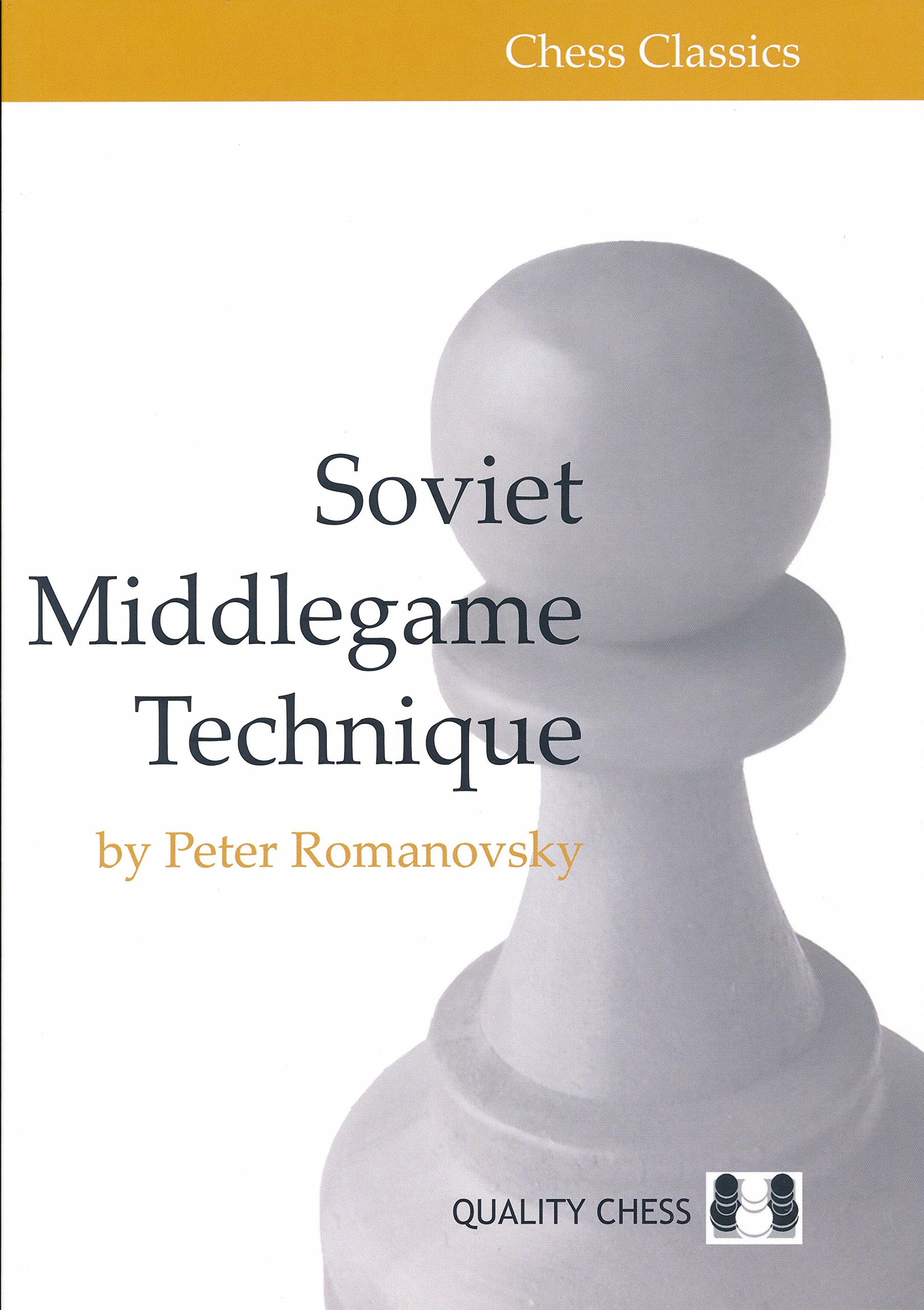
This book is a classic, an important read for aspiring players and I needed to replace my copy after I had lent it out and it wasn't returned.The book arrived in bag instead of a box with the corner of its binder side bent. This book is premium priced and it arrived in bad condition. Upon arrival at home, my family ink stamped the inside cover that it was from my personal library with my name imprinted. When I arrived home and saw the biding damage, I felt ripped off.
R**S
This Soviet classic is a tour de force of the middle game, no ambitious player can be without it...
The Quality Chess publication of Soviet Middle Game Technique is actually an amalgamation of the two original works into one 412 page volume. The Introduction and chapters 1-8 make up Part One: Planning. This deals with things like basic concepts; dynamics; harmony; open lines; manoeuvring; two bishops... In short all the stuff one would find in a fairly advanced treatise on chess. Part Two: Combination: deals with the forcing nature of tactics to achieve a given objective. Here, in chapters 9-21, the skill and art of the combination is presented holistically as some thing which develops organically from the positional factors covered in Part One. Thus, the reader is introduced to such things as: the aesthetics of combinations; modern history of combinations; combinative attack with two bishops;harmonious action of rook & bishop; the interference device in various combinative schemes...The thing that strikes me about this book is the precise use of language in explaining the complexities inevitably encountered in understanding a difficult game such as chess. Credit for this belongs as much to the translators as to the author. Each chapter begins with a thought provoking discussion of the forth coming topic and this comes across most cogently in chapter 21, How Players Think During the Game where Romanovsky articulates the "spirit" and "demands" of middle game positions that capture the attention and direct a player's thoughts throughout a game. It is here that the author does some of his best writing, examining the interdependence of thought, calculation and final position assessment envisaged in the mind's eye: The whole thrust being greater "self-disciplined thinking". Those readers anticipating copious analysis will be disappointed as sub-variations are minimalist to say the least. Rather the narrative is moved along by some fine prose that does an excellent job to instruct and enlighten. This readability along with the book's spacious layout and crisp, frequent diagrams - a pleasing feature of the Chess Classics series -make the whole work easy to read and understand given the some what abstruse nature of the content. With its games and examples drawn from the mid 19th century till the edition's revised and updated publication date (1960), S.M.G.T. is undoubtedly a classic of its kind. For those wishing to augment their study of, say, Nimzowitsch's My System or Giants of Strategy by Neil McDonald, two books which might be considered in a similar vein, Peter Romanovsky's book is a perfect fit. In summary money well spent for ambitious chess enthusiasts seeking to advance their knowledge of a relatively neglected area of the game.
I**G
Master Level
I may be reviewing this book prematurely after reading a bit of the introduction...However, the book does seem a bit advanced, for upper class players.The book definitely does not disappoint, it's just my style in fact. When you pick up a book and read it, you kind of get a feel for where the author is coming from and his or her takes on the topic, but I definitely feel this book can teach me a lot of things if I put the necessary time into it.I wanted to post this review closer to the time I actually received the book, about a few weeks ago, but I am currently indulging myself on Reinfeld's "Complete Chess Course," I consider that book to be a major step below in terms of strategy and depth of Romanovksy. Especially "chess theory." It's a great book, but this one is like master level in my opinion.I actually think the book is better than Nimzowitsch, in terms of strategy and how powerful the book feels in my hands, I would probably consider reading the "lesser" books first, even if they are masterpieces.An overview of the entire course would require a more indepth review, but I couldn't restrain myself from giving House of Staunton an A+ for shipping and handling, and 5 stars at that.I would also like to say that this review may not be entirely based on somebody who has read the whole book, I have skimmed through it many times and came to the same conclusions that people who read it have come to. It's a strategically sound and tactical grimoire as well that just seems like a master level book, or something that you should read before ever coming a "Master" of chess. Not without.
M**H
fantastic!
The only (minor) issues I had with the book are:1. The author's name and book title are at the top of EVERY page. Having the chapter title at the top of at least one side is helpful to more quickly locate sections of interest.2. At least one diagram was from a side variation, NOT what was actually played in the game. I had to scratch my head for a few minutes until I figured out what I was looking at. Once I knew to keep an eye out for such things, it became less of a problem.Other than those two minor things, I THOROUGHLY enjoyed the book, and feel that all those dog-eared pages and highlighted sections (that I put in, as the book was purchased new) will be revisited quite often.
Trustpilot
3 weeks ago
5 days ago