Buy anything from 5,000+ international stores. One checkout price. No surprise fees. Join 2M+ shoppers on Desertcart.
Desertcart purchases this item on your behalf and handles shipping, customs, and support to Spain.
๐ท Elevate your visual storytelling with Canon G1 X โ where power meets portability.
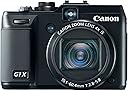
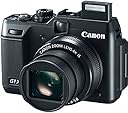
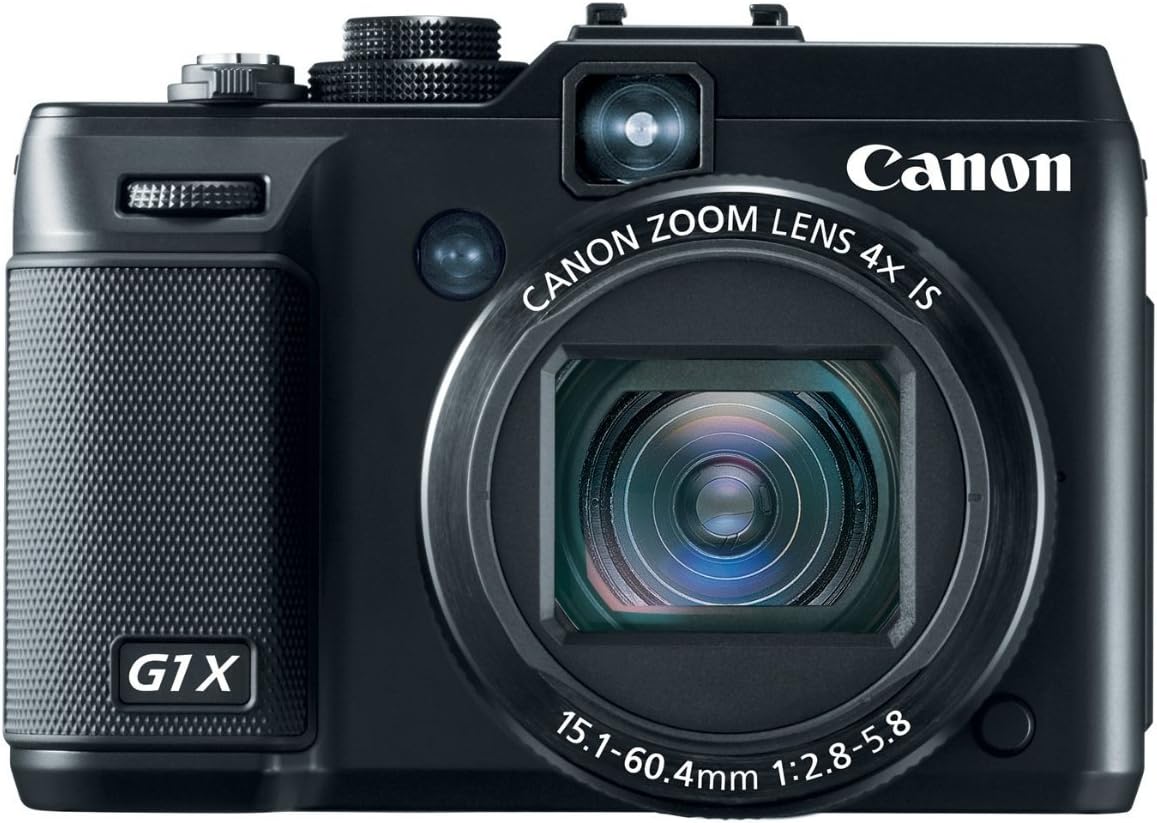
The Canon G1 X is a high-end compact camera featuring a large 1.5-inch, 14.3 MP CMOS sensor paired with DIGIC 5 processing, a 4x wide-angle optical zoom lens with image stabilization, and a 3-inch vari-angle LCD. It supports professional 14-bit RAW + JPEG shooting and full 1080p HD video recording with stereo sound and HDMI output. Designed for serious enthusiasts and professionals seeking DSLR-quality images in a portable form, it excels in low-light performance and creative flexibility, though it is larger and slower than typical point-and-shoots.
| ASIN | B006UMM2BW |
| Age Range Description | Adult |
| Aperture modes | F2.8-F5.8 |
| Are Batteries Included | No |
| Aspect Ratio | 16:9 |
| Auto Focus Technology | Hybrid |
| Autofocus | Yes |
| Autofocus Points | 9 |
| Best Sellers Rank | #138,082 in Electronics ( See Top 100 in Electronics ) #1,235 in Digital Point & Shoot Cameras |
| Bit Depth | 14 Bit |
| Brand | Canon |
| Built-In Media | Instruction Manual |
| Camera Flash | Built-In |
| Camera Lens | 4x optical zoom, 28mm ultra wide-angle lens with optical image stabilizer, 1.5-inch, 14.3 MP High-Sensitivity CMOS sensor, and DIGIC 5 Image Processor |
| Color | Black |
| Compatible Devices | Canon EF, Canon RF |
| Compatible Flash Memory Type | SD, SDHC, SDXC |
| Compatible Mountings | Canon EF, Canon RF |
| Connectivity Technology | HDMI, USB |
| Continuous Shooting | 1.9 |
| Customer Reviews | 3.9 out of 5 stars 153 Reviews |
| Digital Scene Transition | zoom |
| Digital Zoom | 4 |
| Digital-Still | Yes |
| Display Fixture Type | Articulating |
| Display Maximum Resolution | 922,000 pixels |
| Display Resolution Maximum | 0.922 MP |
| Display Type | LCD |
| Effective Still Resolution | 14.3 MP |
| Expanded ISO Minimum | 100 |
| Exposure Control | Manual |
| File Format | JPEG Exif 2.3, RAW, DPOF 1.1 |
| Flash Memory Speed Class | UHS-I or faster |
| Flash Memory Type | SD/SDHC/SDXC |
| Flash Memory Video Speed Class | 6 or higher |
| Flash Modes | Auto, On, Off, Slow Synch, Rear Curtain Synch |
| Flash Sync Speed | 1/200 or 1/250 |
| Focal Length Description | 15.1-60.4mm (35mm equivalent) |
| Focus Features | Hybrid |
| Focus Mode | Manual Focus (MF) |
| Focus Type | Auto Focus |
| Form Factor | Large sensor compact |
| Generation | 1 |
| Global Trade Identification Number | 00854587178467 |
| HDMI Type | Type C Mini HDMI |
| Hardware Interface | HDMI |
| Has Color Screen | Yes |
| Image Capture Type | Stills & Video |
| Image Stabilization | Optical |
| Image stabilization | Optical |
| Item Weight | 18.8 Ounces |
| JPEG Quality Level | Fine |
| Lens Construction | 4 |
| Lens Type | Zoom |
| Manufacturer | Canon Cameras US |
| Manufacturer Part Number | 5249B001 |
| Maximum Aperture | 5.8 f |
| Maximum Focal Length | 112 Millimeters |
| Maximum Image Size | 4.3 Inches |
| Maximum Shutter Speed | 1/4000 Seconds |
| Metering Methods | Multi, Center-weighted, Spot |
| Minimum Focal Length | 28 Millimeters |
| Minimum Shutter Speed | 60 seconds |
| Model Name | G1 X |
| Model Number | 5249B001 |
| Model Series | G1 X |
| Movie Mode | Yes |
| Night vision | No |
| Optical Zoom | 4 x |
| Photo Sensor Resolution | 14.1 MP |
| Photo Sensor Size | 1.5-inch |
| Photo Sensor Technology | CMOS |
| Real Angle Of View | 10.5 Degrees |
| Remote Included | Yes |
| Screen Size | 3 Inches |
| Self Timer | 10 Seconds |
| Sensor Type | CMOS |
| Shooting Modes | [Multiple shooting modes, specific values not obtainable from the provided information] |
| Skill Level | Professional |
| Special Feature | Portable |
| Specific Uses For Product | Videography, Photography |
| Supported File Format | JPEG Exif 2.3, RAW, DPOF 1.1 |
| Supported Image Format | JPEG, RAW |
| Total Still Resolution | 14.1 MP |
| Total USB 2.0 Ports | 1 |
| Total USB Ports | 1 |
| Total Video Out Ports | 1 |
| UPC | 854587178467 013803143997 138031439978 163120770625 |
| Video Output | HDMI |
| Video Resolution | FHD 1080p |
| Viewfinder | Optical |
| Viewfinder Magnification | 0.5x to 0.7x |
| White Balance Settings | Auto, Cloudy, Daylight, Flash torch |
| Wireless Technology | Yes |
| Write Speed | 1.9 fps |
| Zoom | Optical Zoom |
G**R
After almost a year, still love this camera
he Canon G1X is the newest professional level compact camera from Canon. The G1X offers many features normally found on the larger DSLR's in a much smaller package. The G1X however is probably not the best choice for the photography beginner due to its complexity and price point. I decided to update my review of the G1X to incorporate what I've learned about it over the last 10 months. This was originally written when I had stepped up from a G12 and before the G15 (which is closer to a G12) was introduced later. The Canon G1X had an original retail price of $799 placing it closer to the price tags of the entry level DSLRs than to your normal point-and-shoot camera. Amazon currently is running it for $549 and it has been as low as $499 on sale. Used models can be picked up usually starting at around $450. Canon has a great video on their website which describes the G1X in detail and also the mindset of the engineers and designers responsible for it. Some hand's on observations include: 1) The lens is a lot nicer and it basically replicates a EF 28-115mm dSLR (no you can't change the lens) with full-time (turn-off able) power IS which works in video or still mode. The CMOS sensor size means the lens is really a 15.1mm to 60.4mm with a 1.9x crop-factor (compared to a 1.6x on the 7D) or a 4.6x on the G12 with it's 6.1mm lens. This is a big improvement. There is an adapter available to use 58mm standard filters. However, you cannot use the filters and the optional screw on "tulip-style" lenshood at the same time. Later I bought a lenscover that retracts similar to the G12/G15. However, using this precludes using the 58mm filters. A CP filter comes in handy. 2) Max aperature is up to F/22 from F/8 on the G12 due to that bigger lens. Minimum is a variable F2.8 to 5.8 which makes it the same as a stock lens. I wish they could get the minimum down more, but it is decent in low light. 3) The camera feels "better built" meaning it feels solid. it is not a typical point and shoot that you will be putting in a normal pocket though. It is quite bulky 4) There is a hot shoe and it is compatible Speedlites 270EX and higher. With a 430EX mounted it is very top heavy. However, you can use a ETTL cord for off-camera flash. They also offer a flash bracket to move the flash position to the left of the camera. It does not have full ETTL functionality. 5) The in-camera flash now pops up (from behind the Canon logo) and when it is retracted is off. 6) The ISO dial is gone from the top of the camera (it is now up arrow on the back) and the exposure compensation dial is now under the settings. The exposure compensation dial now goes -3 to 3 and you can immediately see the impact on the LCD. ISO range is 100-12,100. Auto ISO is adjustable but the max auto is 1600 (I turn mine down to 800 usually). It is not very strong at higher ISO ratings. Of course, I am spoiled to the low light capabilities of the 5D Mark III now. But it is also not a professional level DSLR. 7) It shoots RAW (one of the reasons for getting a G-series in the first place) and you can shoot jpeg+RAW and change aspect ratios on the jpeg shots such as my favorite 1:1 "Photosquared" shots. 8) 14.3MP is nice and allows you to easily crop in on shots and still have good detail. 9) I do not do much video yet, but you can start filming with the push of a button from any mode on the camera instead of having to go to film mode. Built in stereo microphones (and wind filter function) but no way to hook in an external mic (that is a shame) 10) Max exposure time is 1 minute but there is still no "bulb" setting for night-time shooting. Here is also a link to the full specifications on the G1X The G1X fits a niche for DSLR owners looking for something smaller to carry with them as a day-to-day or travel camera. While it does not replace the flexibility of the DSLR with their inter-changable lenses and L-series glass, it is a great "back-up" camera and/or everyday camera. Many of the shots that I share on Google+ and Facebook are taken with the G1X. See some more shots at [...]
B**0
I have good news and not so good news !
The Canon G1X takes a good picture in a wide range of lighting types and levels. It's well made and has held up to traveling in my pocket or luggage when riding my motorcycle. There are a few negatives to this camera. Firstly, shutter lag. With today's hi-speed processors there's just no excuse. Secondly, the lens has a narrow zoom range and I find the Macro feature on my G11 to be better suited for close-ups. Thirdly, the lens extends out from the body making it a bit bulky. Lastly the HDR setting gets confused. In scenes with a wide dynamic range, the image recorded looses the dramatic effect of the scene opting for a "middle of the road" exposure. Since I tend to shoot in Aperture or Shutter Priority, it's often not an issue but I find it annoying that my phone takes a better photo under those specific conditions. If using HDR is important, better to over and under expose in manual mode and use software to get the desired effect.
E**K
Good IQ, good build quality, slow performance, poor focusing
I really, really liked this camera, but decided to return it due to focusing issues. There's a lot to love, but it just wasn't for me. First, the good: - Nice image quality, especially distant subjects - Nice handling, especially if you're used to G-series or EOS bodies - Relatively compact, considering the size of the sensor. Low-end dSLR image quality in a smaller package. - Very good low-light performance - Decent (practical) zoom range suitable for the vast majority of needs - Articulating LCD is nice, solid - Has a real thumb dial as well as a wheel in front of the shutter, making it excellent for Manual exposure shooting (one for the f/stop, the other for shutter speed) - Raw mode Now, the bad: - Close focusing ability is horrible compared to other G-series; lens design limitations due to large sensor - Close focusing accuracy is not so good; mine misfocused a lot - Slow slow slow. Slow focus, slow shot-to-shot, slow playback-to-shoot performance - Exposure compenstation dial requires the use of left hand; better to shoot in 'M' and ignore Exp compensation dial altogether; f/stop and shutter speed can be controlled via dial/wheel for one-handed shooting - Depth of field. While the larger sensor provides more bokeh than other G-series cameras, it does not provide enough bokeh to really be that desirable. The larger sensor is also less forgiving than previous G-series with regards to focusing. With mediocre focusing performance, this is a real issue. If you're shooting wide open, zoomed to tele, and/or focusing close, there's a good chance your subject will not be sharp. At least with dSLRs (larger sensors), focusing is far more precise. - Price is too high considering the performance, size, image quality, etc. But then again, Leicas are overpriced too, all things considered :-) I'm a photographer who shoots professionally with Canon 5D2 bodies, and have been shooting Canon SLRs, both film and digital, since the mid-90s. I picked up the G1X after giving my G11 away to a friend. The reason for wanting a smaller camera was mainly for personal projects and lightweight travel where image quality isn't critical (I wouldn't dare shoot a paid commission with anything less than my dSLRs). I think for the price, you could do much better getting a budget Micro Four-Thirds (MFT) body and a lens or two and save a significant amount of money. Either that or an entry level dSLR kit if size isn't too much of an issue. The G1X will probably outperform most MFT bodies in low-light, but for the price, there are simply too many shortcomings. For 30-40% less money, the G1X may be worth it. At its current price, no way. I settled on an Olympus EPL1 with pancake lens and zoom lens for a little more than half the price of the G1X. It doesn't perform as well as the G1X, nor is it built as good, but for the money, I can't complain. Plus the Oly with pancake lens mounted is more compact than the G1X. ###################################################################### EDIT 6/13/2012: Downgraded to two stars after using the G1X again: * Image quality - 4 stars * Focusing - 2 stars * Speed - 2 stars * Price - 2 star * Size - 1 star So that's 11 stars/5 = 2.2 stars rounded off to 2 stars. I noticed that the price of the G1X has dropped some twenty bucks. When it goes down another $150, I think it might be a decent buy and perhaps I'll upgrade my rating :-). The reason for this update is that I shot about a hundred frames this evening with a friend's G1X, and it was slower than I remembered (used a Class 10 SD card). Shot indoors, incandescent lighting. Focused quite poorly in this lighting, which is to be expected. This was especially true at closer range (~4 to 8 feet). However, for those images I was able to capture, image quality was quite good, even at ISO1600 (though I missed several shots due to focusing and slowness). I also used another friend's Panasonic GH2 this evening. What a fantastic camera. Fast focus, more compact than the G1X, and the flexibility of the interchangeable lenses are a win win win in my eyes. 20mm/1.7 pancake lens is very compact and much faster than the G1X lens. 14mm-42mm lens is a nice all-around street lens. Longer teles are also available, but I didn't try any; it's nice to have that option though. Image quality was good up to ISO1600. Image quality seems pretty comparable to the G1X, but with more flexibility. I think I just found my next camera. Price for the body only is about the same as the G1X, but I already have some micro four-thirds lenses. The GH2 is a camera I would consider using for certain paid commissions. Maybe not as a primary body, but certainly as a backup to one of my 5D2s. I think I just found my next camera. I still have to try the Olympus OM-D, which another friend of mine raves about. More thoughts... - If you're the type of person who wants good low-light image quality, but don't care about performance, this camera may be for you. - If you like shooting static subjects (not at close range) and can take the time to frame and focus and snap, and don't mind waiting to take another shot after you've chimped the one you just took, this camera may be for you. - If you do like shooting moving subjects, but you have the luxury to prefocus and wait for the "moment" (i.e. performer on stage), then this camera may be for you. - If you want to capture dynamic scenes (street photography, kids in action, etc, etc), then look elsewhere. A dSLR would be a better choice if you don't mind going bigger. If you like the idea of carrying something compact, there are better performing cameras out there, many of which are smaller. However, you *might* have to sacrifice a bit of image quality (of which there is plenty) to get there. It's not a deal breaker for me, and it very likely might not be for you either. Look at Olympus/Panasonic micro four thirds cameras and Sony NEX for alternatives. If I was only concerned with photographing static subjects at farther distances, I would give this camera 4 stars (5 stars is reserved for perfection). ####################################################################### EDIT 8/2/2012: Price is down to $699 as of today. If it drops another $50 (preferably $100), I just might buy it again as a throw around camera. A friend of mine recently bought the G1X on my recommendation, and he's quite happy with it. He works as an architect/planning consultant who travels a lot. He's not a photographer, but he wanted something with good IQ, and he didn't mind spending the money to get this. He didn't necessarily need compact, but wanted something portable (i.e. smaller than a dSLR). His only complaint is that he wishes the lens was wider, which is understandable considering his interest in architecture. All in all he's happy. He likes being able to take low-light photos going into dusk or indoors, he likes the articulating LCD screen, he likes the build quality and handling, and he likes the size. The video is something he's been happy with too, often panning scenes that his camera can't capture due to lens limitations on the wide end. If he were the type of person to write reviews, he'd probably give this camera 5 stars based on how this camera meets his specific needs as a traveling architectural photographer who shoots static scenes in jpeg. That's not me, so the 2 star review remains :-)
M**C
A great camera with a few compromises
I once read a comment on a photography blog that most consumers who purchase a DSLR with a couple of kit lenses, stick with one (usually a fixed 35mm or a 15-80mm, or something similar, zoom). It becomes a hassle to carry more lenses, and sometimes the camera gathers dust. I consider myself an amateur photographer, probably not at level of what people call "pro-sumer". I understand the basics of how to create a good photograph, but I just don't take enough photos every day to get to the level of some of the beautiful photos I see there, unless I'm very lucky. So this review is based on being a fairly experienced amateur. I had a nice DSLR with three good lenses, but I was using the smaller zoom lens almost exclusively. I decided that if I was going to take a lot of photos and really get better, I needed a camera that was powerful but a lot smaller. Something I could throw in my messenger bag and take more photos. And I just got annoyed carrying everything I needed to take a decent photo. So, I sold my DSLR, and started the process of which would meet my needs. I wanted it to take outstanding photos, to be well made (of course), and give me a lot of overhead in powerful features that as I improved, I wouldn't be thinking, "maybe I should have gotten another DSLR." I rejected the super zoom cameras, because even though they're great for capturing images far away, they suffer from a tiny imaging sensor, which means that they're not all that great in low light situations. And since I don't do much nature photography where I'm trying to take a photo of some animal 1000 yards away, it really met none of my needs. It came down to the Canon G1 X and the Sony RX-1. Of course, the latter is over $2000, and if I'm going that high, I might consider one of full frame DSLR's or similar. What impressed me about the G1 X were reviews here and elsewhere that seem to indicate professional photographers were carrying it as a backup camera, or one that they carry when they don't need their full kit of lenses and bodies. And although the price is much higher than super zooms and almost any point and shoot camera, I knew I was getting a lot more. All that being said, here's what you should expect from the camera: 1. It has one of the largest image sensors available in any camera. It's just slightly smaller than what you would find in a typical DSLR, but larger than you would get with a 4/3 camera and several times larger than what you would get in a $200 point and shoot. This means two things: you get outstanding low light photos, and high ISO performance without a lot of noise and artifacts. 2. Build quality is at the level of higher priced Canons. The body is solid metal, instead of plastic. It has nice rubber grips. You don't even find this in lower priced DSLR's. 3. User interface, though complex, is intuitive for those who have experience with higher quality digital cameras. 4. Compact dimensions, though not as small as one of the generic point and shoots. What I found problematic: 1. Big sensors on small cameras give some physics issues, including depth of field. If you love those simple cameras that give you an almost infinite depth of field, this one won't do it. This really isn't a negative, but just a warning if you're looking for a point and shoot camera that is literally that. 2. The manual is in a pdf file on a CD. I hate this because sometimes you need to look up something, and either I print out the manual, or open up my iPad to read the manual. By that time, I give up. 3. Even though the interface is intuitive, it does take some practice to get the settings right for a particular shot, especially since there is no handy manual. I would suggest one of the guide books when you purchase this camera like David Busch's Canon PowerShot G1 X Guide to Digital Photography. It actually walks you through proper settings to get good photographs. 4. I don't like the optical viewfinder. It's basically useless (there's no information or anything there), and when the lens is extended, you can see it in the viewfinder. 5. The lens isn't threaded (even though it kind of looks like it does), so you have to purchase an adapter for high quality filters. My conclusion. This isn't your every day point and shoot camera, it is much more advanced. It has a learning curve (which I have found to be a bit lower since obtaining the guide book). If you're looking for a point and shoot, and just think a camera at this price must make it the best one out there, then you are right and wrong. It is in the top two "point and shoots", but to get amazing photos, you really have to learn how to use it. Also, you have to understand how to use a compact camera like this with a huge imaging sensor. I'm deducting a star for my issues with the camera, but I believe it is superior to many lower priced DSLR's and 4/3 cameras. And at its current cost point, it is a great value.
L**K
Canon PowerShot G1 X: An Excellent Advanced Digital Compact Camera, Especially for Low-Light/High-ISO Photographs
This is not a 'perfect' camera (what is?). It is not the nicest-looking (best styled) compact camera (in my opinion, the best looking are the Fujifilm X100 12.3 MP APS-C CMOS EXR Digital Camera with 23mm Fujinon Lens and 2.8-Inch LCD and the Leica M9 18MP Digital Range Finder Camera (Black, Body Only) . Nor is it the most prestigious. And it is definitely NOT a replacement or a substitute for a DSLR camera. If it is not any of these things, then what is it? It is, in my opinion, simply the best designed, the best performing, and the most advanced compact digital camera on the market today and is, again in my opinion, the very finest such camera yet made. Many people, such as myself, do not want an interchangeable-lens camera for various reasons (including the expense, the inconvenience, and necessity to carry about a rather large array of camera equipment). Yet some of those people, including myself, want an advanced, highly capable, camera with a high-quality lens, a large sensor, and the ability to take pictures under many varied conditions (including low-light without flash) and have those pictures turn out exactly the way they'd like. In other words, they want pictures the equal of those produced by most DSLRs - and they (and I) want to be able to achieve this quality 'in-camera' rather than having to use computer software afterwards. There is really no technical reason why such a camera couldn't have been made before but it appears that this one is the first that can actually achieve that goal. As a preamble, I encourage you to read EVERY review of this camera which appears on Amazon, as well as all of the comments thereto. Plus I also suggest that you read reviews on other sites (including the 'professional' reviews). After all, this is a very expensive camera and you want to make certain that you have obtained every bit of information available to you before you buy it. Here on Amazon you will see almost as many 'con' reviews and comments as 'pro' ones. Some writers feel it is too expensive for what you get. Some writers feel it has too many disadvantages, one way or another. Many of the writers, very obviously, do not truly know how to use it. And there are some people who just don't like it. Some reviewers have purchased the camera and returned it after just a short period of ownership. Frankly, I believe that they did not learn to properly use it. This is a very advanced camera and learning it will take a lot of time. A couple of weeks won't do. There are also a few reviewers here who, while praising the camera for its abilities, are nevertheless somewhat negative in tone; these appear to be written by people who own DSLR cameras and are looking for a more convenient alternate to be used at certain times. Unfortunately, it appears to me (and I could be wrong of course) that they want a compact fixed-lens camera which has EXACTLY the same types of design, features, and, especially, controls of their interchangeable-lens camera. It 'ain't' going to happen! I do want to say that all of these people's opinions are, of course, just as valid as mine and are to be respected (and you'll surely want to consider them) - but I disagree with them all. To begin with, this is a very sophisticated and complicated instrument. In order to derive the maximum benefit from its capabilities, you must be very familiar with the technical fundamentals of photography - or be willing to learn them. Otherwise, if you're not going to teach yourself to use it to its maximum advantage, why pay $800.00 for this camera? If you don't want to take the time to learn these things, feeling perhaps that the effort in obtaining this knowledge is too time-consuming for you personally, or if you just want to take ordinary snapshots and don't really need the capabilities of an advanced camera, in my opinion, you could and should buy a much less expensive one which will suit your needs. This camera would definitely not be for you and I say that without meaning to be disrespectful to anyone. If you're still interested, however, I want to tell you right now that this is a VERY long review and, while I do apologize for its length, I hope you will read all of it to understand what I personally like in a camera, why I particularly like and recommend this one, and why I feel that it is worth every penny I paid for it. Ten years ago, I bought a Canon PowerShot G2 4MP Digital Camera w/ 3x Optical Zoom which, at the time, was one of the best cameras available. It had many good features; it had a nice, bright f/2.0 - 2.5 maximum aperture across its 3:1 zoom ratio but it also had some disadvantages. For example, the smallest f-stop was only f/8 - this, to me, was unsatisfactory (I had not seen that particular specification listed anywhere; had I known about that minimum f-stop, I might not have bought the camera!). In addition, the maximum shutter speed was only 1/1000 second and the ISO range was from 50 to only 400. In other words, this camera did not offer a high dynamic range. As a result of these disadvantages, I missed a number of pictures I would have liked to have had. In addition, it had only 4.0 mega-pixels; though high at the time I bought it, today only cell-phones offer that little. Since that time I have been looking for something better but I had no luck until now. Every camera I saw (including other models in the Canon PowerShot G line) had various disadvantages which precluded my consideration of them. I want a fixed-zoom-lens camera with a wide range of ISO settings (the equivalent of slow-to-fast films), the ability to take good, noise-free ("grain-free") pictures at high ISOs (sensitivities) so I can take low-light pictures without using flash, a relatively fast lens which can also stop down to at least f/16, and the ability to take pictures in a wide range of shooting modes (automatic, manual, etc). In other words, I want a camera which has most of the capabilities of a DSLR but without the need to change lenses. When I read about the Fujifilm X-100, it seemed to be very good but it is clearly out of my price range (as is the Leica - but I can always dream). In addition, though it has a large APS-C-sized sensor (the same as in DSLRs and even larger than the G1 X) and its lens is fast (f/2.0), it is fixed focal length only (no zoom) and it has only a 12.3 mega-pixel sensor (a relatively low figure at its price by today's standards) and, while, if the camera were in my price range, I could accept all of that, most importantly, according to "Popular Photography's," test results, its measured noise figures are mediocre, even at only moderately high ISO settings. I am afraid that that is something I do not want to accept. There are several Sony cameras which have good noise figures at high ISOs but they have too many other disadvantages, at least for me, to consider them. In addition, though I'm sure that this is not representative, I personally know TWO people whose expensive Sony cameras 'died' shortly after the warranty expired - and Sony would do nothing for them. Please note that I'm sure this is an anomaly - I own many Sony products though not cameras - and I have never had problems with any of them; nonetheless, though I'm certain that most Sony camera owners are completely satisfied, these people's experiences has left a sour taste in my mouth for Sony's cameras. The Fujifilm X10 12 MP EXR CMOS Digital Camera with f2.0-f2.8 4x Optical Zoom Lens and 2.8-Inch LCD, which was introduced recently, IS in my price range and, as soon as I saw it, I put it into my Amazon Wish List. However, when "Popular Photography" reviewed it in the March 2012 issue and I saw the rather dismal high-ISO noise figures listed for the camera, fast lens or no, I immediately removed it from my Wish List. (I have been reading "Popular Photography" for over fifty years now and I have learned to trust their test figures implicitly.) Please note that I am sure that the X10 is a fine camera and will please all who buy it but it does not fulfill my requirements. (However, you should keep in mind that the Fujifilm X10 does cost two hundred dollars less than the Canon G1 X.) I first heard about this new Canon G1 X 14.1 MP CMOS Digital Camera with 4x Wide-Angle Optical Image Stabilized Zoom Lens Full 1080p HD Video and 3.0-inch Vari-Angle LCD in January of this year and last month I received an email from "Popular Photography" about their test results (which now appear in the April 2012 issue). As soon as I saw their test results figures (and read the entire review to which the email linked), I immediately pre-ordered the camera from Amazon! This is the first camera in ten years to induce me to part with 'coin of the realm' and buy it. You can find all three of these reviews online at "Popular Photography's" site if you wish to read them. Of course, when I ordered the camera, I had no idea whether or not I would really like it. I was taking a chance. But now that I actually have the G1 X, I can only say that I am VERY pleased with it, as pleased as possible. Among its other attributes, its lens stops down to f/16, something I have sorely missed for the past ten years. Do you know the old photographer's trick? On a bright sunny day set the aperture to f/16 and then set the shutter speed to the speed of the 'film' [the ISO rating you have chosen]. Set the focus either to Infinity or to ten feet [depending on the nature of your main subject]. Exposure will be perfect and everything will be sharp. On cloudy days, set the aperture to f/11, and so forth. The wider the aperture, of course, the more critical focusing becomes. (I always recommend 'bracketing' your shots, both for focus and exposure; it's easy to do with this camera, either automatically or, my own preference, manually.) This camera, with its relatively large, relatively fast lens (at the wide angle setting; the range is f/2.8 to f/16), its wide range of shutter speeds (60 seconds to 1/4000 of a second), and its ability to create superb pictures even when using a high ISO setting, thus offers a VERY high dynamic range. This means that you will be able to take pictures in just about any lighting condition (and without using flash if that is your preference, as it is mine) and the pictures will turn out exactly the way you want them. I have uploaded some pictures along with the information about the parameters. Other people have uploaded even better pictures than mine and I hope you will look at all of them. You will see just what this camera can achieve under many varied conditions. I have also uploaded a (rather pathetic - sorry about that) 1-minute video which, bad as it is, does show the image capabilities of this camera under some trying conditions (and, if you see any noise, it is solely due to the fact that I had to compress the original video to conform to Amazon's requirements; there is absolutely NO noise in the original video). And in the still images, I see hardly any 'noise' ('grain') no matter under what conditions I take a picture. While the lens is not as fast as I should like (f/2.8 [moderately fast - but I really wish it were f/2.0] at its wide-angle setting to f/5.8 [very slow - and I really wish it were faster] at its maximum telephoto setting), the fact that you can easily use high ISO settings (the range is ISO 100 to ISO 12,800) with little or no loss of image quality (unlike the Fujifilm models) MORE THAN MAKES UP for the lack of lens brightness (and, as a trade-off, slower lenses can produce sharper pictures as focus is not as critical as it is with fast lenses). In other words, you can use a sensitivity rating of ISO 6400 (and sometimes, depending upon the nature of the subject, even ISO 12,800) with hardly any visible noise in the picture! As far as I know, there is no other compact camera on the market which can achieve that! Why does this camera have this capability while other competitors do not? It is because of the sensor size in it. Its sensor is 1.5 inches (the Fujifilm X-10's sensor s only 2/3 inch), it has 14.1 mega-pixels, plus it has Canon's very advanced design for noise reduction (which, by the way, is user-adjustable). A 1.5 inch sensor is almost the same size as the APS-C-sized sensors used in most DSLR cameras. I believe that no other compact fixed-zoom-lens camera has such a large sensor. Naturally a larger sensor requires a larger (and heavier) lens yet Canon has managed to design the lens to a fairly reasonable size and weight (and the camera's overall weight is also quite reasonable - plus it is well-balanced). This absolutely first-rate lens (there can be no other description for it) has a 4:1 zoom range; this may be an inadequate zoom range for some people (especially those who favor 'superzooms') but note that, everything else being equal, the lower the zoom ratio the sharper the lens ("prime" lenses being the sharpest of all) and the lower the zoom ratio, the lower the lens distortion. This lens's zoom ratio is certainly adequate for me! And it's the large sensor and the large sharp lens which allow for the truly superb pictures this camera produces. A large sensor coupled with a relatively large lens has another major advantage: the ability to make excellent closeup 'portrait' photos (which allow the main subject to be in sharp focus while the background is blurred). Yes, this can be done with post-processing software but here it can be done in-camera. DSLRs can do this routinely but few compact cameras can. (You can also get the same results using fully manual aperture/shutter settings and manual focus.) As with most other digital cameras, there are various scene settings (Kids & Pets, Fireworks, Sports, etc.) which I have not yet used but which will probably come in handy at various times. Multiple facial recognition (as well as red-eye reduction, both prevention before and fixing after taking a flash picture) is also offered as is blink indication. Regarding flash (which I myself use only rarely and then I use only the built-in flash), the camera does have a 'hot-shoe' so that, with an optional bracket, very sophisticated flash attachments (Canon Speedlights for example) can be used. In addition, the built-in flash can be physically lowered into the body when you're not using it, a nice touch. In the 'P' Program setting, I leave the flash in the 'on' position but with the flash body lowered into the camera so it won't fire. Then, when I occasionally do wish to use flash, all I have to do is to raise the flash body and it's ready to go. Naturally burst shooting is present and it appears to be very sophisticated. Automatic bracketing is another feature and, using the available HDR setting, three images can be combined automatically to allow for a high dynamic range (note that the subject must not move; this is primarily for landscapes or cityscapes). This camera has a myriad of possible adjustments; to obtain maximum benefit from them will frankly require a long learning curve (I have just scratched the surface!). However - and this is a BIG however - right out of the box you can use its Auto setting and probably 95+% of your pictures will come out fine (and they will be of far higher quality than almost all other compact fixed-lens cameras and on a par with any produced by DSLRs). If and when you desire to be a bit more creative (in camera), well you can 'play' with the menu adjustments and set the camera to do what you like. (And you need not worry about messing up the settings: there is a quick Reset All option which sets everything back to factory defaults.) Just as on a DSLR, there are options to take pictures in several ways: fully automatically; aperture-priority (you set the lens opening, the camera decides the shutter speed); shutter-priority (you set the shutter speed and the camera decides the aperture); and full manual (you set everything). (This is what I use most of the time.) Note that the camera will show you "correct" settings (what it thinks is correct) and you can reset your settings to what the camera has decided or you can ignore that altogether. This model also features a terrific articulating LCD screen. So did my G2 but its size (about an inch diagonal) and its brightness were severely wanting. Not so with this G1 X; the LCD screen is big and bright and I have to tell you that it is my opinion that an articulating LCD screen is the only way to go. The advantages of having one of these becomes very apparent as you use it. As a matter of fact, I would not, under any circumstances, purchase an expensive camera which did not have one. Do you like to shoot in RAW (or RAW + JPEG) mode? It's easy with this camera (and fast too if you have a fast-writing card) and you do NOT need to use Canon's software to process and edit RAW images. [You can view a picture I took in RAW mode and adjusted via software - both done very quickly - in the uploaded photo section.] Are there any possible disadvantages? Sure there are! Automatic focusing in low-light situations is perhaps very slightly slower than I should like but, in fact, I use manual focus for the most part (I use manual aperture and shutter settings most of the time too) and the auto focus is not nearly as slow as some people suggest; obviously it is much faster in bright conditions but it seems adequately fast in most low-light situations too. I know that some people would rather have the ability to turn a lens ring to manually adjust focus (I would too) but such an option is probably not possible at this time with a lens such as this one. In any case, as I have been manually focusing via a menu option for the last ten years, this is no problem for me. (And outdoors I use the 'trick' I mentioned so I generally do not need to focus the lens at all. This 'trick' can be used for high-speed outdoor sports photography.) I also wish there were a "Bulb" setting for long exposures but, unfortunately, this camera does not support that. (Truth to tell, in my well over 50 years of taking pictures, I have used the "Bulb" setting only two or three times and that was with 35mm film cameras.) Some people have commented on the fact that the optical viewfinder does not display any information (even about focusing, as in true rangefinder cameras) as well as the fact that, at the wide-angle setting, the necessarily large lens obscures the lower left portion (the lens disappears when setting it to telephoto). Though they are correct, and this is one of the few really valid complaints about this camera, at least for me, this is not too significant: I use the optical viewfinder rarely, only when I am taking pictures outdoors under very bright light (and the 3-inch LCD on this camera is so bright - so far I have used it only at its default brightness, 50% - that it may not even be necessary to use the optical viewfinder as often as I did with my older G2, if at all). Nonetheless, the camera really should have an EVF rather than an optical viewfinder. As we're unlikely to see any more reasonably-priced true rangefinder cameras, I believe that the day of the optical viewfinder has passed. So if an optical viewfinder is of major importance to you, you may wish to look elsewhere. However, the mediocrity of this feature is not enough to sway my opinion or enjoyment of the camera. One disadvantage of this particular large lens and large sensor is that it cannot focus very closely (7 inches is about as close as you can get). If you do a LOT of Macro shooting, and do not wish to buy auxiliary lenses, this may not be the camera for you. I only rarely wish to use Macro so this is not a disadvantage for me personally. [But see my uploaded Macro picture of an Iris flower within the "View and share related images" section; if you know what you're doing, you can indeed take ultra-closeups with the G1 X.] I have to say that, though it is acceptable, I generally do not care for a 'press and click on' (or 'center-pinch') type of lens cap, much preferring the old-fashioned kind which just slips on (of course I want a cord attachment; this one has it). The internal mechanism of 'press and click on' types can break if not handled carefully. Just my opinion. And regarding the lens, WHY OH WHY do manufacturers of advanced compact cameras NOT put filter threads within their lenses? Canon makes you buy a Canon FADC58C 58mm Filter Adapter for G1 X which, like the adapter I had to use on my G2, is cumbersome and a plain pain to have to use every time you want to attach a filter. You must remove the lens surround ring (and put it somewhere), attach the filter adapter, and then attach the filter. You can't leave this Canon filter adapter mounted full-time because the lens cap won't work with it. So, when you're done shooting using a filter, you must reverse the procedure by retrieving the surround ring, removing the filter and the filter adapter, and then reattaching the surround ring in order to use the lens cap. This is BRILLIANT(?!?) design! [But please see my May 6 update about an inexpensive and complete remedy for this.] However you can see that these 'disadvantages' are QUITE minor (they could be called 'nit-picking') and have no bearing whatsoever on the quality of the pictures you will get or even the ease of taking them. This Canon has many individual and well-designed physical controls (thus minimizing the necessity for using menu options when actually taking pictures) yet very strangely this model does not offer one additional button (which it should have): it would have been nice had Canon included a white balance button to quickly adjust the setting. But the camera does have an 'assignable' button and I assigned white balance to it (so that takes care of that problem!). And, if a situation requires you to change the assignable button, even temporarily, to something else, that is quick and easy to do. The rest of the controls are, again in my opinion, exemplary in design. Of course, in the final analysis the question is: how good are the pictures? I have to say that, based on my own use of the camera, they are, in a word, SUPERB. If you look at the pictures (and the video) I and others have posted here, you can judge for yourself. Color in the 'standard' setting is positively beautiful, vivid and accurate. And, for certain circumstances, there are many color adjustments available (assuming you are shooting JPEG; if shooting RAW, you adjust the color via your RAW processing program). Black-and-White photos are luminous; I can think of no other word to describe them. Sepia-toned pictures are also very, very beautiful. If one were to try to compare pictures made with this model with similar ones made with much more expensive DSLRs, and one did it 'blind' (in other words he/she did not know which photos were made with which camera), I do not think anyone could distinguish between them. That's how high in quality pictures taken with this camera are. I hope that you have found this somewhat lengthy review to be of some value to you (sorry, there's still some more to go!). I have tried to explain my thought processes in the decision to replace my ten-year-old G2 (which I'm still keeping, however) with this new one (which is a much more advanced, sophisticated, and capable model) and, if your wishes are similar to mine, then I am certain that you will be as pleased with the G1 X as I am. I have a couple of small 'point-and-shoots:' the Fujifilm FinePix T300 14 MP Digital Camera with Fujinon 10x Wide Angle Optical Zoom Lens (Black) and the Kodak Easyshare Touch M5370 16 MP Digital Camera with 5x Optical Zoom, HD Video Capture and 3.0-Inch Capacitive Touchscreen LCD (Silver) . For what they are they are nice, and my wife and I take them along wherever we go. But, regarding quality of pictures produced, they're not even in the same ballpark as this Canon model. (I gave them 5-stars each but that is within their category, the only fair way, I think, to rate a product.) And you can, if you wish when you first obtain it, just set this camera to its full Auto setting and it will be as easy and as quick as any of those 'point-and-shoots' and, of course, the pictures will be vastly superior. I suggest that you start off that way and, as you become more familiar with it, you'll want to start trying some of the more advanced features. You will never 'outgrow' this camera. Obviously, if you have someone else take a picture, you would merely set the camera to Auto. And as further proof of ease of use (with the caveat that you know what you're doing!), please note that I took all of the pictures (and the video) after just a couple of hours of 'playing' with the camera and WITHOUT reading the instruction manual. Of course operation is rather straightforward and it's quite similar to that of my PowerShot G2. If you have ever used any advanced compact digital camera (including Superzooms, etc.), you should have no difficulty with this one. If you have never used such a camera, the voluminous (242 page) instruction manual found on the included CD-ROM will answer any and all of your questions about this particular camera. My 10-year old Canon PowerShot G2 featured construction of the absolute highest quality; it is still functioning as it did when new (and it still looks new!). This new Canon PowerShot G1 X appears to be constructed with the same integrity (and its body is made of metal, not plastic). In conclusion, it is my belief that, with this camera, no matter what you do or how "poor" a photographer you are (and I'm afraid I'm one of the most mediocre, at least aesthetically-speaking), you just can't help but get really fine pictures, something you can't always say with many other models. If you are in the market for a camera such as this, I recommend that, after you investigate this one carefully, if it appeals to you, just buy it. Is it expensive? It most certainly is! But (assuming you have sufficient financial resources), the question to ask is do you get good value for money? In my opinion, the answer is a most resounding 'yes!' However, if, for some reason, you do not like it, and, if you have bought it from Amazon (something I strongly recommend), you merely contact them and they will arrange it such that you can return the camera at no cost to you (and you'll get a refund quickly!). Just make certain that you have given the camera a fair chance over an appropriately lengthy (as necessary) period of intensive study and experimentation. This camera or even this type of camera (essentially very expensive 'point-and-shoot' cameras, albeit extremely advanced) is not for everyone. It's not even for the majority of people. But I believe that there are enough people who would rather have this type than a DSLR such that Canon will sell a significant number of them. The fact that this camera seems to be in relatively short supply confirms my thoughts. As I stated at the beginning of this review, I and some other people desire an advanced, highly capable, camera with a high-quality fixed-zoom-lens, a large sensor, and the ability to take pictures under many varied conditions (including low-light without flash) and have those pictures turn out exactly as desired (and at the same, or at the very least practically the same, high image quality as those which can be obtained with much more expensive DSLRs). In my opinion, this one is IT! Thus I give this camera my highest possible recommendation and, if you buy one, I hope you like it as much as I do. Thank you for reading all of this (perhaps the "War and Peace" of camera reviews?) and for considering my opinions. Lawrence H. Bulk ================================================================================================================================== Update: May 6, 2012 Back when I bought that PowerShot G2, Canon included a 32 MB 'starter' Compact Flash card. No such luck with this one. Canon included NO card - plus the camera has NO internal memory. That means that you MUST buy a card at the same time you buy the camera; I bought two (I always like backups) SanDisk Extreme Pro 16GB, SDHC, UHS-1 Flash Memory Card SDSDXPA-016G-X46,Black , a very good one - and it writes and reads very fast; the 16 GB size is sufficient for me as I download pictures to my computer (and back them up to external hard drives) at least once a day (and with two cards, I have plenty of capacity). There are some other accessories I recommend that you buy (in addition to an SD card): this Power 2000 PT72 Replacement Recharger for Canon NB-10L Battery or P2K ACD-347 and two (2) Power2000 1200Mah Lithium Battery Replacement For Canon NB-10L Battery (For Canon SX40 HS Camera) . (Why two spare batteries? Because, while this camera is not a 'battery hog,' nonetheless, its battery does not last quite as long as I should like. Anyway, that is my recommendation.) Fortunately, neither of these two accessories are expensive. I bought this COSMOS ยฎ Brown Leather Case Cover Bag For Canon Powershot G1X Digital Camera DC G1 X + Cosmos cable tie which, at the time, was the only non-OEM case being offered by Amazon. While its price is good, Amazon now has other cases (which look almost the same as mine) for much less money; you'll want to investigate them. ================================================================================================================================== Update: June 8, 2014 While still an excellent camera, this unit has now been superseded in my estimation by the Fujifilm X-S1 12MP EXR CMOS Digital Camera with Fujinon F2.8 to F5.6 Telephoto Lens and Ultra-Smooth 26x Manual Zoom (24-624mm) . Though the Fujifilm does not have nearly as large a sensor nor the ISO range that the Canon does, and thus cannot produce such wonderful low-light high-ISO photographs as can the Canon, overall, at least for the kind of photos I take, it is a far superior camera. Its versatility and ease-of-use make it my "go-to" camera. On our last vacation, I did not even bother to take the Canon along, relying completely on the Fujifilm for still pictures. And believe me, the quality of the photos it produced requires no apologies. Having many dedicated settings buttons, as opposed to the Canon's menu-driven ones (buttons are faster and easier to use in the field), and having a very high zoom-ratio lens (of very high quality) as opposed to the limited zoom range on the Canon, trump the Canon's advantages, in my opinion. In addition, the Fujifilm is much less expensive. I strongly suggest that anyone reading this carefully investigate the Fujifilm X-S1 Digital Camera.
P**G
I Like Mine. A LOT!
Ah, the much-maligned Canon PowerShot G1 X! If you're already a PowerShot G series user and understand this line of cameras, you probably suspect the issues that you read about are moot points. And for most photographers, you would be right. It is a point-and-shoot compact with ample manual control and RAW capability. It takes stunning photographs with a minimum of fuss. It's what I've been wishing for since the birth of digital photography. Excellent image quality in a portable, all-in-one package. What's not to like? For years I've used PowerShot G series cameras as SLR backups because they had RAW capability, plenty of manual control, and portability. They were not without their limitations, though. And those limitations were frustrating. Namely, those associated with a small sensor--high ISO noise, noise reduction smearing and narrow dynamic range. This camera more than addresses those issues. Dynamic range is improved. High ISO image noise is well controlled without noticeable loss of detail. I don't find its performance significantly slower than my G12. It DOES work in low light--and the pictures are beautiful. Clean and usable through ISO 3200 (and, hey, 6400 is actually pretty decent). Image quality in some ways is better than my EOS 60D. And the resolution is great enough to allow some cropping without noticeable loss of quality. Others have already said it, but it bears repeating. (And repeating.) It's unfair to compare this camera with compact system (mirrorless and four-thirds) cameras, DSLRs or any other camera for that matter because it stands alone in its class. It isn't a CSC, and it isn't a DSLR. It's a solidly built, all-in-one point-and-shoot compact with a big sensor and a fixed lens that zooms. In short, a maverick camera. Granted, it's not for everyone, but for photographers who use care composing their images or just like always having a camera handy--one that takes truly excellent pictures--this is it. Enough cannot be said about the quality of images through ISO 3200. Or the gorgeous, high-resolution vari-angle LCD. Or its creative capabilities. I can put the G1 X in my purse or hang it around my neck and carry it without discomfort. And no fiddling with an array of lenses and gadgets. Because the lens retracts a good way into the body when the camera is powered off, it is fairly compact to carry. Compact for what it is--a large sensor camera with with a 28-112mm zoom lens, a built-in flash, an external flash hot shoe, optical viewfinder and a high-resolution, 3" vari-angle LCD. It will fit in a coat pocket, no problem. (But you WOULD look and feel kinda funny with it in a pants pocket.) I added a CowboyStudio ALC-G1 X Camera Auto Lens Cap Cover , so removing and replacing the lens cap is not necessary, and it works very well. If you're already familiar with Canon's G cameras, there's only a small learning curve. More like a blip than a curve. Mostly it's remembering to use macro mode for close subjects. This swiftly becomes an automatic motion. That's about it. In some ways the controls are simpler to use than the G12's. For my style of shooting, minimum focus distance is its only drawback, and with the Canon 250D 58mm Close-up Lens , this camera takes incredibly good macro pictures with beautiful bokeh. For someone who's not familiar with the G series, there's some ground to cover for manual controls, but the good news is that the camera has several very useful scene modes where the camera makes the decisions for you, and JPEGS straight from the camera are colorful, sharp and accurately exposed. It is equally suited to the hands of novice and seasoned shooter alike. In Review mode, there's a slight lag when you press the button before you can see the image--the G12 is faster in that regard. In shooting mode, shot-to-shot time is slower by a fraction of a second. Shutter lag--yes, a little, but not that noticeable if you're accustomed to the performance of this camera series through the G12 model. (Can't say anything about the G15 because I've never used one.) Autofocus is actually quite fast, but it takes the camera a little time to register. Go ahead and snap the shutter. You can trust it. It has already locked focus before the camera tells you so--and it's pretty darned accurate. Although I don't often use video mode, when I do, I like the ability to zoom in and out while recording, something new to the G series. And I appreciate true HD video. The file format doesn't eat up huge chunks of computer memory, either, and videos are more easily shared than with previous G model cameras. Battery life is short. Really short. If you take a lot of pictures or videos in a day, it's a good idea to have at least a couple of spares charged and on hand. And the camera is too expensive. Period. A lot of cameras are. I understand that cost of production makes it so, but it is still too expensive. I couldn't afford one at its price point until I found a good deal on a "used, like new" copy. I keep it in a clever camera bag that doubles as a small purse. In addition to my usual purse stuff (ID, credit cards, insurance cards, lipstick, hairbrush, etc), there's room for a couple of extra batteries and the Canon 250D filter for true macro shooting. This one goes everywhere with me. My 60D goes with me on special occasions. Those don't happen often. Life happens every day. And with the G1 X, I got it covered. In beautiful, professional quality images!
R**H
Nitch Camera does what it does very well
The Canon G1X is a nitch camera. It does low light high ISO shots very very well. Its image stabilization is well up to Canon standards. Its color rendition of things like flowers is spot on. Now for the "but". It is sloooow, oh so sloooow. If your subject is moving any faster than a tree, forget it. Delay between pushing the shutter button and actual operation of the shutter can often be measured in seconds. After the shot is acutally taken, the cycle time to be ready for the next shot can also be measured in seconds. I tried taking some shots of my 20 month old grandson. I got 0 for 8. It makes my S95 look lightening fast. It's too big to carry in anything but a largish coat pocket so you have to plan ahead to have it with you, just like a DSLR. My DSLR (D7000) can't do low light quite as well as the G1X but it can do a whole lot of things the G1X can't do. The special lens cap is a pain and I was always concerned about losing the darn thing, knowing a replacement would have to be special ordered. I ordered it because of its low light capabilities and because of the big sensor's resolution potential. In the end, I returned it because $799 was too much money for its limited usefulness. For that money, I could buy a new Ipad, which I may well do and which I will probably use and enjoy more.
G**N
Oh Canon, you came so close
I really wanted to like this camera. I own a G11 and absolutely love it*, so I was really looking forward to the G1x. And at first look it was great. Image quality was fantastic especially in low-light (my favorite). It felt very familiar in use, and if you have not experimented with an articulated viewfinder, you are in for a treat. (I'm pretty much done with pentaprism viewfinders.) The construction quality was excellent too; it felt like a real, worthwhile camera. Unfortunately the auto focusing was very weak and slow, and it often simply failed to focus. The specifications said it could get as close as eight inches, but auto focus got even worse at such close range. Even in manual focus mode, it was inconvenient to use that super-sensitive dial wheel on the back of the camera. Perhaps Canon should consider re-purposing the front scroll wheel on the G12 and G1x for manual focus control, and use the rear dial wheel and/or buttons for exposure control. So sadly, I returned it for a refund. I really want a mirrorless camera with a big sensor and an articulated viewfinder. I don't know what I'll end up buying; there doesn't seem to be anything on the market like that right now. (*Except for the manual focus control. This review edited for clarity in several places after R. Schwarz' comment. As originally written, the review was unclear.) UPDATE, 12 December 2012 - I wound up getting a Canon T3i and am very happy with it even though I wasn't planning to buy a dSLR. But I still use my G11 extensively as well. The G1x is a formidable camera but it didn't happen to fit my specific use. If Canon comes out with a nice update I will certainly look at the next model.
D**L
Great camera
No camera can be everything for everyone, but the Canon G1X is perfect for those who demand two things: (i) uncompromisingly good image quality that comes from a sensor that is larger than four thirds; (ii) reasonable compactness. In terms of image quality, it is just as good as most entry-level DSLRs and most mirrorless cameras (just do a Google search for "G1X versus" to see the many positive image comparisons between the G1X and some entry-level DSLRs). In terms of compactness, it is smaller than a DSLR and even a mirrorless camera (if you include the lens), though slightly bigger than something like the Canon G15 or G16. It is perhaps midway between a G16 and a mirrorless+lens in terms of size. But the image quality of the G1x is out of this world, if you are willing to accept its macro limitations.
A**D
Five Stars
excellent
R**R
Four Stars
Good quality pictures and a good compromise camera in most lighting conditions.
F**R
Five Stars
Great camera
E**Y
Powershot G1 X
Great features on this "point and shoot". Replaced G11 model. Great compliment to SLR. Very good price. No shipping charge at that time made for an excellent purchase.
Trustpilot
1 month ago
4 days ago