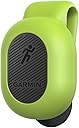
Garmin Running Dynamics Pod - 010-12520-00。
Product ID: 733031872
Details
- オペレーティングシステムandroid
- ワイヤレス通信規格ブルートゥース
- 接続技術Bluetooth
- 特徴防水
- 電池の種類リチウムイオン
📊6 advanced running metrics
📏Ultra-compact & lightweight (<5oz)
🔋1-year replaceable battery life
Desertcart purchases this item on your behalf and handles shipping, customs, and support to Spain.
🏃♂️ Elevate every stride with data-driven precision!
The Garmin Running Dynamics Pod is a compact, waterproof sensor that clips onto your waistband to measure six key running metrics including cadence, stride length, and ground contact time. It wirelessly transmits data via Bluetooth to compatible Garmin devices, helping runners optimize form and performance. With a replaceable battery lasting up to one year and weighing less than 5 ounces, it offers hassle-free, durable tracking for serious runners.
| ASIN | B06XQ4KCVL |
| Amazon 売れ筋ランキング | スポーツ&アウトドア - 496,718位 ( スポーツ&アウトドアの売れ筋ランキングを見る ) 活動量計 - 585位 |
| EUスペアパーツの入手可能期間 | 1 年 |
| GTIN (Global Trade Identification Number) | 00753759175528 |
| OS1 | android |
| UPC | 753759175528 |
| おすすめ度 | 5つ星のうち4.4 3,077 レビュー |
| ウェアラブルコンピュータの種類 | 活動量計 |
| オペレーティングシステム | android |
| カラー | ブラック |
| スタイル名 | ランニングダイナミクスポッド。 |
| スポーツタイプ | ランニング |
| タッチスクリーン、声認識、他の有無 | 不明 |
| ディスプレイの種類 | 抵抗タッチ。 |
| バッテリーセルタイプ | リチウムイオン |
| バッテリ平均持続時間 | 1 Hours |
| ブランド名 | ガーミン(GARMIN) |
| メーカー名 | Garmin |
| ユニット数 | 1 個 |
| ワイヤレス通信規格 | ブルートゥース |
| 互換デバイス | D2チャーリー、D2デルタ、D2デルタPX、D2デルタS、Descent Mk1、fēnix 5、fēnix 5Plus、fēnix 5S、fēnix 5SPlus、fēnix 5X、fēnix 5X、fēnix 6、fēnix 6-Proおよびサファイアエディション、fēnix 6 - Pro。 ソーラーエディション、fēn。 ix 6S、fēnix 6S - Proおよびサファイアエディション、fēnix 6S - Proソーラーエディション、fēnix 6X - Proおよびサファイアエディション、fēnix 6X - Proソーラーエディション、fēnix Chronos、Forerunner 245、Forerunner 245ミュージック、Forerunner 645、Forerunner 645ミュージック、フォアランナー。 735XT、 Forerunner 745、For… |
| 同梱商品 | マニュアル(日本語ではない場合があります)。, マニュアル。, ランニングダイナミクスポッド。 |
| 商品の追加説明1 | 防水 |
| 商品の重量 | 0.1 ポンド |
| 商品本体サイズ | 38 x 20 x 23 mm |
| 商品種別 | ランニングポッド。 |
| 型番 | 010-12520-00 |
| 対応する衛星測位システム | GPS |
| 接続技術 | Bluetooth |
| 特徴 | 防水 |
| 画面サイズ | 0.9 |
| 画面サイズの単位 | 0.9 |
| 言語 | 英語 |
| 通信・接続インターフェース | Bluetooth |
| 電池の種類 | リチウムイオン |
S**M
Does What It Says
This does what it says it will do. It is extremely compact as I had imagined it to be bigger. Even if you don’t care much for such stats, I still recommend it because having technology serve you to gather stats during a time you are incapable of doing so yourself really adds value and worth to each run, and that motivates you to do it again. Connectivity is quick each time. I’ve ran in a freak rainstorm before and it worked just fine.
N**E
Top, macht was der soll
Der Pod macht genau was der machen soll- in Verbindung mit Garmin Uhr mit dazugehörigen Laufeffizienzfeldern und Garmin Connect App kann man schon eine deutliche Verbesserung vom Laufstil erreichen und die Laufstilfehler eingrenzen und vermeiden. Ich tendiere z.B. unbewusst zu zu hoher vertikaler Bewegung und genau da geht ja Energie verloren- seit ich den Pod habe und meine Läufe ausgewertet habe, habe ich den Fehler eingegrenzt und im Zuge der Lauf-ABC bewusst vermindert. Auch andere Daten wie Balance, Bodenkontaktzeit usw. sind nützlich wenn man effizient und schnell laufen will. Für einen 5-km-Hobbyläufer ist der Pod aber wahrscheinlich eher sinnlos. Hier muss jeder für sich selbst wissen was er mit dem Sensor anstellen will und was er davon erwartet. Ich verstehe auch nicht manche Rezensionen, die auf den Gedanken kamen den Pod beim Skilanglauf einzusetzen. Es heißt ja auch "Running Pod". Für mich ist das Gadget top. Einziges Nachteil - konstruktionsbedingt keine Winddatenerfassung. Für mich ist das Gadget top.
P**O
super produit d'analyse de foulée mais...
Compatible avec les montres Garmin, cela permet d'obtenir toutes les infos complémentaires de foulées en running, fournies habituellement par les ceintures de la marque, sans avoir besoin d'en acheter une. Pour ma part j'utilise quand même une ceinture pectorale car elles sont plus précises que le cardio de la montre... Mais ce sont des ceintures de la marque concurrente (deux Polar H10 et une Polar H7), et il semble en plus qu'elles soient plus confortables que celles de Garmin. Par contre, avec ces modèles concurents (H7/H10), on obtient que le cardio, et rien d'autre. Avec le RDP (Running Dynamics Pod), on obtient toutes les données manquantes, que ce soit avec la montre toute seule, ou avec des ceintures "cardio simples". Le RDP se met dans le dos au niveau du short / cuissard, en face de la colonne vertebrale. Contrairement à ce qui est dit dans la doc, il suffit de commencer à courir pour qu'il se mette en marche, pas besoin de "l'activer" préalablement. Concernant le compteur de foulée, cadence, rapport et oscillations verticales des foulées, etc.. on a une valeur identique aux infos des ceintures Garmin. Par contre, concernant le calcul de l'équilibre contact avec le sol pied gauche / pied droit, il est très sensible du placement du RDP au niveau de la colonne et de manière verticale... Du coup, des fois, on obtient des résultats pas du tout cohérent avec les résultats habituels. Si cette valeur est vraiment importante pour vous, je conseille donc de faire vérifier visuellement le placement du RDP par un de vos proches ou un de vos compagnons de course avant celle-ci. A part cette petite remarque, le produit fait vraiment bien son boulot.
T**V
Tiny, but useful training tool for runners!
Garmin’s tiny but entirely capable Running Dynamics Pod is a device worn on the back of your running shorts which then communicates with your Garmin running wearable to provide running dynamics in real time during your workouts. These six combined metrics will help you with your running form and efficiency and are as follows: Cadence - measured in steps per minute (spm), this is how quickly you are moving your feet. The pod overrides your watch’s included cadence sensor. This is more accurate since the pod is far more static on your torso and is therefore closer to the ground than it would be if the data were coming from a constantly moving source (wrists). Ground Contact Time Balance - shows the balance of your left and right feet at the time of impact/strike. This is presented as a numerical value on the watch in real time, showing either a perfect 50-50 balance reading or giving you a value with an arrow showing which side you are favoring. Knowing these metrics in real time or viewing this data after your run can help improve running form. Ground Contact Time - shows the length of your impact when striking the ground and is measured in milliseconds. The lower this number is, the better as there is less strain on the joints with a lower contact time. Stride Length - this measures the length of your stride in meters and is an important metric to monitor when doing speed work and pace training. Vertical Oscillation - this is the height of your bounce measured in centimeters and the lower this value is, the less strain you are putting on your body. Think of this in terms of if you jumped high and landed on your feet, the impact would be far greater on your joints as opposed to if you did a smaller jump. Vertical Oscillation Ratio - this is a combination of the values of your stride length and vertical oscillation to help gauge how much time you are spending off the ground. This metric is expressed as a percentage. The actual pod is encased in a silicone housing from which it can be removed if the batteries need to be changed. Battery life is rated for up to a year and is user replaceable. The pod is waterproof to some degree in the sense that heavy sweat and the occasional downpour during your runs will not affect performance, but one cannot fully immerse it in water for prolonged periods of time. It is only available in a single color and while that may be puzzling at first, it is actually a smart decision on Garmin's part as the unit is highly visible on nearly all colors of clothing. This is a blessing as the pod is slightly larger than a peanut M&M and can easily be forgotten about once you throw your running shorts in the hamper. The unit is so light at 12 grams that the user forgets it's even there during a workout. The silicon layered clip is strong and never once has the pod fallen off during or after a workout. There are no physical buttons on the pod, you simply either wear it, walk to your starting point and initiate a run on your watch or wake the unit by gently giving it a vertical shake or two. Pairing is extremely simple and if your Garmin wearable supports it (check Garmin's website for compatibility), you'll be up and running in under a minute. On supported devices, there will be two visible data pages consisting of the six metrics described above for monitoring dynamics in real time. This data is also saved and logged to your run statistics under your Garmin Connect account for viewing at a later time. Having used the pod for well over a month now, I can say that these metrics update with an alarming rate of frequency during a workout. If you move your feet faster, you'll see your cadence increase and your stride length decrease almost instantaneously. The same goes for all the other metrics. When the workout is over, your watch buzzes to remind you to remove the pod. Garmin's Run, Tri and now Pro chest heart rate monitors will provide these same metrics with the added benefit of giving the user heart rate data over its optical, wrist -based counterpart. But what if you have another, off-brand chest strap or simply don't like wearing heart rate monitors to begin with? That's where this little pod comes in. Bottom line, if your watch supports it and you love data, there's no reason not to have this little device in your arsenal.
D**E
Small and unobtrusive - but does it add any value to your running?
If, like me, you love poring over the stats after your run you'll already have a state of the art running watch and will need no persuading to buy this extra gadget. Whether the data it produces is actually useful is a moot point. But first things first; the device weighs virtually nothing and clips onto the back of your shorts or tights (note that it has to be there and nowhere else to function correctly). If you have the right Garmin device it pairs very easily but it won't work with older or non- Garmin devices (despite recent moves to open up the ANT+ standard). If you want to measure power as well as the Running Dynamics data, you'll also need to download the Running Power Connect IQ app and create a data screen with the Run profile (or it won't record the power data). You'll get loads of extra stats about how much you bounce when you run, whether you're running evenly (L/R balance), etc. as well as arguably more accurate cadence and stride length data than the watch produces alone. The question is what it tells you and whether you can use it to improve your performance. Read up on the internet and opinion is divided. Finally Power which has now taken over cycling as the key metric. It's early days for running and Stryd for example gives different data from Garmin with no real idea which is correct. However comparative studies seem to suggest that the profile is similar even if the absolute numbers differ. I love this stuff and I'm coming back from heart surgery after a couple of years out so it's too early to tell whether it will be helpful as I progress to full racing fitness or not. Read the reviews on DC Rainmaker for a more detailed evaluation. However it's relatively inexpensive and seems to work well. UPDATE January 2020 Having used it for a good few months now, I can say that I do find it very useful and the figures seem plausible and consistent with my form - no funny blips in the data. My shoes wear pretty evenly and my L/R balance is pretty even. My stride length has increased as I've got fitter and faster but my vertical bounce has remained pretty static as has my cadence. Power is also gradually increasing. Planning to look at improving my running form and this will definitely help to tell me how it's going. Not essential by any means but worth the money for me. Update February 2021 Still on the original battery after 854 miles! Unlike some reviewers, I've not managed to wash it yet and I make a point of removing it when I take my key out of the back pocket of my shorts or tights. I have accidently dropped it several times and there's been no effect. It still fits very tightly and there is no prospect of it falling off. I do look at the power number (which is what I bought it for), but not convinced that it adds to my running pleasure and it does not account for underfoot conditions and has a limited adjustment for wind. Stryd may be better but everything I read is suggesting that Running Power is just too difficult to measure as accurately as cycling where it has taken a hold. On the other hand, I really have found the other stats genuinely useful. As I've relearned how to run well, it's given me valuable insights into my stride length and ground contact time and if I've had a quick run I can see how I've achieved it. I've also noticed a definite change in my left/right balance as I run faster which I will need to keep an eye on to avoid injury. Update August 2022 Still using the same RD Pod but now with a Garmin Epix 2. Still an essential piece of kit for me. The new generation of watches give you a pretty comprehensive measure of how your cardiovascular system is coping with training, the Pod completes the picture by adding in how your legs and feet are doing it. Everything I need, maybe overkill for others.
Trustpilot
1 day ago
1 month ago