We remain fully operational. Our teams are working around the clock to ensure your deliveries continue safely.

DOWNLOAD THE APP


Copyright © 2025 Desertcart Holdings Limited
DOWNLOAD THE APP
Buy anything from 5,000+ international stores. One checkout price. No surprise fees. Join 2M+ shoppers on Desertcart.
Desertcart purchases this item on your behalf and handles shipping, customs, and support to Spain.
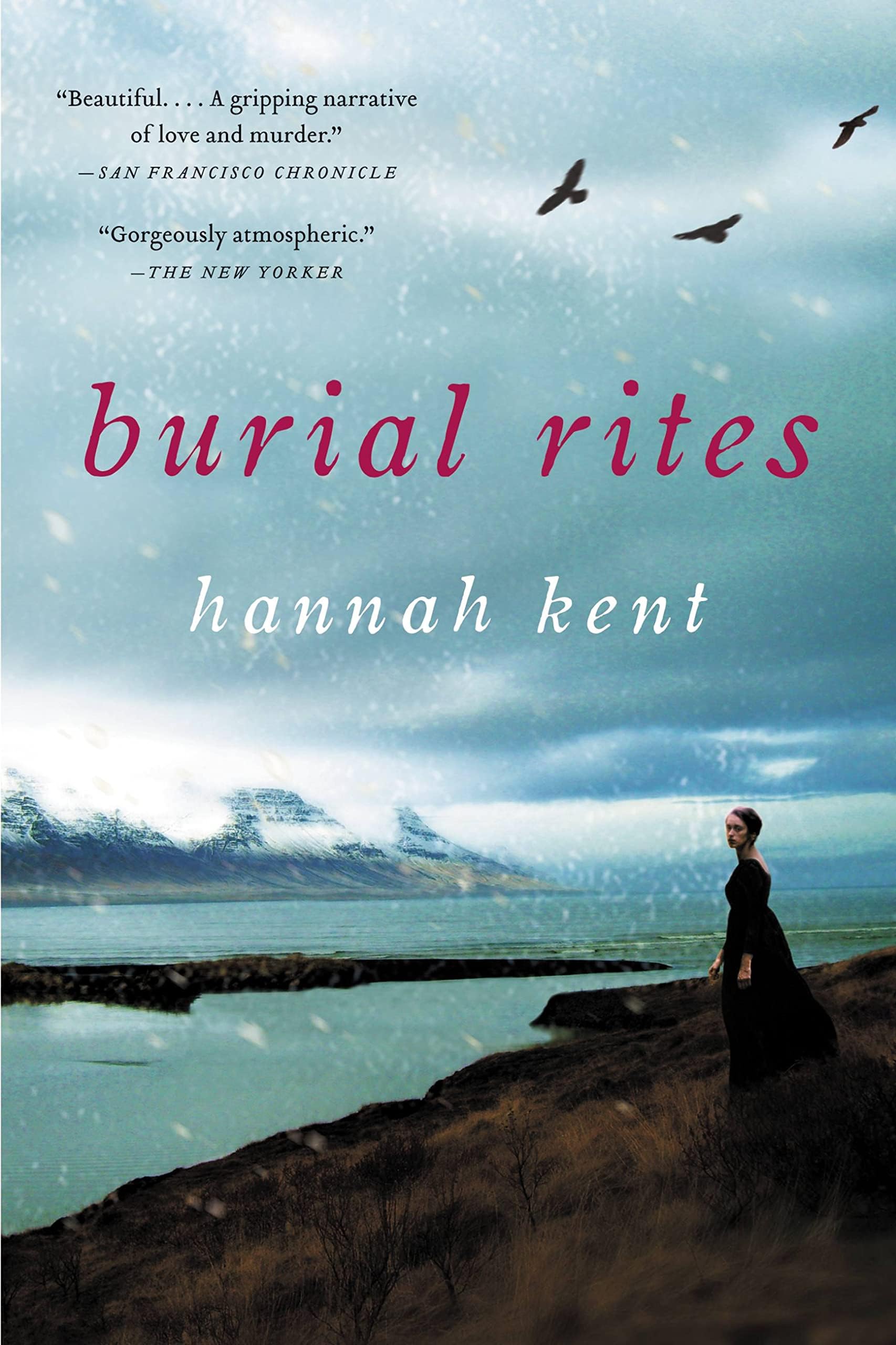
desertcart.com: Burial Rites: 9780316243926: Kent, Hannah: Books Review: Brilliantly crafted - My Review and Thoughts: Burial Rites is a complex character study of one women’s inner thoughts and the surroundings around her as she goes through her last days. You become sour in the realization of this tormented soul of a character. Her past is bleak and clouded with pain, suffering and the world seems to have beat her down. Hannah Kent has away with capturing the ordeal in a harsh, destructive emotional reality that makes the reader truly feel sorry for this person. The descriptive narrative by the main character of Agnes is by far the highlight of this book. Her personal thoughts, her storytelling in first person narrative at times truly bleeds off the page into the emotional heart strings of the reader. As you go about reading this brilliantly written novel you become like the fly in the room and you hear, see, watch and become apart of the ordeal in truly emotional and humble ways as Agnes truly becomes apart of your inner soul, mind, thoughts and most of your heart. The story is about the character of Agnes. She has been accused alongside two others in a brutal double murder. She has been sentenced to be beheaded. Her execution lingers throughout the story. She has been placed in the care of a farm until her coming death. There a Minister in training has been hired to see that Agnes comes about freeing her soul and comes to ask God for forgiveness for her brutal crimes. As the Minister Toti comes to know her, he realizes the story is more complex as it slowly unravels in vivid storytelling detail. Agnes is a brilliant character. A personal character. A complex character of mystery. Well weaved in written form. Agnes truly grows on you. You can’t help but want to save her, to listen to her, to comfort her even in her hard bitterness. She has such a past that the writer displays that you the reader can’t help but want to know everything about her and what happens to her. You want to listen to her past, her present her inner darkness. I think what truly stands out is this is based on a True Story and Hannah Kent displays that true story in vivid detail and truly an emotional ordeal that the reader follows along with until the very end. You can’t help but turn the page to see what unfolds in this graphic tale of a woman’s life in so many bitter filled ways. Hannah Kent is a is a flawless writer of detail. She captures the sadness. The torment. The dread. The love. The idea of suffering. Hannah takes the reader on a journal that never gives up in detail and emotional reality. What I love about Hannah’s writing is it’s so vivid. She displays the rough living reality of farm life in the 1800’s. The dirt and grime. The hard labor. The emotional happenings. The close minded people. The gossip and hatred. The ideas of women being lesser than man and treated horribly during the time periods displayed. Hannah captures it all vivid detail and that makes the book more complex, graphic and truly memorable page after page. I found myself very emotional toward the last pages of this book. I will not lie, I cried. The writing was so well down the emotional reality of this story gets to you and you can't help but shed a tear. Would I Return to: I think I would? This is going to become a movie I gather and so it will be interesting to see how they capture the darkness, dread and torment of this novel in movie form. Would I Recommend: In a heartbeat. I think this is a book that should be read, experienced and honored in all it’s wonderful written detail. As I have stated it’s a complex story with tight weaved and emotional realities in characters described in great detail on each page. Final Four Words: Complex. Emotional. Descriptive beauty. My Rating: 5 out of 5 Review: Excellent research combined with good writing equals a winner - OK, I like offbeat books - not the pulp that characterizes the best seller lists. I want something that gets me into areas where I can learn something about other places, other cultures, and other lifestyles wrapped up in a good well written story - and this book hits the mark on all counts. Based on a true story about the last woman executed in Iceland in the early 1800's, it is (on the surface) a rather mundane description of everyday life in rural iceland durng that period. So while there is no real "plot," per se, the author does an admirable job of turning what could have been an academic essay into a highly readable story. Agnes Magnusdottir, the "woman to be executed" for killing (actually, participating in the killing) of her employer/live-in companion/part-time lover is a simple woman, but interesting. Due to the nature of where the murder occurred and the antiquated legal system, she is held prior to execution living with a rural farming family. And, consistent with the religious environment at the time, is assigned (actually, she chooses) a young priest to counsel her while she awaits execution. All of the characters come across as real and consistent with the time period. I can't tell you there are any brilliant plot twists, but the spare and compelling writing, dialogue, and well-wrought character studies get you caught up and compelled to keep turning the pages. The ending is expected and unsurprising, but the story that gets you there is well worth your time. You will emerge from this book with not only more knowledge, but will gain some new perspectives on human values, compassion, and coping with life along the way. A very good read.
| Best Sellers Rank | #76,120 in Books ( See Top 100 in Books ) #1,553 in Murder Thrillers #2,837 in Literary Fiction (Books) #4,282 in Suspense Thrillers |
| Customer Reviews | 4.2 out of 5 stars 17,121 Reviews |
L**S
Brilliantly crafted
My Review and Thoughts: Burial Rites is a complex character study of one women’s inner thoughts and the surroundings around her as she goes through her last days. You become sour in the realization of this tormented soul of a character. Her past is bleak and clouded with pain, suffering and the world seems to have beat her down. Hannah Kent has away with capturing the ordeal in a harsh, destructive emotional reality that makes the reader truly feel sorry for this person. The descriptive narrative by the main character of Agnes is by far the highlight of this book. Her personal thoughts, her storytelling in first person narrative at times truly bleeds off the page into the emotional heart strings of the reader. As you go about reading this brilliantly written novel you become like the fly in the room and you hear, see, watch and become apart of the ordeal in truly emotional and humble ways as Agnes truly becomes apart of your inner soul, mind, thoughts and most of your heart. The story is about the character of Agnes. She has been accused alongside two others in a brutal double murder. She has been sentenced to be beheaded. Her execution lingers throughout the story. She has been placed in the care of a farm until her coming death. There a Minister in training has been hired to see that Agnes comes about freeing her soul and comes to ask God for forgiveness for her brutal crimes. As the Minister Toti comes to know her, he realizes the story is more complex as it slowly unravels in vivid storytelling detail. Agnes is a brilliant character. A personal character. A complex character of mystery. Well weaved in written form. Agnes truly grows on you. You can’t help but want to save her, to listen to her, to comfort her even in her hard bitterness. She has such a past that the writer displays that you the reader can’t help but want to know everything about her and what happens to her. You want to listen to her past, her present her inner darkness. I think what truly stands out is this is based on a True Story and Hannah Kent displays that true story in vivid detail and truly an emotional ordeal that the reader follows along with until the very end. You can’t help but turn the page to see what unfolds in this graphic tale of a woman’s life in so many bitter filled ways. Hannah Kent is a is a flawless writer of detail. She captures the sadness. The torment. The dread. The love. The idea of suffering. Hannah takes the reader on a journal that never gives up in detail and emotional reality. What I love about Hannah’s writing is it’s so vivid. She displays the rough living reality of farm life in the 1800’s. The dirt and grime. The hard labor. The emotional happenings. The close minded people. The gossip and hatred. The ideas of women being lesser than man and treated horribly during the time periods displayed. Hannah captures it all vivid detail and that makes the book more complex, graphic and truly memorable page after page. I found myself very emotional toward the last pages of this book. I will not lie, I cried. The writing was so well down the emotional reality of this story gets to you and you can't help but shed a tear. Would I Return to: I think I would? This is going to become a movie I gather and so it will be interesting to see how they capture the darkness, dread and torment of this novel in movie form. Would I Recommend: In a heartbeat. I think this is a book that should be read, experienced and honored in all it’s wonderful written detail. As I have stated it’s a complex story with tight weaved and emotional realities in characters described in great detail on each page. Final Four Words: Complex. Emotional. Descriptive beauty. My Rating: 5 out of 5
C**E
Excellent research combined with good writing equals a winner
OK, I like offbeat books - not the pulp that characterizes the best seller lists. I want something that gets me into areas where I can learn something about other places, other cultures, and other lifestyles wrapped up in a good well written story - and this book hits the mark on all counts. Based on a true story about the last woman executed in Iceland in the early 1800's, it is (on the surface) a rather mundane description of everyday life in rural iceland durng that period. So while there is no real "plot," per se, the author does an admirable job of turning what could have been an academic essay into a highly readable story. Agnes Magnusdottir, the "woman to be executed" for killing (actually, participating in the killing) of her employer/live-in companion/part-time lover is a simple woman, but interesting. Due to the nature of where the murder occurred and the antiquated legal system, she is held prior to execution living with a rural farming family. And, consistent with the religious environment at the time, is assigned (actually, she chooses) a young priest to counsel her while she awaits execution. All of the characters come across as real and consistent with the time period. I can't tell you there are any brilliant plot twists, but the spare and compelling writing, dialogue, and well-wrought character studies get you caught up and compelled to keep turning the pages. The ending is expected and unsurprising, but the story that gets you there is well worth your time. You will emerge from this book with not only more knowledge, but will gain some new perspectives on human values, compassion, and coping with life along the way. A very good read.
R**K
Iceland As You Have Never Seen It
Burial Rites by Hannah Kent is a fiction novel based on fact about the last woman to be executed in Iceland. After a lengthy time used for appeals, she was executed in 1828. There are no real surprises in the book as the case and result are a matter of historical record. The value of the book is in the character portrayals Kent provides. “A Note on Icelandic Names and Pronunciation” followed by a map prepares the reader for a presentation that is extremely well-researched. A reader will be able to make sense of the meaning in dialogues between main characters without the pronunciation guide but it is nice to have. Letters between government officials and religious functionaries are written in a complex style reflecting the times. Such letters written in the present time would be considered verbose and overly polite. Again, this gives the reader a sense of research well done. Agnes ( the main character), Sigridur (accomplice and sometimes rival of Agnes) and Fridrik (sometimes thief) killed Natan and Petur. No surprises here. The three were convicted of the crime of murder and sentenced to death. Much as in the present day, the convictions were referred to higher courts on appeal. The three murderers were confined in separate locations but not in jails or prisons familiar to the present-day reader. Instead, they were assigned to confinement in homes of officials based on their earlier employment or residency. This was not always welcomed by the officials and their families but it was a duty that could not be refused by local officials. This novel focuses on the family which had the responsibility for the confinement of Agnes. There seems to have been a lot of miserable childhoods in Iceland during this period. Children lost parents perhaps through death. Parents lost children through death or abandonment when the parents felt unable to economically support them. Children served periods of indenture which were followed by further periods of indenture. They were employed as servants and/or housekeepers. Agnes knew her mother but was abandoned at about the age of three. As she is facing imminent execution, she is over thirty years old and has worked as a servant or housekeeper in more than fifteen locations. This forced labor is not quite slavery. That is why Agnes served in so many locations. If a person was not in debt, the person was free to seek better conditions of employment. Based on the amount of work a person had to do; there was little time to seek better conditions. Agnes fell in love with Natan. It was a long process. Natan noticed her and was impressed with her level of literacy. Agnes did not know of or suspect Natan’s serious character flaws. Natan was a people manipulator. He played with them and provoked them for his amusement, not necessarily for any material gain. This did not become apparent until Agnes had moved into Natan’s home and was promised the job of housekeeper, a job which implied sexual duties along with the more mundane boot polishing. But Natan had another servant, Sigridur. She believed that Agnes would be employed as a servant and she, Sigridur, would take over the role requiring total service. So, we have the complete and open jealousy between the two women. As for Natan, he intends to, and does, have relations with both as he promises each of them the role of housekeeper. So how did the two become close enough to be convicted accomplices in the murder of Natan? The answer to that might be the only surprise, or spoiler, in the novel. All of this is the background to the main story of the novel. Agnes is confined with an official and his family at Kornsa. The main story is how she interacts with the family as she awaits either execution or pardon. For most of the novel, she is resigned to her fate of execution. She is with the family because she has requested the spiritual guidance of Assistant Reverend Thorvardur (later known as Reverend Toti). She had the right to request a church person of her choice to help prepare her for her meeting with God. Toti is not yet a full reverend; he is very young and has little confidence in himself. But he has been given the duty of frequent contact with Agnes to prepare her for her fate. Agnes does not find it easy to tell her full story to Toti; she is much older than him. She feels closer to Margret, wife of official Jon, and the mother of daughters Lauga and Steina. Marget is closer in age to Agnes and throughout the novel feels more and more empathy for Agnes. Daughter Lauga despises Agnes and frequently expresses her disgust with having Agnes in the house. Daughter Steina thinks Agnes is interesting and steals time away from chores to talk to Agnes whenever possible. This displeases her father who fears negative influence on the entire family. This is a great, brilliant novel for a variety of reasons. There is the depiction of language. There is the depiction of history. There is the depiction of the difficulties of daily life such as this: The family with Margret was not always as poverty stricken as they were when Agnes joined them. I years past their house, constructed from either mud, clay, or a composite had walls that did not crumble. Earlier, they were reinforced by planks of wood. But when the family fell on hard times, Jon had stripped the walls and sold for much-needed money to support the family. This type of cultural and economic awareness, supported by research, make this a valuable novel. For the eclectic reader, one who invites surprise, this is a great novel.
A**R
Simply and nicely written. A stark straightforward story.
I usually dislike historical fiction, and I was surprised by how clear this book was, how easy to read. The story is simple and stark, and Hannah Kent's protagonist, Agnes, is delightfully human. I especially treasured the end. Agnes is not made of stone, and I like that she was not endowed with supernatural powers. She was afraid of death. She loved Natan, though Natan was deceptive and cold. Agnes is convicted of Natan's murder and condemned to death. A farm family resents hosting her, but complies. The matriarch, Margrét, resents Agnes, until she sees how Agnes had been abused in prison. Agnes works hard, better than the family's servant, and there are small delicate moments between Margrét and Agnes. Laugna, the youngest daughter and initially the most accepting of Agnes's presence, grows to resent Agnes. Laugna always had her older sister, Steina, in her thrall, and now, Steina gravitates toward Agnes, who tolerates her questions without criticism, recalling a time when Agnes was kind to her. I like how the family is portrayed - they are not perfect; their sentiment towards each other and toward Agnes alter, and though Margrét's gesture is touching at the end, I don't know how much Agnes will really affect their lives. For me, it was educational about the criminal justice system. Witnesses forced to confess; witnesses tortured until the District Commissioner's version was corroborated, and good people hurt for no reason at all. Then there was the hardship - the snow, the terrible poverty, where even a family of some distinction burned dung for heat, their walls cold, causing Margrét to cough blood. The writing could be beautiful. Emotions are complex, as are family, and Hannah Kent conveyed all without being overt.
L**N
A Tough but Worthwhile Read
This book is kind of confusing in the beginning, with a letter from someone to someone, about someone, and why? Because it was a book club selection, I stuck with it, and I'm glad I did. But I have to warn you, there is an abundance of suffering in this story, and it became overwhelming at times. Burial Rites is based on a true story of an Icelandic woman of the mid 1800s who is condemned to death for a crime. In the weeks prior, Agnes is housed with a farm family until the execution. It's interesting to see how these people lived, but they are so challenged by the harsh environment that it felt almost as if I were studying early man. The author, Hannah Kent, is a very good writer. She has a lovely way of describing a character's interior landscape using metaphors from the world around her. A perfect example, from Agnes: "There is a brisk wind and it blows ripples across the puddles in the yard. I notice the small things now." As well she would, given her devastating circumstances. There is good character development (especially between Agnes and Margret, the farm wife). The book is well-paced and edited, and I couldn't have stopped reading it, even though I considered it at one point due to the relentless discouragement. But in a weird way I feel like a more rounded person for having read it. I stepped back in time, almost felt as if I visited Iceland of the era, and that's a tribute to Ms. Kent. Also, my ancestors traveled from Austria/Hungary/Germany at about the same time, to the new land of America, and it helps me understand more about them. Frightening how actually recent 1850 was. We've come so far in such a short time, and thank God for that. The author did exhaustive research to support her descriptions. For that, and for the beauty of her writing, I have to give this book four stars. But I don't know if I'd recommend it. I like sunnier stories.
B**M
Gripping story about the last execution in Iceland
In 1830, Agnes Magnúsdóttir and Fridrik Sigurdsson were led to a turf platform on a snowy hill in Iceland and beheaded. They were surrounded by 150 farmers from the area, who were ordered to attend. Magnúsdóttir and Sigurdsson had been sentenced to death for the murder of two men, a farmer named Natan Ketilsson and a visitor, Pétur Jonsson. (Sigrídur Gudmundsdóttir was also convicted and condemned to death for the murder, but her sentence was changed to life in a labor camp, where she died a few years later.) Theirs were the last public executions performed in Iceland and form the basis of Hannah Kent’s terrific historical fiction book, Burial Rites. Kent’s story begins as Agnes is ordered to stay with a farming family at Kornsá, where she will receive spiritual guidance from Assistant Reverend Thorvardur to prepare for her execution. Imagine being the family ordered to make room for a convicted murderer! It’s a grim situation for Jon and his wife, Margrét, and their two grown daughters, Steina and Lauga, who already share their small turf hut with farmhands and a workmaid. Agnes arrives emaciated, bruised and covered in layers of filth, as she has been shackled and beaten since her conviction. Over time, the family adjusts to Agnes in different ways. Lauga hates Agnes and shuns her, Steina is sympathetic, Margrét is wary and Jon stays away. Agnes is an excellent farm worker, however. She is as skilled at cutting hay and outside labor, as she is with cooking, sewing and knitting and this hard work earns her the family’s respect. It is during Reverend Tóti’s visits that we slowly learn about Agnes’ sad and lonely childhood and her complicated and intense relationships with Natan, Sigrídur (Sigga) and Fridrick. Tóti and Agnes soon become friends and Margrét, too, warms to Agnes as we learn more about the murder. Agnes slowly becomes a tentative member of the Kornsá family, but the inevitable execution looms over them all. It seems an impossible ending and I found myself hoping that the final chapters would somehow conclude in a different way. Kent portrays Agnes in a partially sympathetic light but she leaves the reader to judge. She describes the sober business of executing convicted murderers in what was the cold reality of justice during that time and she evokes a desperate mood as Agnes approaches the platform on that cold icy day. Kent does a great job portraying these historical events and tells a powerful story during a time when people had to devote all their energy to the basics of survival, no matter what the circumstances. She writes in a simple and convincing way of a harsh land and time that is perhaps unfamiliar to a lot of readers. But she also brings out the beauty of both landscape and human spirit, making the story relevant in modern times. We will never know the full story of Agnes Magnúsdóttir, but Kent allows us to imagine…
F**R
It is a beautiful book and I am in awe of Kent's talent ...
It is a beautiful book and I am in awe of Kent's talent and maturity especially coming from someone so young. The main character is fascinating and her story is interesting. The structure of the book is beautiful and and many ways the book is a literary masterpiece. So why 4 stars? I gave it 4 stars because there are elements of the book which are overdone and tiresome. E.g the constant mention of bodily fluids, disease, s***, blood, bad smells...the list goes on. It is intended as a 'dark love letter to Iceland' as Kent herself says but it does not feel this way at all. Had I been an Icelander I would have been insulted. There are many places in the book where Kent's desire to produce a literary masterpiece are too obvious, tiresome and repetitive. How many times can I read about 'words like dead birds in her mouth'? I love literary works and I am an avid reader yet even I had to skip pages of endless, morbid description of Icelandic landscape. The book does not seem to be set in the 19th century but rather in dark ages and I, personally, did not find the dark descriptions and constant bad smell, convincing. Finally, the truth is that I bought the book because of the great hype around it and because I did know that she got $1 000 000 in advance for it. Having said that, it is worth reading and Kent has an amazing talent.
D**I
What a remarkable piece of literary work.
In this impressive debut, Australian author Hannah takes on the historical figure of Agnes Magnusdottir, a servant woman sentenced to death for her role in the murder of two men in 19th century Iceland. The book follows Agnes as she is sent to live on a farm in the North to await her death sentence. She progressed then to labouring for the family, and all the while is counseled by a young reverend, who helps unravel her personal story. Local history remembers Agnes as a wicked woman with ill intentions, who "is a spider caught in the web of her own making", but actually very little is known about her life. Kent's fictionalised account of Agnes life delves deep into Scandinavian history and reimagines Agnes. not as the one dimensional murderess, but as a strong and complex female figure trapped in a destiny that was not of her choosing. The book paints a sympathetic account of Agnes brilliantly achieved by carefully peeling each layer, while building up gradually to reveal what really transpired in the two murders that implicated Agnes. The inclusion of official records and letters obtained during the author's decade long research added to the suspense. The story is set against the hostile and barren landscape of Iceland, and the author did an amazing job in conveying its tyrannical nature, leaving humans at its mercy as they are left helpless and isolated in the snow, storm and winter darkness. In some ways, the forces of nature emerged here as a third party/protagonist because it was lent such a powerful personality and a will on its own to act and influence events and individual fates. Readers are made to understand that the stoic and curt nature of the characters is born out of the the need to survive in the harsh natural environment of Iceland. The author also did a fantastic job in conveying the minutiae of farm life, from sight, sound and smell, to the point where I pick up the smell of damp turf walls or rancid whale fat. What really had me glued to the book is Kent's outstanding writing style - the prose is lyrical and very strong as it switches between it being haunting, gut wrenching, heart warming, poignant, shattering. As a reader, I was constantly gripped with emotions. The book also touches on many themes that left me pondering long after putting it down: How the natural environment shapes humans and societies, how poverty and isolation inflicts psychological damage, the role of women in rural societies and more. Apparently 'Burial Rites' took 10 years in the making; Kent first heard of the story when she was a 17 year old Rotary exchange student in Iceland and has been fixated on the subject since. The book got a lot of industry buzz and deservedly so; to me this was one of the best books I have read this year. Highly recommended - definitely book club material!
Trustpilot
4 days ago
1 month ago