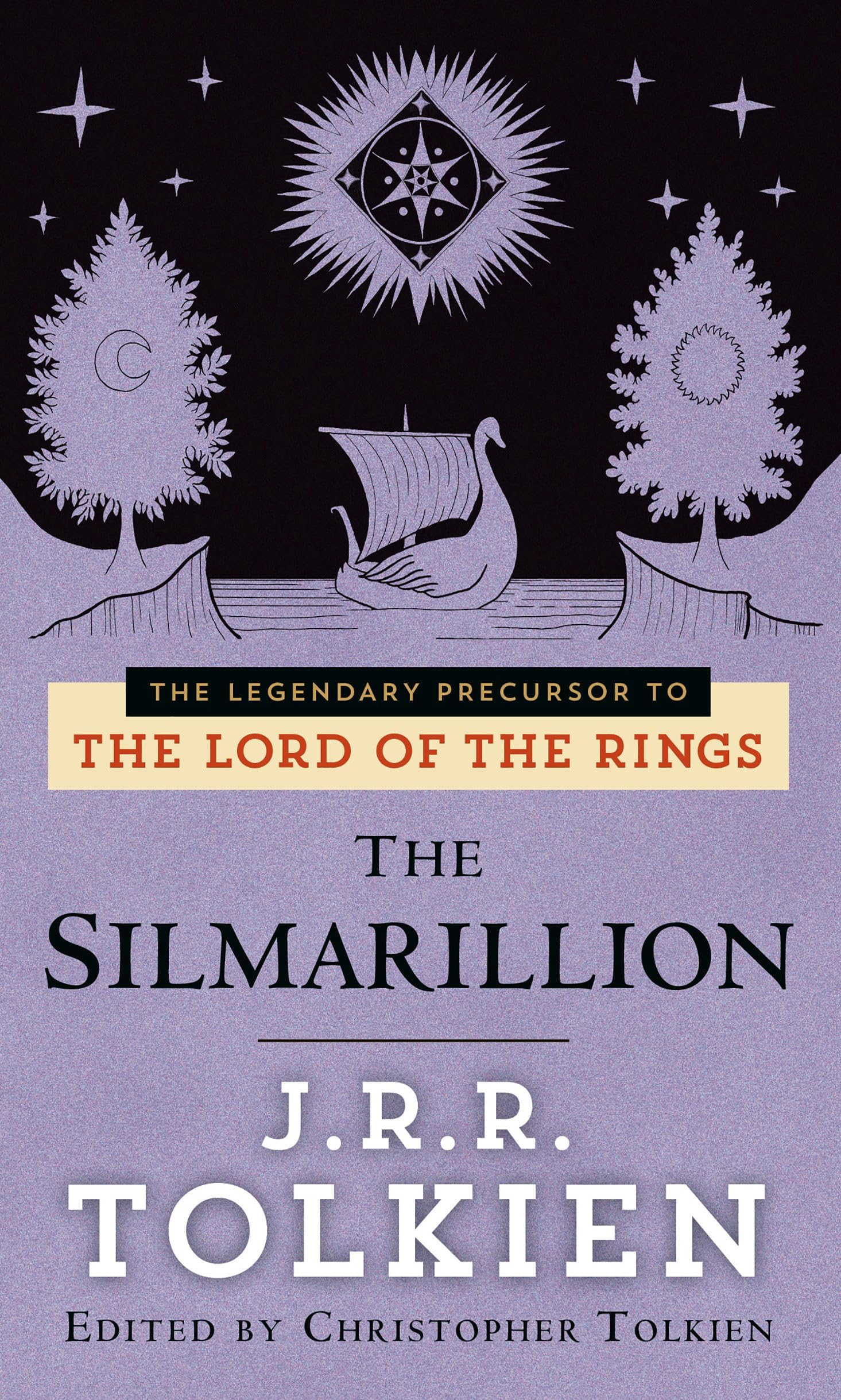
The Silmarillion: The legendary precursor to The Lord of the Rings
Product ID: 4460447
📚480 pages of epic lore
🕰️Timeless 2002 2nd edition
🖼️Up to 59 detailed illustrations
Buy anything from 5,000+ international stores. One checkout price. No surprise fees. Join 2M+ shoppers on Desertcart.
Desertcart purchases this item on your behalf and handles shipping, customs, and support to Spain.
🌟 Unlock the epic origins of Middle-Earth—where legends begin and fandom thrives!
The Silmarillion, authored by J.R.R. Tolkien and published in 2002 as a 2nd edition mass market paperback, spans 480 pages of foundational lore for The Lord of the Rings universe. Featuring up to 59 illustrations by Tolkien and Ted Nasmith, this highly acclaimed book (4.8/5 stars from 24,327 reviews) offers an essential deep dive into the creation myths, histories of Elves, Men, and the Silmarils, and the epic struggles shaping Middle-Earth. Priced affordably at $8.99, it’s a must-have for serious Tolkien enthusiasts and fantasy scholars alike.


| Best Sellers Rank | #45,299 in Books ( See Top 100 in Books ) #49 in Epic Fantasy (Books) #131 in Classic Literature & Fiction #298 in Action & Adventure Fantasy (Books) |
| Customer Reviews | 4.7 out of 5 stars 24,447 Reviews |
H**Y
An Amazing Story of the History of Elves and Middle-Earth
The Silmarillion was great, it deepened my knowledge and understanding of world and characters we meet in The Lord of the Rings. The book provided a vast and integral history of Tolkiens world, from the creation of the world with Ilúvatar and the Children of Ilúvatar, to the beginning of the elves, men, dwarves and various other creatures. The Silmarillion tells of the history of Valinor in the West and the beginning of Middle-Earth. The Silmarils are briefly mentioned in LOTR, but this books tells their story, and just like the One Ring, it was tragic how many killed and died for them. The way the Curse of Mandos unfolded was also so incredibly well written the way everything was doomed to fall apart. If you are looking to study Tolkien or fantasy and world building, this book is essential, even if you merely wish to read more of Middle-Earth, this book is a great choice to start diving deeper into Tolkiens Legendarium, after LOTR. After reading LOTR I had so many questions about the Elves and the lands in the West they journey to. I wanted to know why the Elves felt the way they do about dwarves and man and why so many of them removed themselves from the dealings of man. The Silmarillion answered all of these questions and more. It showed me just how vast and complex Tolkien's world-building is. I'm greatly interested in Tolkien's idea's of death and it being a "gift of man," we see this in LOTR, but this book dived deeper into this idea. When the creation of man is described and it talks about them having the gift of freedom and with that they live short lives, felt very revealing of Tolkien's views on death. I also found it interesting when the says that the Elves felt that Man most resembled Melkor (Morgoth), that seemed to say a lot about Mans capacity for evil. Morgoth is a powerful and resilient enemy, even greater than Sauron. It seemed as though all forms of darkness and evil originated with him, the way he influenced the evolution of the world was so interesting, as was the powers that arose to stand against him. I was so disappointed when Manwë pardoned him, but I understood why he did it and also relent to the fact that if he hadn't so many of these characters wouldn't exist. As much power as Morgoth had, some of the worst tragedies were a result of the ways he'd lie and manipulate and sow doubt and hatred in others, putting them on a path of destruction, conveying themes of the cost of greed, pride and nature of corruption; teaching lessons on the power of not entertaining negative thoughts. This theme and so many others make this just as timeless a read as LOTR.
B**L
Hardcover versions compared
This is a review of the editions, with an image, not the text itself. If I'm wrong about anything let me know and I'll correct it. 1998 edition: Cover: “Maglor casts a Silmaril …” (male throwing white gem against red background) 18 illustrations by Ted Nasmith Readable, nice, can be found around $20-$30 used. Crazy that this edition is almost 35 years old. Art: 1. The Sea 2. The Lamp of the Valar 3. At Lake Cuiviénen 4. The Light of Valinor on the Western Sea 5. Fingolfin Leads the Host across the Helcaraxe 6. The First Dawn of the Sun 7. Maedhros's Rescue from Thangorodrim 8. Eöl Welcomes Aredhel 9. Felagund among Beor's Men 10. By Moonlight in Neldoreth Forest 11. Lúthien Escapes upon Huan 12. Morgoth Punishes Húrin 13. Túrin and his Band are Led to Amon Radh 14. Finduilas is Led past Túrin at the Sack of Nargothrond 15. Ulmo Appears before Tor 16. Eärendil the Mariner 17. The Eagles of Manwe 18. The Ships of the Faithful Front over: Maglor Casts a Silmaril into the Sea Back cover: Beren and Luthien are carried to Safety 2004 edition: Cover: “White Ships of Valinor” (white boats sailing in fair weather, island in background) 45 illustrations by Ted Nasmith Glossy paper, which can be a positive or negative I guess Can be found around $25 new, which is a DEAL. This is mine for reading without fear of damaging a collector’s item. Art: 1. The Sea 2. The Lamp of the Valar 3. Aule Prepares to Destroy His Children 4. At Lake Cuiviénen 5. The Light of Valinor on the Western Sea 6. The Ships of the Teleri Drawn by Swans 7. The Kinslaying at Alqualonde 8. Fingolfin Leads the Host across the Helcaraxe 9. The First Dawn of the Sun 10. The Burning of the Ships 11. Maedhros' Rescue from Thangorodrim 12. The Gates of Sirion 13. Eöl Welcomes Aredhel 14. Eöl is Led to the Walls 15. Felagund among Beor's Men 16. Fingolfin's Wrath 17. The Orc-Host is Ambushed in Brethil 18. Tarn Aeluin 19. By Moonlight in Neldoreth Forest 20. Lúthien Escapes upon Huan 21. Transformed 22. Beren and Lúthien are Carried to Safety 23. Huan's Leap 24. Morgoth Punishes Húrin 25. The Hill of Slain 26. Saeros' Fatal Leap 27. Túrin and his Band are Led to Amon Rûdh 28. Beleg is Slain 29. Túrin Bears Gwindor to Safety 30. Finduilas is Led past Túrin at the Sack of Nargothrond 31. Túrin Reaches the Abandoned Homestead 32. Up the Rainy Stair 33. Húrin Finds Morwen 34. Tuor Follows the Swans to Vinyamar 35. Ulmo Appears before Tuor 36. Tuor and Voronwe see Turin at the Pools of Ivrin 37. The Escape from Gondolin 38. Maglor Casts a Silmaril into the Sea 39. Earendil the Mariner 40. White Ships from Valinor 41. The Eagles of Manwe 42. Tar-Miriel and the Great Wave 43. The Ships of the Faithful 44. The Forging of the One 45. The White Tree 2021 edition: Cover: “Ships of the Faithful” ship sailing amidst storm/red sky 49 illustrations by Ted Nasmith Can be found closer to $40 Regular flat paper, not glossy. More standard book-shaped, whereas the 2004 version is more square, like a coffee table book. Mine was used and did NOT include a fold-out map, but the colorized Christopher Tolkien Beleriand map is in the front plate and endplate (inside the cover, both ends). Art: 1. The Sea 2. The Lamp of the Valar 3. Aule Prepares to Destroy His Children 4. At Lake Cuiviénen 5. The Light of Valinor on the Western Sea 6. The Ships of the Teleri Drawn by Swans 7. The Kinslaying at Alqualonde 8. Fingolfin Leads the Host across the Helcaraxe 9. The First Dawn of the Sun 10. The Burning of the Ships 11. Maedhros' Rescue from Thangorodrim 12. The Gates of Sirion 13. Eöl Welcomes Aredhel 14. Eöl is Led to the Walls 15. Felagund among Beor's Men 16. Fingolfin's Wrath 17. Turgon at Fingolfin's Cairn 18. The Orc-Host is Ambushed in Brethil 19. At Tarn Aeluin 20. By Moonlight in Neldoreth Forest 21. Lúthien Escapes upon Huan 22. Transformed 23. Beren and Lúthien are Carried to Safety 24. Huan's Leap 25. Lúthien at Tol Galen 26. Morgoth Punishes Húrin 27. The Hill of Slain 28. Saeros' Fatal Leap 29. Túrin and his Band are Led to Amon Rûdh 30. Beleg is Slain 31. Túrin Bears Gwindor to Safety 32. Finduilas is Led past Túrin at the Sack of Nargothrond 33. Túrin Reaches the Abandoned Homestead 34. Up the Rainy Stair 35. The Slaying of Glaurung 36. Húrin Finds Morwen 37. Tuor Follows the Swans to Vinyamar 38. Ulmo Appears before Tuor 39. Tuor and Voronwe see Türin at the Pools of Ivrin 40. The Escape from Gondolin 41. Eärendil Searches Tirion 42. Maglor Casts a Silmaril into the Sea 43. Eärendil the Mariner 44. White Ships from Valinor 45. The Eagles of Manwe 46. Tar-Miriel and the Great Wave 47. The Ships of the Faithful 48. The Forging of the One 49. The White Tree 2022 edition: Blue cover with circular design 59 illustrations by Tolkien himself – BUT more than half of these are “devices,” neat little square symbols at the start of a chapter and so on—not big full color paintings or drawings. Around $40. Be aware, Tolkien’s artwork consists more of drawings and sketches with limited color. They are not the epic Ted Nasmith paintings you see in others. If you value his quaint older sketches, these are great. Personally, Nasmith’s objectively better work is more inspiring and helps me engage in the story. Tolkien is a GREAT writer, and a pretty good artist. Nasmith is a GREAT artist. I like them all. If I was only going to get one, I’d get the 2004 version because you get a ton of great Nasmith artwork for an insanely cheap twenty-five bucks (today). Tolkien’s own art is neat, but if you want to be encouraged through a dense book, Nasmith’s art helps pull you in and pull you along.
D**N
No Hobbits Here
There are no Hobbits in J. R. R. Tolkien's Silmarilion. This may appear to be a trivial observation but it is an observation worth considering when reading Tolkien's works. Tolkien, it seems, wrote in two styles. He had a "low" style that he used in The Hobbit. This was a familiar, wryly humorous style, perhaps too deliberately written for children in places to be entirely successful as a children's story. The other style is a grand, epic style, more suited for the affairs of kings, elves and great battles. The Lord of the Rings was a mixture of these two styles. It began in much the same style as The Hobbit, but as the story became more serious and the danger of the Ring and its pursuers more acute, the style became darker and more serious to match. By The Return of the King, with its tale of the great War of the Ring, the style became almost entirely, but not quite, the grand style. There were always the hobbits to return the story to a more down to earth level. The Silmarilion is written entirely in the grand style. The stories are epic tales of gods, elves and men fighting against the first, and far mightier, dark lord Morgoth. There is little room for the sort of humble details of everyday life found in The Hobbit or the Lord of the Rings. The characters are all kings and heroes of ancient times, not humble gardeners. This is not to say that The Silmarilion is not a good book to read. It is an excellent book, and Tolkien is, in his way, comparable to the great composers of national epics like Homer or Vergil. That was indeed his intention when he began writing these stories of the Elder Days and to some extent he did succeed. There are actually five parts to the Silmarilion. The first part is called the Ainulindale and tells of the creation of the world by Eru, the One, who the Elves call Illuvatar. Illuvatar first creates the angelic powers or Ainur, and teaches them to sing to a melody He has made. This song was a vision of the world and many of the Ainur longed to dwell in that world so Illuvatar created it and sent the Ainur, or Valar to complete the work of creating and ordering the world. This they did against the opposition of Melkor, the mightiest of the Valar, and one who sought to rule the world for himself. The next section is called the Valaquenta, is simply a list of the chiefs of the Valar and their names, and attributes. There is not a narrative here, but it is useful to read it as a guide for later The middle and longest section is the Quenta Silmarilion, or the Silmarion proper. This is the epic story of the Elves in the First Age of Middle Earth. The Silmarilion tells of the awakening of the Elves in the dark times when Melkor ruled Middle Earth. The Valar go to war against Melkor to save the Elves and he is defeated and imprisoned. TheValar then offer to take the Elves to their home, Valinor, far in the West. Many Elves agree to make the long journey and are named the Eldar. Many others prefer to stay in Middle East and call themselves the Avari. The Eldar travel to Valinor and become mighty in lore and power. The most skilled of all the Elves is Feanor and his greatest work is the three jewels, the Silmarils in which he captured the light of the Two Trees of old. After a time Melkor feigns repentance and is released. He poisons the Two Trees, steals the Silmarils and flees to his stronghold in Middle Earth. Against the will of the Valar, Feanor leads his clan, the Noldor in pursuit of Melkor, who he has renamed Morgoth, the Black Enemy. Feanor is slain but the Noldor and their allies among Elves and the new race of Men continue the war. They fight bravely against Morgoth and managed to confine him to his stronghold for many years, but in the end, their war is hopeless. Morgoth has hosts of Orcs, troll, Balrogs and dragons and is himself a Valar, one of the mightiest beings in the world. The Elves and their allies are utterly defeated only the intervention of the Valar prevents Morgoth from ruling forever. Morgoth is defeated and the Silmarils are lost. Much of Middle Earth is damaged beyond repair and the Western lands where the Noldor fought and died is submerged beneath the sea. The Akallabeth tells of the history of Numenor, the island that the Valar gave to the Men who fought on the side of the Elves. (Most Men sided with Morgoth). The Numenoreans were given a life span beyond any of the Men of Middle Earth though they were not immortal and could not travel to Valinor. Over time, the Numenoreans grew increasingly jealous of the immortality of the Elves and since they could not make themselves immortal, they began to seek for wealth and dominion in Middle Earth. The last king of Numenor, Ar-Pharazon challenged Sauron, the servant of Morgoth, for the rule of Middle Earth, actually defeated him, and carried him back to Numenor as a hostage. Sauron quickly gained the confidence of Ar-Pharazon, and preying on the old king's fear of death, induced him to assault the Valar and wrest immortality from them. This ended with the destruction of Numenor and the Numenoreans with the exception of a few refugees led by Elendil. The final part of the Silmarilion, Of the Rings of Power and the Third Age, relates the history of the dealings of Sauron and the Elves of Middle Earth. Sauron deceived the Elves into creating the rings of power and attempted to enslave them by forging his own One Ring in Mordor. There is a brief summary of the history told in the Lord of the Rings and a brief mention of the destruction of the ring by Frodo the Halfling and his servant Samwise. After this, the last remaining Eldar of Middle Earth, rendered powerless, leave for Valinor and the cycle is finished. This is a rather grim cycle of tales, probably inspired by Tolkien's love of the rather grim Nordic mythology. Unlike the Norse tales, evil is defeated in the end, but the damage done can never wholly be undone. Then evil arises again after an age. Oftentimes evil corrupts or misleads the good and sometimes the most damage is done by those who fight most valiantly against evil. Beren and Luthien wrest a Silmaril from Morgoth so that Beren can present it to Luthien's father as bride price, but the Silmaril causes wars among Elves and Dwarves and the sons of Feanor and eventually causes the destruction of all the Elf-kingdoms. Turin son of Hurin spends his whole life fighting the servants of Morgoth, and is cursed because in the end all his valiant deeds only bring about Morgoth's victory. Even when Morgoth is defeated, the evil he does lives on to afflict later ages, as does his servant Sauron. When Sauron is, in his turn defeated, and his Ring is destroyed, the Eldar also rendered powerless, no longer wish to live in Middle Earth and return at last to Valinor leaving a colder, grayer world for those of us who are doomed to stay behind.
R**P
The third and (relatively) infrequently taken step
Read the Hobbit? Isn’t it great? Read the Lord of the Rings? Isn’t it awesome (in the true sense of the word)? Answer yes to the two above questions, and you may be ready to embark upon this third volume of the Legendarium. I say “may,” and I promise I’m not trying to be condescending; but “may” is the word. First, the content: This has been elucidated by many others on this review page, so I won’t say too much. Suffice to say that this is the tale of the First Age, from the creation of the world until the final defeat of the Elder Evil, Melkor, called by the Noldor “Morgoth.” The beginnings of all races (save hobbits, more on that later), and the days when “gods” walked the Earth; great tales of heroism and tragedy; epic battles and terrible deeds that echo down through the millennia. It’s all here, and written in prose that will appeal especially to fans of classical literature (from the ancient Greeks, to Rome, to Anglo-Saxons and Finns, with a dash of the ancient books of the Bible and Gilgamesh thrown in). Now, to the “may:” this is not an easy read. It is dense, it is complicated, there are names and events and concepts that will find you flipping to the index/glossary to try to remind yourself what happened and when. Partially, this is by virtue of it being an edited work. At Tolkien’s death, this remained unfinished. Christopher Tolkien, his son, one of the original draft readers of LOTR, compiled the Silmarillion over the course of four years (?) and put it into the form you see here. But this was always a version of the form it would take. It was always going to be dense and was always going to require attention and focus. This, more either the Hobbit or Lord of the Rings, is what Tolkien the philologist wrote. It is, in short, history, rather than fantasy. It is more like reading a history book than a fantasy book. The Hobbit was a children’s novel, the Lord of the Rings was a “romance” (Tolkien’s word), while this is a historical chronicle. It is also epic, deeply moving, fascinating, and very rewarding. There are no hobbits in this story. I know, I’m as disappointed as you, but hobbits are a stand in for modern humans, and, unfortunately, during the time when the elves and the elder houses of Man we’re battling with the ultimate evil bent on destroying and enslaving the world, we didn’t rate any attention. We were just smoking tobacco and growing root vegetables. Try it out. If it’s too much, set it aside and try it again later. If you want more (read, if you’re weird like me and the rest of us singing its praises), there’s more. Oh, Lordy is there more. PS: I also highly recommend the Letters of Tolkien, compiled by Humphrey Carpenter. Lots of goodies and background, and fascinating insight into the mind of the man.
I**O
Great Background Info for Die-hard Tolkien Fans
For those who have gobbled up Tolkien's novel "The Lord of the Rings" and "The Hobbit" and are wondering where to look next, this is the obvious first choice. However, the buyer should be cautioned: this is not a "novel" in the way that Tolkien's other two books are. Rather, it is more like an extension of the appendices at the end of "The Return of the King." If you were bored by those appendices, you probably are not so interested in the pre-history of Middle Earth and maybe you do not want to buy this book. You could turn elsewhere to "The Book of Lost Tales" instead. However, if you loved all that pre-history, then this book is for you and will open your eyes further to the incredible world and mythology Tolkien created. As to this edition: I would recommend it over the others. It is slightly large and therefore easier to handle than standard trade paperbacks (most of which are too small for my taste), with good thick paper (slightly beige - not that awful shiny white stuff), well bound with an appealing cover and good taste. You will like having this book lying around. Also, it is part of a series edited by Christopher Tolkien, so if you end up buying the other books in the series (I hear they are quite good), then you'll want matching editions. So, it may be worth paying a bit more for this one. What do you get? Well, first you get a story about the creation of Middle Earth, which for the first time clearly lays out the religious underpinnings of Tolkien's mythology. The One God, Eru, and his angels (the Valar) are hanging out. Eru gives them a song to sing, and they sing it, but one bad angel (a Satan-figure) rebels and starts singing his own tune, creating dissonance. Some angels follow him, and soon the song is cacophanous. Eru introduces a new melody, but the bad angels rebel again. Finally Eru says "Stop!" and it all ends. He then says: "What you have sung, you will now see created" (I'm paraphrasing horribly), and their song becomes Middle Earth -- the forces of good and evil, etc. Amazing concept. We then get a long narrative about how the Valar came down to Middle Earth, how the first-born (Elves) were created, then the dwarves and Men. How Sauron came out; who the Numenoreans were; what "O Elbereth! Gilthoniel!" refers to; how Galadriel got to Middle Earth; how Sauron became evil; why the elves go off to the Blessed Realm; how the rings of power were made; etc. If you've wondered about all these questions - the answers are all here (or most of them, anyway). Apart from the opening story about creation, the writing is not easy; it is dense and not very story-like at times. Often it feels like a poorly written history book. But if you survived (and liked) "The Lord of the Rings", then no doubt you can handle Tolkien's writing and you'll be fine (Believe me - I think he writes beautifully at times, but not always in this book!).
B**D
The Story of Arda.
What an absolute master. I read the first 80 pages or so of this book from June of last year to April of this one. I then read the next 300 pages in the last seven days. I absolutely could not put it down. While it is true that portions of this book are dull, dense, or wordy, I do not think these were reasons why it took me so long to get through the beginning. Rather, because of my perception of the book I attempted to read this book little by little as a side endeavor to my main reading. This was a mistake. I am not someone who can offer half-baked concentration to a book, and The Silmarillion is a book which demands one's full attention. But I want to make one thing clear about this book, because it has a pretty heavy reputation (as was made immediately clear whenever I brought up the fact that I was reading it). The Silmarillion is a must read. Yes there are a thousand names and sometimes it's slow and on occasion it feels like you're reading an encyclopedia of mythology. Those things aren't untrue, but they do not encompass this story. Understand that these things are (in my opinion) overblown, and beyond them is a vast reward. If you are a fan of Tolkien's world you simply must read it. I can say nothing--offer no praise--in this review that has not already been heaped upon Tolkien a million times over; but he deserves it. I have never (not after reading The Hobbit, not after reading Lord of the Rings, both of which I love), ever been as enthusiastic about Tolkien's world as I am right now having just finished this book. It is an absolute masterwork. It is the most fully realized world I have ever had the pleasure to read, and was built by an absolute master of the craft. I know that people sometimes bounce off the language, as it comes off archaic, but what a disservice you are doing yourself! Tolkien is a linguist, and thus he comes at his creations from the very heart of things; the very origin of the workings of our thoughts and mind. He builds languages and worlds pour forth. He even commented in a letter to his editor that he felt that these stories were not merely inventions, but something that was being channeled through him. "...yet always I had the sense of recording what was already ‘there’, somewhere: not of ‘inventing’." The skill of his writing simply can't be understated. I mean, I could read the man's grocery list and be happy. There is a reason a book of his letters was published (and I'll definitely be reading it). Reading it after Lord of the Rings is the way do it I think, because it adds so much to it when you eventually circle back around. LotR throws around names and places and events that intrigue and astound, and ignite the fires of mystery within the reader. The Silmarillion fans those flames, and shows you how the fire was built. So I say again: if you are a fan of deep, realized worlds and expert writing, what are you waiting for? But beyond his technical skill The Silmarillion is a veritable gold-mine for fans of Fantasy (and obviously fans of the Lord of the Rings). Tolkien takes those tantalizingly mysterious legends of the Third Age and weaves them into a complex and nuanced tapestry of mythic, tragic tales. This is the story of the First Age (and less so the Second and Third). The story of Arda. Stories of Iluvatar and the Valar and Maia. Of Melkor, later Morgoth. Of the Eldar and the Silmarils. Of the first Men. Of the Numenorean kings. Of oaths broken and oaths fulfilled. Tolkien crafts an entire mythos full of beauty and wonder. Full of grand deeds and creations. Full of love. But also full of corruption and hate; avarice and war. He is truly a weaver of myth and legend, and it is no wonder his work is still being read all these years later. In the Lord of the Rings one has the tangible sense that there is an entire world stalking the shadows behind this story. In The Silmarillion, that sense is proved true. Bravo.
M**C
basically the Tolkien lore bible
If you read Lord of the Rings and wanted to know literally everything about Middle Earth this is your book. It goes so deep into the lore covering the creation of the whole world, all the elf drama, Morgoth being honestly way scarier and more powerful than Sauron, and so much more. It is a dense read for sure but once it clicks it is absolutely incredible and makes LOTR hit so much harder when you go back and reread it.
L**H
Five stars? Absolutely!
WARNING: SOME SPOILERS I first read Lord of the Rings when I was ten years old. Since then I've been a passionate fan, reading the books multiple times throughout the years. When I was eighteen, I tried to read the Silmarillion; it took a few tries, but I finally got past the rather heavy, slow beginning and had reached the part where Morgoth and Ungoliant escape from Valinor with the Silmarils. Then I lost the book and couldn't find it for a long time. By the time I did find it, I had forgotten a lot of what I'd read and couldn't seem to get back into it. So I put it aside, and the book was lost during a move. I did purchase The Children of Hurin, which I loved and have read several times. But I finally read The Silmarillion last month and now I'm like, why in the WORLD did I wait so long? This book is seriously epic. Even the beginning, slow as it is, is pure poetic prose. The names are magic. And so much that I hardly noticed in LotR, because I didn't understand it, makes sense now. Beren and Luthien: it's so much more than just a love story (and there's a heroic dog, too!). Earendil: I always had a hard time reading through Bilbo's song about Earendil because it was so long and didn't seem to make a lot of sense. Now that I know who he was and why he built the ship and journeyed through perilous waters, I love the poem and the story behind it. And elves! By the time of LotR they are fading; you only get glimpses of who they really are or were. In The Silmarillion, they are full-on amazing. Tragic, stubborn, bull-headed, valiant, so many words to describe them. The human characters are awesome too. Hurin isn't just Turin's father; he is a mighty warrior in his own right, and faces Morgoth down and mocks him (with tragic consequences, unfortunately). This stuff is epic in every sense of the word. When I finished reading, I was reeling a bit from all the feelings it gave me. It was almost like experiencing Lord of the Rings for the first time, just this time I was older and able to appreciate it even more. This is absolute poetry from someone who knew just the right way to make every word sound like music. It's also an amazing epic from a man who had some kind of crazy busy imagination. The Akallabeth is epic too, but it's much more condensed and doesn't have the same weighty feeling of ancient history (though it too takes place long before LotR). It's valuable, though, because in it we learn about the Men of the West, where Elendil and Isildur came from, and also we see the first rise of Sauron after his own master's defeat. The Akallabeth has basically no elves; this is a story of men, of the rise and then terrible fall of the Numenoreans. I can't say that I enjoyed it as much as The Silmarillion; but of course it would be hard to top that! In conclusion, I'm so glad that I read this at last; and though I sort of wish I'd read it sooner, the first-time experience of reading it was so amazing that I'm glad it was recent, as it still lingers in my mind. Go out and buy a copy of it, if you enjoyed Lord of the Rings. Persevere through those first chapters of set-up, and the payoff will be worth it. I promise.
K**T
Top
Top i am extremely happy
P**E
For the price it’s worth it
Came damaged put that aside… Compact book have to bend it back to read all the words the type is close to the book bind. But it is a tidy book and good read
C**S
Ein Meisterwerk der Sprache und Mythologie - noch vor LOTR
Unvergleichlich und jedem LOTR-Einsteiger zur Vorlektüre empfohlen.
A**A
Una Edición Fantástica de un Libro Excepcional
Esta edición del Silmarillion de Harper Collins es excepcional. De hecho, he decidido que todas las obras de Tolkien que adquiriré en inglés serán las ediciones de Harper Collins, que tienen las cover art más hermosas y unas medidas muy satisfactorias. Opino que hay ciertos libros que “están hechos” para leerse en tapa dura; que todo el trabajo y empeño puestos en la obra hace que merezca la pena hacer un esfuerzo a más para adquirir la colección en su mejor edición. La obra de J.R.R. Tolkien entra en esa categoría en la que considero el precio-beneficio justos. Esta edición en particular, en tapa dura, contiene detallados mapas de Belleriand en ambas contracubiertas. Contiene además 50 maravillosas ilustraciones creadas por Ted Nasmith; ilustraciones fantásticas muy acordes con las descripciones del libro. Hay algunas que pueden hacerte pasar varios minutos analizándolas, y te proporcionan ganas de leer más. Si algún día has leído la trilogía del Señor de los Anillos y el Hobbit y te gustaría saber todos los detalles del mundo que hay por detrás de esa historia, las demás obras de Tolkien son esenciales. Empezando por El Silmarillion, donde toda la historia de los Anillos de Poder no es más que un capítulo. Es un libro adictivo donde Tolkien empieza a contarte la historia de su universo desde los mismísimos Primer Días. Si estás leyendo esta reseña es porque además has optado por la edición en inglés, por lo que te congratulo. Las versiones originales siempre son mejores y transmiten eficazmente lo que el autor intentaba transmitir. Si tienes cierta fluidez en el inglés y además conservas el hábito de leer libros en su idioma original, no tendrás problemas con este libro (que en mi opinión tiene esa fama injusta de estar escrito en un idioma arcaico e incomprensible). No es verdad. Depende del hábito de lectura que cada uno haya desarrollado). Tened en cuenta que, para seguir el ritmo a este libro sin perderte, aconsejo tener a mano un cuaderno para ir apuntando nombres y términos proprios del universo de Tolkien. Yo lo he hecho y considero algo fundamental, ya que más adelante te encontrarás con un concepto que ya no recuerdas, o algún nombre que hace referencia a algún acontecimiento en particular. Entonces, solo tienes que consultar tu cuaderno, y ahí estarán las definiciones. Es además algo divertido de hacerse, lo hago tras terminar cada capítulo. Utilizaré el primer capítulo como ejemplo: “The Vision of Ilúvatar” se refiere a la visión que este ser, la deidad suprema (Dios), tenía del Mundo antes de que este o el Tiempo existieran. Entonces este ser crea los primeros seres (que para nosotros vendrían a ser como los dioses menores) y los nombra Valar. Después crea a los Maiar, espíritus primordiales creados con la tarea de ayudar a los Valar a dar forma al Mundo que tenía en mente. Y todos juntos crean Eä (el Universo) cantando una canción que les enseña Ilúvatar. Tras la creación, los Valar adentran el Eä mismo y allí crean Arda, lo que sería “la tierra”, donde se encuentra el continente de Middle-earth. Y así sigue esa maravillosa historia. ¿Veis porque es necesario tomar apuntes de conceptos como Valar, Eä o Arda? Porque este es solo el primer capítulo. Pero no lo veáis como una tarea fastidiosa o ardua; sino lo contrario. He disfrutado mucho creando mi cuaderno particular como si fuera un Historiador de la Tierra Media y decorándolo a mi gusto. Pero, si la idea no te atrae, es verdad que el libro contiene un extenso “Index of Names” y “Appendix” donde puedes consultar cada uno de los términos. Una manera interesante de leer el Silmarillion es leyendo las demás obras de Tolkien simultáneamente a medida que sus correspondientes capítulos aparecen en el libro. Porque, como he mencionado, toda la historia del Señor de los Anillos no es más que un capítulo del Silmarillion. Y, aprovechando que estoy releyendo estos libros (esta vez en inglés), pienso leer cada obra de Tolkien que tenga su origen en un capitulo del Silmarillion pero que haya sido publicada de manera más detallada en un libro aparte (libros editados por Christopher Tolkien a partir de los manuscritos de su padre). Si os interesa saber qué capítulos han resultado en un libro aparte, aquí os dejo los títulos en el orden cronológico en que aparecen en el Silmarillion: "Beren and Lúthien" "The Children of Húrin" "The Fall of Gondolin" "The Fall of Númenor" "Unfinished Tales of Númenor and Middle-Earth" Creo que leer esas obras a medida que sus capítulos aparecen de manera más breve en El Silmarillion aportará una visión muchísimo más profunda del Universo de Tolkien en general, y leerlos en el orden cronológico traerá una mayor lucidez y entendimiento. Como he dicho al principio de esta reseña, estas increíbles obras también fueron publicadas por Harper Collins, con ilustraciones igualmente fantásticas y además a un muy buen precio. Pienso adquirir las mismas ediciones de esta editorial par que las medidas de mi colección de Tolkien coincidan de manera exacta; tendrán un lugar de honor en mi estantería. En fin, no podría indicar de manera más enfática esta maravillosa obra y las demás que la acompañan, en especial publicadas en esta edición. Recordemos que el fascinante mundo de Tolkien es el que ha inspirado a otros tantos cientos de sagas y series fantásticas; es un placer dejar que la magia fluya a medida que nos dejamos vagar por esas emocionantes historias de la Tierra Media.
V**R
Great edition
I love it. Great edition of this classical book. A must have for every Tolkien fan.
Trustpilot
2 months ago
1 week ago