
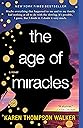
The Age of Miracles: A Novel
Product ID: 4074011
Buy anything from 5,000+ international stores. One checkout price. No surprise fees. Join 2M+ shoppers on Desertcart.
Desertcart purchases this item on your behalf and handles shipping, customs, and support to Spain.
The Age of Miracles: A Novel [Walker, Karen Thompson] on desertcart.com. *FREE* shipping on qualifying offers. The Age of Miracles: A Novel Review: Excellent. But know what you're getting into. - EDIT: Two years after reading it, I still think about this book. It kicked off a period of existential self-reflection for me that I ultimately had to write a novel of my own to deal with. I originally gave it four stars because it was so heavy. That's ridiculous. Any book that can stay with you for two years deserves 5 stars, so here I am, changing my rating. Note: this review contains some minor spoilers A lot has been made about the coming-of-age story in this book and how that is the real story. I disagree. I think the dying of the planet is more than just a backdrop. It infuses everything and casts a pall over all of it. Each reader will of course come away with something a little different, but for me, the idea that the entire world is ending eclipsed everything else. It made Julia's story feel small, insignificant, and hopeless. I understand that for her, the daily tribulations of growing up and learning about her place in the culture and the world were important, even consuming. For me, it was a side event. Watching the slow, inevitable death of the entire planet stole the show. The mood was similar to Mccarthy's The Road: bleak and inescapable. I was left desperate for some ray of hope - something, anything. The novel implies at the end that the main character survives for at least another ten years, but frankly I don't understand how that was even possible. It tries to apply a veneer of normalcy, talking about the main character's parents' home (which her parents still live in), and her plans to go to college. All of it in a world where nearly everyone she's ever known is gone, everything has died, and there is literally no hope. There is no light at the end of this tunnel. There is no reversal of this hell. From the first extra minute in the day, we are all on a steady, dreadful march to an absolute end: an empty, lifeless ball of rock, floating in the blackness. An earlier commenter said something along the lines of, "The real miracle is that they didn't all just off themselves." I agree. This book is as depressing as they come, and you should know that going in. But I've been unable to stop thinking about it since I finished it two hours ago, and that is a sign of a strong work. Walker's prose is brutal and unflinching. I don't think things should be ignored simply because they are terrible to contemplate. The scenario demands my attention, and forces me to ask myself the horrible questions: If it were me, what would I do? Is there any point in persevering when each day just brings deeper pain and more despair? This is the question I wish Walker had answered. But I don't think she did. Instead, she just showed me a nightmare future, bleak and devoid of hope, and left me to decide for myself. Review: Misleading... - Though this novel has many strengths, the setting--an alternate earth where the rotation is slowing and the days (and nights) are getting longer--is not really one of them. It is certainly a clever idea somewhat reminiscent of the popular episode of The Twilight Zone called "The Midnight Sun" and Ms. Walker deserves credit for using her setting well once it's in place. However, readers weaned on science fiction will be disappointed in certain aspects of this setting. The weakest point is that there is no effort made to explain the slowing, and having scientists claim repeatedly that they just have no idea what's happening is a cop out. It seems unlikely at best, lazy at worst. Even bad explanations of scientific phenomena are usually better than none at all in a scientific world. It is also a highly optimistic view of the breakdown of society in the face of the changes. Apart from a few instances of vandalism, humanity takes its downward spiral rather well. Again, it seems very unlikely. Focusing on the setting is a bit misleading, however, because this book is really a female coming-of-age story and it is here that Ms. Walker shines. She tells this story very well, with plenty of insight into the mentality of young women. Julia, our protagonist here, goes through many of the common experiences of youth: losing her BFF, getting bullied, buying her first bra, discovering her parents' weaknesses, liking a boy, dealing with illness, etc. Most of this story could have been lifted right out of this setting and told in another challenging environment with little impact on how Julia reacts but, of course, her experience just happens to be heightened in the face of worldwide catastrophe. This adds a layer of seeming uniqueness that contributes to the intensity of the emotion. Julia is a very memorable character. It is well done. In fact, when Ms. Walker isn't reminding us of the fact that the slowing has no explanation, she uses it to her advantage. There are some nice scenes centered on the changes; particularly, the changes in tides. Julia explores washed out coastal houses with her father and goes down to see a group of beached whales with her longed-for boy, Seth. She uses both scenes to bring out a number of emotional truths. Which, in the end, is what makes this book a success. Everything in it is about getting to the emotional core of Julia. In this, Ms. Walker makes the most of everything she puts in, and creates a book worth reading.
| Best Sellers Rank | #136,113 in Books ( See Top 100 in Books ) #294 in Dystopian Fiction (Books) #452 in Coming of Age Fiction (Books) #1,604 in Literary Fiction (Books) |
| Customer Reviews | 4.1 4.1 out of 5 stars (4,726) |
| Dimensions | 5.21 x 0.63 x 8 inches |
| ISBN-10 | 0812982940 |
| ISBN-13 | 978-0812982947 |
| Item Weight | 8 ounces |
| Language | English |
| Print length | 304 pages |
| Publication date | January 15, 2013 |
| Publisher | Random House Trade Paperbacks |
A**I
Excellent. But know what you're getting into.
EDIT: Two years after reading it, I still think about this book. It kicked off a period of existential self-reflection for me that I ultimately had to write a novel of my own to deal with. I originally gave it four stars because it was so heavy. That's ridiculous. Any book that can stay with you for two years deserves 5 stars, so here I am, changing my rating. Note: this review contains some minor spoilers A lot has been made about the coming-of-age story in this book and how that is the real story. I disagree. I think the dying of the planet is more than just a backdrop. It infuses everything and casts a pall over all of it. Each reader will of course come away with something a little different, but for me, the idea that the entire world is ending eclipsed everything else. It made Julia's story feel small, insignificant, and hopeless. I understand that for her, the daily tribulations of growing up and learning about her place in the culture and the world were important, even consuming. For me, it was a side event. Watching the slow, inevitable death of the entire planet stole the show. The mood was similar to Mccarthy's The Road: bleak and inescapable. I was left desperate for some ray of hope - something, anything. The novel implies at the end that the main character survives for at least another ten years, but frankly I don't understand how that was even possible. It tries to apply a veneer of normalcy, talking about the main character's parents' home (which her parents still live in), and her plans to go to college. All of it in a world where nearly everyone she's ever known is gone, everything has died, and there is literally no hope. There is no light at the end of this tunnel. There is no reversal of this hell. From the first extra minute in the day, we are all on a steady, dreadful march to an absolute end: an empty, lifeless ball of rock, floating in the blackness. An earlier commenter said something along the lines of, "The real miracle is that they didn't all just off themselves." I agree. This book is as depressing as they come, and you should know that going in. But I've been unable to stop thinking about it since I finished it two hours ago, and that is a sign of a strong work. Walker's prose is brutal and unflinching. I don't think things should be ignored simply because they are terrible to contemplate. The scenario demands my attention, and forces me to ask myself the horrible questions: If it were me, what would I do? Is there any point in persevering when each day just brings deeper pain and more despair? This is the question I wish Walker had answered. But I don't think she did. Instead, she just showed me a nightmare future, bleak and devoid of hope, and left me to decide for myself.
T**H
Misleading...
Though this novel has many strengths, the setting--an alternate earth where the rotation is slowing and the days (and nights) are getting longer--is not really one of them. It is certainly a clever idea somewhat reminiscent of the popular episode of The Twilight Zone called "The Midnight Sun" and Ms. Walker deserves credit for using her setting well once it's in place. However, readers weaned on science fiction will be disappointed in certain aspects of this setting. The weakest point is that there is no effort made to explain the slowing, and having scientists claim repeatedly that they just have no idea what's happening is a cop out. It seems unlikely at best, lazy at worst. Even bad explanations of scientific phenomena are usually better than none at all in a scientific world. It is also a highly optimistic view of the breakdown of society in the face of the changes. Apart from a few instances of vandalism, humanity takes its downward spiral rather well. Again, it seems very unlikely. Focusing on the setting is a bit misleading, however, because this book is really a female coming-of-age story and it is here that Ms. Walker shines. She tells this story very well, with plenty of insight into the mentality of young women. Julia, our protagonist here, goes through many of the common experiences of youth: losing her BFF, getting bullied, buying her first bra, discovering her parents' weaknesses, liking a boy, dealing with illness, etc. Most of this story could have been lifted right out of this setting and told in another challenging environment with little impact on how Julia reacts but, of course, her experience just happens to be heightened in the face of worldwide catastrophe. This adds a layer of seeming uniqueness that contributes to the intensity of the emotion. Julia is a very memorable character. It is well done. In fact, when Ms. Walker isn't reminding us of the fact that the slowing has no explanation, she uses it to her advantage. There are some nice scenes centered on the changes; particularly, the changes in tides. Julia explores washed out coastal houses with her father and goes down to see a group of beached whales with her longed-for boy, Seth. She uses both scenes to bring out a number of emotional truths. Which, in the end, is what makes this book a success. Everything in it is about getting to the emotional core of Julia. In this, Ms. Walker makes the most of everything she puts in, and creates a book worth reading.
C**Y
Great Story that Could Have Been More
This book has a facinating premise, and that's exactly why I purchased it directly after reading a review online and the synopsis. The writing is beautiful, the author was truly able to portray how ordinary life both breaks down and carries on amid some exceptionally terrifying events. For example, the fact that people still have children in this slow moving apocolyptic world brought a tear to my eye. *spoiler* However, the ending is just so - stark. Chapter after chapter passes in detail so rich it sometimes felt thick and oppressive (which I actually thought was a good thing, considering the subject matter) suddenly you're thrust into the ending where major players vaguely exit stage left and others you just have no idea about. There's a brief, unsatisfying description of the narrator's 'present' experience and what the state of the rotation is at that point. It was jarring, and up until that last chapter I would have given the book a five star, 'omigod everyone must read this book' review. I still think it's a good read - especially if you're someone who likes to recreate the story in your own mind to suit your own wants in the ending.
C**E
The Age of Miracles is as beautifully written as it is terrifying to contemplate. The novel reminds us that it's usually not the things we are conscious of that ultimately shape the course of our lives. It is also a testament to just how addicted humankind is to living.
G**M
I recently reviewed this author's latest novel, The Strange Case of Jane O, and showered it with praise. I'm more than happy to do the same for this, her debut novel, which is just as remarkable and offers wonderful examples of the intelligence, vivid imagination and turn of phrase that characterise her writing. The depth of her research, the structure and balance of her sentences, her instinctive feel for which emotional buttons to press at exactly the right moment and her careful tiptoe across that fragile borderline which separates it from mawkish sentimentality all speak volumes for the care she lavishes upon each page. Just brilliant.
A**B
Amazing book, the last 40 pages almost had me in tears. Highly recommended. A beautiful coming of age tale, resemblance to present day is uncanny
E**S
Reading some of the other reviews here I feel a gathering sense of objection. I add my voice to be clear there are those who've read this lovely novel and don't easily dismiss it. I would not be so dismissive of aspects of the book that lack drama or histrionics or deep penetrating explanations. An eleven year old, as the girl Julia portrayed in the book is, must navigate a world that is full of complex and inexplicable events. Friendships end with no explanation as to why, people stop speaking to you and you'll never find out what happened, people you love just go missing, never to return, your father may be betraying your family and it's not clear why and it may never be, people taunt you and you can't guess at their motivations and here a global event unfolds and the answer is beyond the reach of human understanding. To me the biggest catastrophe is the constant undercurrent of loneliness bound into each character and Julia's prospect at being consigned to a lonely life. I loved Julia's constant awareness of the boy she likes and her depiction of him. She is sweet and thoughtful and clearly deserves friendship. I would have been sad if her loneliness was never disrupted. I found this book insightful, beautifully written, sad and lovely. The ending is poignant and note perfect.
P**R
I loved this story and the way the perspective was still on everyday classic concerns while the world around is facing a major crisis. I warmed to the girl and fell into her life and her mind and was routing for her to eek some goodness out of a life that was evaporating around her. I think I will read it again so I can do this review justice
Trustpilot
2 months ago
2 weeks ago