We remain fully operational. Our teams are working around the clock to ensure your deliveries continue safely.

DOWNLOAD THE APP


Customer Services
Copyright © 2025 Desertcart Holdings Limited
DOWNLOAD THE APP
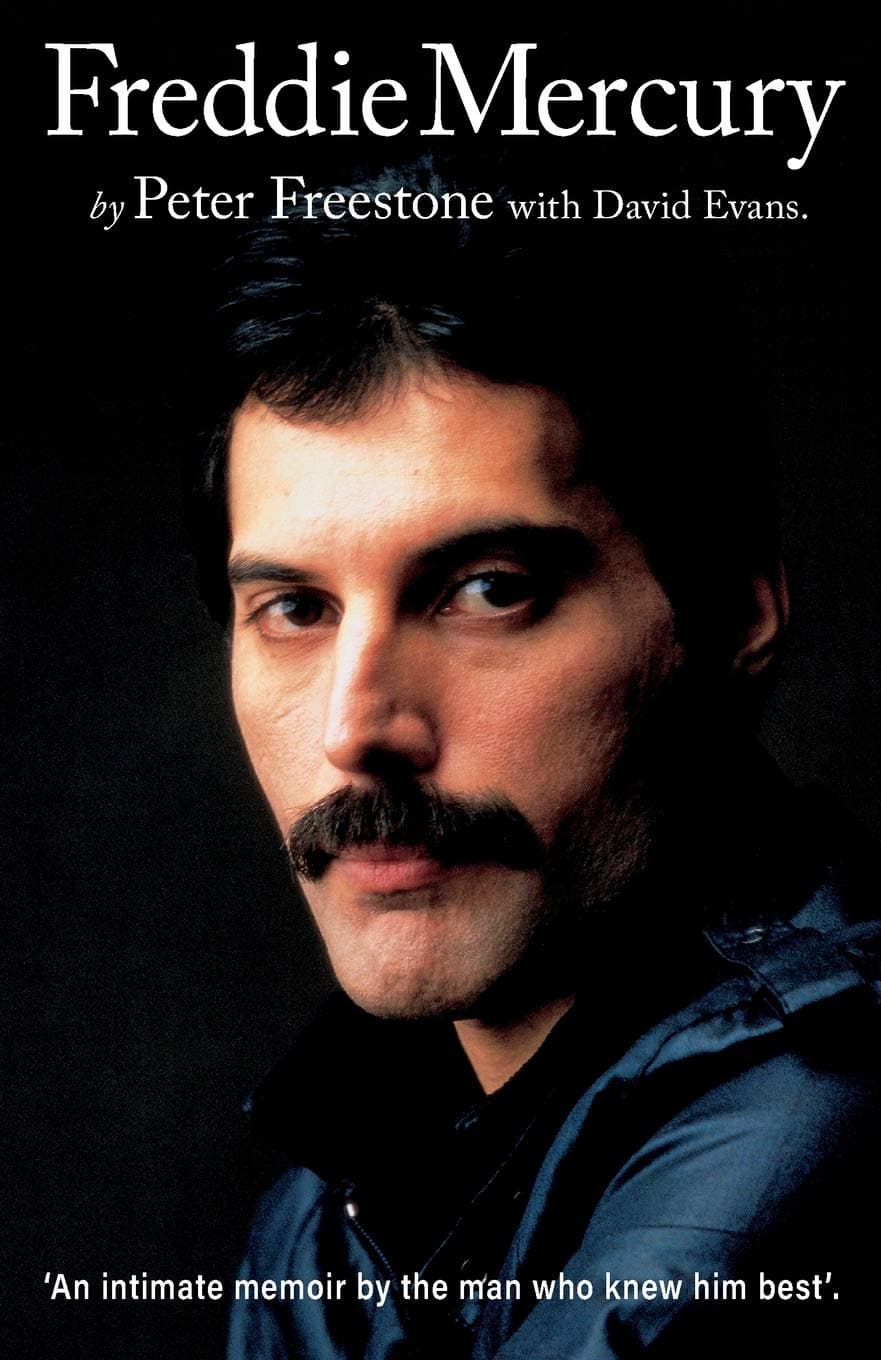
Freddie Mercury: An Intimate Memoir by the Man Who Knew Him Best [Freestone, Peter, Evans, David] on desertcart.com. *FREE* shipping on qualifying offers. Freddie Mercury: An Intimate Memoir by the Man Who Knew Him Best Review: Did we all read the same book? - So many of the reviewers of this book seem to want everything spelled out in capital letters. Perhaps they have no nuances, no ability to read between the lines. To me, this is definitely a read between the lines book. This is not a capital letters book. As for some of the criticisms about it, they just seem to me to rather miss the point. Of course Peter isn't writing about what he doesn't know. He didn't grow up with Freddie. He was only with him in the role of personal assistant for the last decade or so of Freddie's life. For the people who complained that Peter said nothing at all about Freddie's childhood, it seems perfectly obvious to me that Freddie went WAY out of his way to obliterate entirely that portion of his life---with Peter and everyone else. If a person does that, use your common sense---why would he unless his childhood was something he was embarrassed and/or ashamed about? That's what I mean by reading between the lines. For example, on page 208 of my paperback version, Peter gives in my opinion all the information you need to know about Freddie's relationship with his immediate family when he writes: "...by maintaining a distance from them, he was also able to protect himself from some of their censure." Censure? That tells me volumes---that they disapproved of him in some ways. Probably, although I don't know this for a fact, because they were a religious family, they disapproved of his sexuality choices. It has been my experience that people who take organized religion very seriously are the most intolerant of those who choose to follow any path other that the one THEY have deemed correct. The Scientologists and the religious right are good examples of this. Put yourself in Freddie's shoes: here's an inordinately creatively gifted little boy from a restrictive highly religious family, who is shipped off to a boarding school---in another country!---from the age of eight until the age of sixteen, with only short holidays once a year to see his family members. While at this boarding school, by Freddie's own admission, he was chased around by at least one schoolmaster. "Chased around"---that suggests sexual abuse to me. I know from my probation officer husband that frequently pedophiles congregate in those situations: Boy Scouts, boarding schools, all boys choirs, etc. Now before someone gets a hernia from misinterpreting what I just said, I don't say that ALL people involved in those very worthwhile organizations are pedophiles, just that statistically, pedophiles are going to prey where the targets are. So here's Freddie, shipped away from his family, who seem intolerant to me, to a rigid boarding school, which seems intolerant to me, to be on at least one occasion "chased" by a schoolmaster. That poor, poor little boy! And yet he must also have had some good from his family, because otherwise he would have cut them off entirely once he had the ability to do so. He never did. Peter writes sensitively and insightfully about Freddie's behaviour. He does I think zero in on the fact that, for whatever reason, Freddie had to have some sort of drama to release his creativity. As Peter so well put it, "He had to sing angry." Anger, as any artist knows, is closely related to sex and sometimes even to inspiration. Most of the time this spark to creativity seems to have taken the form of Freddie picking arguments with lovers, although with the Bill Reid incident, physical violence erupted in the form of Bill actually biting Freddie on the hand. Ouch! Thank God Freddie dropped that idiot shortly thereafter. With regard to people being bored to death by the careful descriptions of Freddie's Garden Lodge estate, again I think they are missing the point. The descriptions of the things Freddie bought and how he decorated tell you volumes about the man. His furnishings tell you Freddie was tasteful, picky, careful, unencumbered by a lack of money like most of us, and very much into controlling his environment. He was into creating pictures, whether they be of a song on a Queen show, or exactly the right painting on the right wall to bring out the exact mood he wanted. Peter shows us that Freddie was an artist and a collector, and nowhere in the book does he state this so well as when he writes something to the effect of, "Freddie was a collector, of things and of people." The Freddie Mercury I came to know from reading this book was a highly gifted creative man, who had an enormous sexual appetite, a complete and utter devotion to the people who had proved themselves to be his real friends, and a man with absolutely no middles whatsoever. He was either embarrassed or ashamed of his origins and tried to hide them all his adult life, but not to the extent of denying his family once he became a huge star, although he was careful to keep his interactions with them on his own terms. He seemed to me to be extremely funny and extremely sensitive to slights both real and imagined. In addition, he seemed to be someone who went to great pains most of the time never to delve into his own psyche---and in order to avoid doing so, he surrounded himself with virtually non-stop activity. He seemed to have a gigantic capacity for fun and an equally gigantic capacity to be hurt. He hated confrontation and loved Mary Austin, Peter Freestone, Joe Fanelli, Jim Hutton, and all of his many cats, but each of them in deliberately separate and different ways. He seemed to me to be a master of compartmentalization, much like President John F. Kennedy, in that no one person, with the possible exception of Mary Austin, ever got the fully exposed, fully vulnerable Farrokh Borni Bulsara---pronounced FARR-oke. (That's the way his mother pronounced his name on the documentary I saw, and she should know.) And lastly, he seemed to me to be secretive, not necessarily because he was intrinsically that way, but because he learned through painful experience that that was how to protect himself. I consider Peter Freestone's book to be excellent---as long as you can read between the lines. Review: Best book I ever read about Freddie Mercury - This book is absolutely splendid in every way! The level of detail is incredible, and it held my interest from the very first page to the last. If you really want to know all about Freddie Mercury from 1979 - his death, get this book. Peter Freestone formerly met Freddie in late 1979; so the book is based on the 12 years he spent with him until the day he passed. What I liked about this book is it was not written by someone who was in an intimate relationship with Freddie; but rather in a deep friendship and a support role.
| Best Sellers Rank | #1,192,116 in Books ( See Top 100 in Books ) #2,088 in Rock Band Biographies #2,861 in Rock Music (Books) #6,135 in Actor & Entertainer Biographies |
| Customer Reviews | 4.6 4.6 out of 5 stars (1,265) |
| Dimensions | 5.04 x 0.85 x 7.94 inches |
| ISBN-10 | 0711986746 |
| ISBN-13 | 978-0711986749 |
| Item Weight | 2.31 pounds |
| Language | English |
| Print length | 258 pages |
| Publication date | November 5, 2001 |
| Publisher | Omnibus Press |
T**R
Did we all read the same book?
So many of the reviewers of this book seem to want everything spelled out in capital letters. Perhaps they have no nuances, no ability to read between the lines. To me, this is definitely a read between the lines book. This is not a capital letters book. As for some of the criticisms about it, they just seem to me to rather miss the point. Of course Peter isn't writing about what he doesn't know. He didn't grow up with Freddie. He was only with him in the role of personal assistant for the last decade or so of Freddie's life. For the people who complained that Peter said nothing at all about Freddie's childhood, it seems perfectly obvious to me that Freddie went WAY out of his way to obliterate entirely that portion of his life---with Peter and everyone else. If a person does that, use your common sense---why would he unless his childhood was something he was embarrassed and/or ashamed about? That's what I mean by reading between the lines. For example, on page 208 of my paperback version, Peter gives in my opinion all the information you need to know about Freddie's relationship with his immediate family when he writes: "...by maintaining a distance from them, he was also able to protect himself from some of their censure." Censure? That tells me volumes---that they disapproved of him in some ways. Probably, although I don't know this for a fact, because they were a religious family, they disapproved of his sexuality choices. It has been my experience that people who take organized religion very seriously are the most intolerant of those who choose to follow any path other that the one THEY have deemed correct. The Scientologists and the religious right are good examples of this. Put yourself in Freddie's shoes: here's an inordinately creatively gifted little boy from a restrictive highly religious family, who is shipped off to a boarding school---in another country!---from the age of eight until the age of sixteen, with only short holidays once a year to see his family members. While at this boarding school, by Freddie's own admission, he was chased around by at least one schoolmaster. "Chased around"---that suggests sexual abuse to me. I know from my probation officer husband that frequently pedophiles congregate in those situations: Boy Scouts, boarding schools, all boys choirs, etc. Now before someone gets a hernia from misinterpreting what I just said, I don't say that ALL people involved in those very worthwhile organizations are pedophiles, just that statistically, pedophiles are going to prey where the targets are. So here's Freddie, shipped away from his family, who seem intolerant to me, to a rigid boarding school, which seems intolerant to me, to be on at least one occasion "chased" by a schoolmaster. That poor, poor little boy! And yet he must also have had some good from his family, because otherwise he would have cut them off entirely once he had the ability to do so. He never did. Peter writes sensitively and insightfully about Freddie's behaviour. He does I think zero in on the fact that, for whatever reason, Freddie had to have some sort of drama to release his creativity. As Peter so well put it, "He had to sing angry." Anger, as any artist knows, is closely related to sex and sometimes even to inspiration. Most of the time this spark to creativity seems to have taken the form of Freddie picking arguments with lovers, although with the Bill Reid incident, physical violence erupted in the form of Bill actually biting Freddie on the hand. Ouch! Thank God Freddie dropped that idiot shortly thereafter. With regard to people being bored to death by the careful descriptions of Freddie's Garden Lodge estate, again I think they are missing the point. The descriptions of the things Freddie bought and how he decorated tell you volumes about the man. His furnishings tell you Freddie was tasteful, picky, careful, unencumbered by a lack of money like most of us, and very much into controlling his environment. He was into creating pictures, whether they be of a song on a Queen show, or exactly the right painting on the right wall to bring out the exact mood he wanted. Peter shows us that Freddie was an artist and a collector, and nowhere in the book does he state this so well as when he writes something to the effect of, "Freddie was a collector, of things and of people." The Freddie Mercury I came to know from reading this book was a highly gifted creative man, who had an enormous sexual appetite, a complete and utter devotion to the people who had proved themselves to be his real friends, and a man with absolutely no middles whatsoever. He was either embarrassed or ashamed of his origins and tried to hide them all his adult life, but not to the extent of denying his family once he became a huge star, although he was careful to keep his interactions with them on his own terms. He seemed to me to be extremely funny and extremely sensitive to slights both real and imagined. In addition, he seemed to be someone who went to great pains most of the time never to delve into his own psyche---and in order to avoid doing so, he surrounded himself with virtually non-stop activity. He seemed to have a gigantic capacity for fun and an equally gigantic capacity to be hurt. He hated confrontation and loved Mary Austin, Peter Freestone, Joe Fanelli, Jim Hutton, and all of his many cats, but each of them in deliberately separate and different ways. He seemed to me to be a master of compartmentalization, much like President John F. Kennedy, in that no one person, with the possible exception of Mary Austin, ever got the fully exposed, fully vulnerable Farrokh Borni Bulsara---pronounced FARR-oke. (That's the way his mother pronounced his name on the documentary I saw, and she should know.) And lastly, he seemed to me to be secretive, not necessarily because he was intrinsically that way, but because he learned through painful experience that that was how to protect himself. I consider Peter Freestone's book to be excellent---as long as you can read between the lines.
N**T
Best book I ever read about Freddie Mercury
This book is absolutely splendid in every way! The level of detail is incredible, and it held my interest from the very first page to the last. If you really want to know all about Freddie Mercury from 1979 - his death, get this book. Peter Freestone formerly met Freddie in late 1979; so the book is based on the 12 years he spent with him until the day he passed. What I liked about this book is it was not written by someone who was in an intimate relationship with Freddie; but rather in a deep friendship and a support role.
S**7
Good read for Freddie Mercury fans.
Enjoyable read. Lot of info. about how Freddie arranged music, his love of opera, etc. Also several boyfriends, both good & bad, were mentioned. Freddie was a loving, generous, but complex man.
N**S
A must-read for any Freddie Mercury fan
Peter Freestone was Freddie Mercury's personal assistant and friend for the last twelve years of Freddie's life. Mr. Freestone's book is a great behind-the-scenes report of Mr. Mercury's life, loves, and friends. After reading this book, I do feel I know the type of person Freddie Mercury was. The author details the good and the bad--though there was not much bad about Freddie. He was a generous (he bought lavish gifts for everyone in his life, including his maids), kind (he never fired anyone no matter how incompetent), and very humble man who valued his friends more than anything else in life. The end of the book describes the last days of Freddie, and it is quite a tear-jerker. However, Mr. Freestone manages to put Mercury's life into perspective. He says Freddie would have hated getting old (I believe that) and he was surrounded by people who adored him till the end. Though Mercury loved life and obviously wanted to live, it almost makes sense that he died so young. Mercury was a brilliant musician and lived his life for the moment. He packed a lot of life in 46 years, and went out as the diva that he was. His exit from life was orchestrated and dramatic, just as I think Freddie would have wanted it:)
B**H
Good but one perspective
This book is written by Freddie’s last personal assistant. It does give a lot of details but I’d hoped for more statements from Freddie. It includes a lot of expected things like drug use & excess, but Freddie was a rock star in the 1980s so very expected. The author details things he was present for which, sadly, includes Freddie’s death. There are a few things that conflict about those last days amongst those who chose to publish books. It almost seems as though Freddie never meant to issue a statement that he had AIDS since he would have been in a coma at the time it was issued. One of the sad things about this great talent’s life is that for some reason he surrounded himself with employees. Freestone was an employee & hopefully also a friend. Freestone gives his theories for various things in Freddie’s life like his loves, promiscuity, sexuality & privacy. Not sure Freestone gets those things right. Freestone seems to have clearly loved Freddie & tries to keep his legacy alive. I just wonder what Freddie would think about everyone’s theories about him. Love Freddie & his music forever. This book is worth reading but take things with a grain of salt.
L**N
Peter Freestone was someone who really knew Freddie Mercury very well. He wasn't just a personal assistant but a very close friend who was by Freddie Mercury's bedside until he took the last breath. Great reading. I truly appreciate Peter Freestone having written this book. This book made me get to know more in depth this incredible genius irreplaceable musician and person that Freddie Mercury is.
ミ**ラ
本書に出てくる人物の簡単な紹介が最初にあるので、わかりやすい。ずーと何年も行動を共にしてきたからこその詳しい内容だと思う。また文章のここそこにフレディへの深い愛情を感じる。まだ読み終えていないが、読んでいくのが楽しみだし、ますますフレディの事が好きになる。
M**O
El paquete llegó en buenas condiciones y además antes de lo previsto. Cuenta con varias imágenes poco vistas, así como diversos datos extras atestiguados de quien fuera el asistente personal (y aliado) de Freddie Mercury durante 12 años. Un libro que narra otra perspectiva de la vida del cantante. ¡Lo adquirí a un grandioso precio! ¡Recomendado ampliamente!
J**T
This book takes a strangely distant stance from its subject. Freddie the man does not really appear here. It is more a catalogue of the externals of his life. Chapters are devoted to inventories and chronologies of 1. Live performances 2. Record sessions 3. Video productions 4. A catalogue of his art and description of Garden Lodge. Then it becomes truly intimate as Peter describes in a couple of chapters Freddie's final illness, death and aftermath. Only this section is intimate and truly moving. Peter seems to have adopted the flippant style that Freddie often favoured in the previous chapters to describe the ending of relationships, and any hiccups in life (e.g. we were particularly not amused). However, this is a worthy addition to the library of any Freddie or Queen fan, and it is devoid of sensationalism, and prurient voyeurism. A very respectful retelling of Peter's experience with Freddie.
G**T
On rencontre l'homme au-delà de l'artiste admiré. C'était décidément quelqu'un d'exceptionnel à bien des égards, parti trop tôt mais pour former sa légende.
Trustpilot
1 month ago
4 days ago