Desertcart purchases this item on your behalf and handles shipping, customs, and support to Spain.
🎧 Elevate your voice, own the room—podcast like a pro with PodMic.
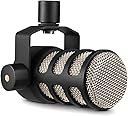
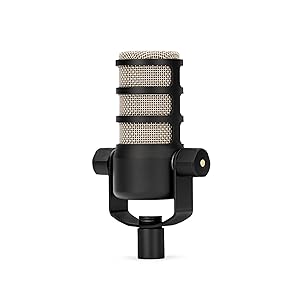
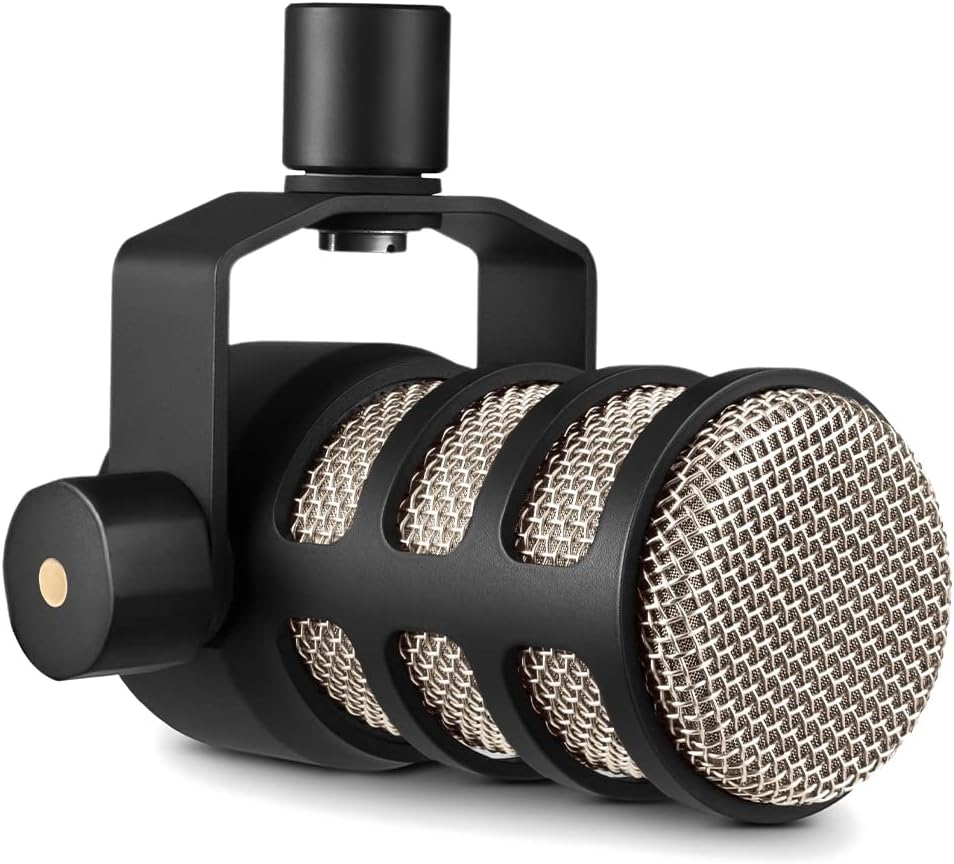
The RØDE PodMic is a premium dynamic cardioid microphone engineered for podcasting and streaming. Featuring a broadcast-quality capsule, built-in pop filter, and shock mounting, it delivers clear, professional sound while rejecting background noise. Its rugged all-metal design ensures durability, and XLR connectivity integrates seamlessly with professional audio interfaces and mixers, making it the go-to mic for creators serious about audio quality.


| ASIN | B07MSCRCVK |
| Antenna Location | Streaming |
| Audible Noise | 78 db |
| Best Sellers Rank | #189 in Musical Instruments ( See Top 100 in Musical Instruments ) #2 in Multipurpose Dynamic Microphones |
| Brand | Rode |
| Built-In Media | PodMic |
| Color | PodMic Black |
| Compatible Devices | PSA1 |
| Connectivity Technology | XLR |
| Connector Type | XLR |
| Customer Reviews | 4.8 out of 5 stars 7,195 Reviews |
| Enclosure Material | Metal |
| External Testing Certification | Não aplicável |
| Frequency Range | 20Hz ~ 20kHz |
| Frequency Response | 20 hertz |
| Global Trade Identification Number | 00698813005567 |
| Hardware Platform | PC |
| Impedance | 150 ohm |
| Item Dimensions | 9 x 6 x 4 inches |
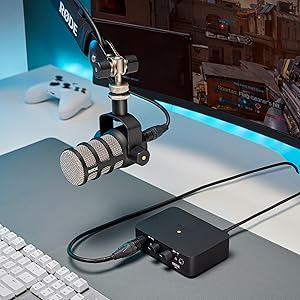
| Item Highlight | Requires Audio Interface (RODECaster, AI-1, or similar). For USB Plug and Play, see PodMic USB |
| Item Type Name | Dynamic Podcasting Cardioid Microphone |
| Item Weight | 937 g |
| Manufacturer | RØDE Microphones |
| Mfr Part Number | PODMIC |
| Microphone Form Factor | Table Array |
| Model Name | PodMic |
| Model Number | PODMIC |
| Number of Batteries | Nonstandard Battery batteries required. |
| Number of Channels | 1 |
| Number of Items | 1 |
| Number of Packs | 1 |
| Polar Pattern | Unidirectional |
| Power Source | Corded Electric |
| Recommended Uses For Product | Streaming |
| Signal-to-Noise Ratio | 78 db |
| Special Feature | Antipop |
| UPC | 698813005567 |
| Unit Count | 1 Count |
| Warranty Description | 2 Year |
M**N
Nothing compares to this microphone for its' price and performance.
Having gone through three (Sennheiser HD599) plug-in microphones, all with cables that unfortunately fail or seem to fail within a small time period. This is my first XLR microphone I've picked up and used in my life and wow. Just absolutely wow. Paired with a Maono G1 Neo (slightly underpowered for this microphone) the RØDE Podmic is quite literally the **best** microphone I have ever owned and used. The RØDE is hefty, and extremely sturdily built, extremely easily set up on an arm (do pay attention to the 'hefty' bit) but can slightly weigh it down a little. Having gone through USB/headsets from Turtlebeach whatever it was called, to Logitech G32, and desktop USB microphones that were random Chinese crap brands, to a snowball ICE (the worst USB microphone I've ever used) to a Blue Yeti. (overpriced, and now owned by a different company lmaooooo) The microphone is perfectly clear, clean and does exactly what it's supposed to do. Friends in Discord hear my voice perfectly (Have a deep voice, so older USB crap mics NEVER worked well) OBS picks up absolutely fine for streaming as well. Of course- some softwares will be needed to perfect the quality to what it can be. The Maono G1 Neo is a decent pair with this microphone, but again as said before, slightly underpowered. I **do** have the gain on the mixer maxed out with the unfortunate hiss of the "S" sound when talking, but it's hardly noticeable, funny enough. All in all- the RØDE Podmic is near a-perfect option for a first-time high quality microphone to start out with for broadcasting, podcasting, Twitch streaming, casual Discord use.
S**O
Great Mic for Podcasting and Streaming
If you are looking for a high-quality microphone without spending too much money, this is a fantastic choice. It feels very solid and heavy because it is made of metal, so you know it will last a long time. The sound is excellent. It makes your voice sound clear and professional, which is perfect if you are recording a podcast, streaming games, or doing voiceovers. Because it is a dynamic microphone, it is really good at blocking background noise, like PC fans or traffic outside. Just keep in mind that it uses an XLR connection, so you will need an audio interface or a mixer to plug it into your computer. Overall, it is a great investment for anyone who wants to improve their audio quality easily.
J**A
Great Audio Quality and Value
This microphone delivers clear, rich sound with excellent background noise rejection. The build quality feels premium, and it’s perfect for podcasting, streaming, or voice recordings. It was easy to set up and has exceeded my expectations. Highly recommend!
D**N
Can you write me a product review of the
The Rode PodMic is a dynamic microphone, the holy grail for many podcasters and streamers. Priced at around $99, it promises broadcast-quality audio at an almost embarrassingly affordable price point. But does it live up to the hype? Let's dive in. First Impressions: The PodMic feels like a tank. Its sleek black metal body and sturdy mesh grille scream quality. It's surprisingly heavy for its size, which inspires confidence in its durability. The included swivel mount offers decent adjustability, and the internal pop filter is a thoughtful touch. Sound Quality: The PodMic shines in the sound department. It captures voices with remarkable clarity and warmth, thanks to its tight cardioid polar pattern that effectively rejects background noise. It's particularly flattering to speech, adding a touch of richness without being boomy. Compared to condenser mics, the PodMic is less sensitive to sibilance and plosives, making it more forgiving for less-than-perfect recording environments. However, the PodMic is a low-output microphone. This means it requires more gain to achieve the same volume level as other mics. This can lead to increased noise if your preamp or audio interface isn't particularly clean. Features and Ease of Use: The PodMic is a plug-and-play XLR microphone, meaning you'll need an audio interface to connect it to your computer. No fancy buttons or dials here – it's all about pure, unadulterated sound quality. This simplicity is refreshing, but some users might miss the bells and whistles found on pricier mics. The Nitty-Gritty: While the PodMic is fantastic for its price, it's not without its quirks. Here are a few things to keep in mind: Requires an audio interface: No USB option here, so factor in the cost of an interface if you don't already have one. Low output: You'll need to crank up the gain, potentially introducing noise. No monitoring: No built-in headphone jack, so you'll need to monitor through your recording software. Limited accessories: The basic package includes only the mic and mount. You'll need to purchase a pop filter and mic arm separately for optimal results. Verdict: Overall, the Rode PodMic is a fantastic value proposition for podcasters and streamers on a budget. Its broadcast-quality sound, rugged build, and simple operation make it a compelling choice for anyone looking to up their audio game. Just be aware of the low output and XLR requirement before you dive in. Rating: 4.5 out of 5 stars
J**E
Are you picking up what I am putting down?
Rode is a well known brand and has been for many years. I expected a lot out of this microphone, and boy did it deliver. The microphone, out of the box, is a simple plug and play set up which make it very consumer friendly and easy to use functionality. The feel of the microphone screams a quality product with high durability in the event you knock it around, or worse, drop it. It has a full metal casing to protect the insides. The size of the microphone makes it easy to work with, though it is on the heavy side. The quality of the recordings are incredibly high. After utilizing this microphone and showing my recordings to friends and family, they were blown away at how professional it sounds. One drawback, and this is like this for all microphones, is the sensitivity of it will allow outside noises to be picked up and that may require some post-processing to eliminate. It is moderately decent at reducing plosives, but I would recommend a wind screen or pop filter for better elimination of that. Additionally, the price range for quality is hard to beat. Pros: Great construction and materials, easy plug and play, Excellent quality Cons: Heavy Overall: I have been impressed with this microphone, even more than my others that I own (AT2020), and will recommend and new comer or veteran to use it. 5/5
J**E
Good sound but very hard to drive.
This is a very good mic but is extremely hard to drive. I have a Behringer UMC202HD and it is simply incapable of getting enough gain to run this. I have the mic gain completely maxed and the output nearly maxed as well and it still struggles. I recommend that you look into audio interfaces that have a much higher gain so that you have some headroom to work with on this mic. The sound of the mic itself is good with a slight warmth to it and solid off axis rejection. My primary use for this mic is teams meetings so I don't have much wiggle room on post processing so getting a mix that I like out of the box was a must. This guy delivers here at a price point that is not either shattering for me. Price point is a difficult subject as mic's run for next to nothing into the thousands so it is hard to quantify the value for these given the range. For me though I placed a hard cap of 200 USD all in for mic and audio interface and this was a perfect match here. Is it as good as my Earthworks ETHOS? No but it is also less than a third of the price so I don't fault it here. All in a great mic with a warm tone that is great for easy sounding audio for podcast or office communications. Four out of five only based on its difficulty to drive but all other areas are exceptional.
C**O
Professional grade!
The RODE PodMic is an amazing microphone that has completely elevated my podcasting game. The broadcast-quality dynamic microphone delivers rich, balanced sound that makes my voice sound professional and polished every time. Whether I’m narrating, interviewing guests, or doing solo episodes, the audio quality is consistently fantastic. The built-in internal pop filter is a lifesaver for minimizing those pesky plosives, so I don’t need to worry about overloading the sound when I get too enthusiastic. The internal shock mounting is another standout feature—it cuts down on vibrations, which means I don’t have to stress about desk bumps or mic stand adjustments ruining my recording. It’s optimized for use with the RODECaster Pro, and the pairing is seamless—it feels like they were made for each other. But even when I’ve used it with other high-quality interfaces, it still delivers exceptional results. The build quality is excellent too—it’s sturdy, compact, and has a sleek, professional look. It’s everything I could ask for in a podcasting mic. If you’re serious about producing high-quality audio content, the RODE PodMic is a game-changer. It’s worth every penny, and I can’t recommend it enough. You’ll sound like a pro from your very first use!
S**H
Professional Radio Sound When Paired with a FetHead
The Setup: I use the Rode PodMic alongside a Rode Procaster for my home podcast. My signal chain is high-spec: the mics run through a Triton Audio FetHead In-Line and FetHead Filter, then into my Pyle 12-Channel Mixer, and finally into a Tascam DR-60D MKII. I also route PC audio and live phone calls through the mixer. Performance & Audio Quality: The PodMic is built like a tank and delivers a rich, broadcast-style tone. However, it is a low-output mic. By using the FetHead, I get that essential 27dB clean boost, which means I don't have to touch the gain knobs on my Pyle mixer. This results in a crisp, clear sound with absolutely no background hiss, even when recording live phone calls or mixing in background music from my PC. Build and Design: Internal Pop Filter: It does a great job taming plosives, though I find the FetHead Filter helps roll off even more low-end rumble for a cleaner recording on my Tascam. Integrated Swing Mount: Makes it incredibly easy to position, and the all-metal construction feels very premium for the price. Room Rejection: The cardioid pattern is excellent. It picks up my voice clearly while ignoring the noise from my PC fans or the room. Final Verdict: On its own, the PodMic is a good mic, but when you put a FetHead in front of it and run it through a decent board like the Pyle, it becomes a pro-grade broadcast tool. It’s the perfect choice for anyone who wants that "radio voice" without spending $400+ on a Shure SM7B.
R**.
The Right Microphone for Podcasters and Voice-Over Artists
I absolutely love this mic, it has completely transformed the way my voice sounds on podcasts and voice-overs—it’s warm, clear, and has that rich broadcast tone you'd expect from much more expensive microphones. It feels incredibly solid and well-built, with a heavy all-metal body that screams quality. I’m using it with an audio interface, and once it's properly dialed in, the sound is crisp with minimal background noise, even in a less-than-perfect room. No need for an external pop filter either—the built-in windscreen does a great job. If you're confused about which microphone to get, check this out. First let's look at Dynamic vs. Condenser Microphones **Dynamic Microphones** * Great for podcasting, voice-overs, and live performances * Handle loud sounds well and are less sensitive to background noise * Very durable and can take a beating * Don't pick up fine audio details as clearly as condenser mics * Example: Rode PodMic **Condenser Microphones** * Best for studio vocals, singing, or acoustic instruments * Very sensitive and capture more detail and high frequencies * Can easily pick up room noise, echoes, or background sounds * Usually require phantom power from an audio interface or mixer Now let's check out USB vs. XLR Microphones **USB Microphones** * Plug directly into your computer's USB port * No extra equipment needed—great for beginners * Usually limited to using one mic at a time * Less flexibility to upgrade your setup later * Example: Blue Yeti **XLR Microphones** * Use professional 3-pin XLR cables and require an audio interface or mixer * Provide better sound quality and more control over audio settings * Allow you to upgrade different parts of your setup over time * Require more setup, but offer better long-term value and performance * Example: Rode PodMic with Focusrite Scarlett Solo I hope this helps :)
A**H
Perfect
Great sound pickup
M**I
Super mikrofon do podcastów
bardzo dobry mikrofon. Używam do podcastów. Wszystko zgodnie z opisem
D**N
Top quality
Top quality from rode as expected, the mic feels heavy and has a good build quality, just make sure you buy the XLR cable as this mic doesn't come with any. Everything works as expect, just plug and play!
H**Y
High quality mic
Versatile Rode mic with a very solid build quality. Great for podcasting or any other voice audio recording. Built to last and it definitely feels that way. Do note that it’s a heavy device, and a stand has to be purchased separately. Also note that it requires a separate cable with an XLR female connector.
Trustpilot
1 month ago
5 days ago