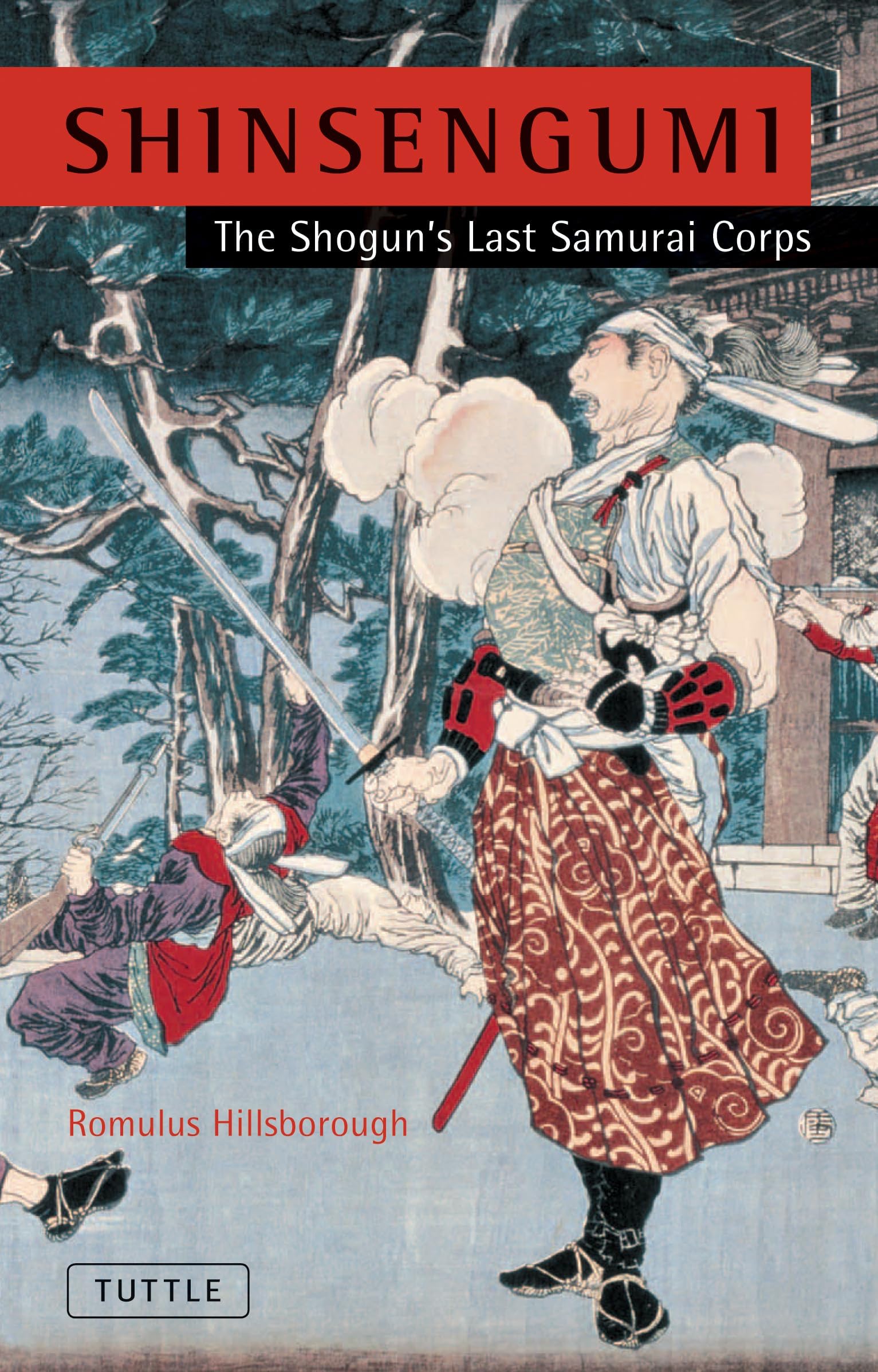
Shinsengumi: The Shogun's Last Samurai Corps
Product ID: 13354735
Shinsengumi: The Shogun's last Samurai Corps is the true story of the notorious samurai corps formed in 1863 to arrest or kill the enemies of the Tokugawa Shogun. The only book in English about the Shinsengumi, it focuses on the corps' two charismatic leaders, Kondo Isami and Hijikata Toshizo, both impeccable swordsmen. It is a history-in-brief of the final years of the Bakufu, which collapsed in 1867 with the restoration of Imperial rule. In writing Shinsengumi, Hillsborough referred mostly to Japanese-language primary sources, including letters, memoirs, journals, interviews, and eyewitness accounts, as well as definitive biographies and histories of the era. The fall of the shogun's government (Tokugawa Bakufu, or simply Bakufu) in 1868, which had ruled Japan for over two and a half centuries, was the greatest event in modern Japanese history. The revolution, known as the Meiji Restoration, began with the violent reaction of samurai to the Bakufu's decision in 1854 to open the theretofore isolated country to "Western barbarians." Though opening the country was unavoidable, it was seen as a sign of weakness by the samurai who clamored to "expel the barbarians." Those samurai plotted to overthrow the shogun and restore the holy emperor to his ancient seat of power. Screaming "heaven's revenge," they wielded their swords with a vengeance upon those loyal to the shogun. They unleashed a wave of terror at the center of the revolution - the emperor's capital of Kyoto. Murder and assassination were rampant. By the end of 1862, hordes of renegade samurai, called ronin, had transformed the streets of the Imperial Capital into a "sea of blood." The shogun's administrators were desperate to stop the terror. A band of expert swordsmen was formed. It was given the name Shinsengumi ("Newly Selected Corps") - and commissioned to eliminate the ronin and other enemies of the Bakufu. With unrestrained brutality bolstered by an official sanction to kill, the Shinsengumi soon became the shogun's most dreaded security force. In this vivid historical narrative of the Shinsengumi, the only one in the English language, author Romulus Hillsborough paints a provocative and thrilling picture of this most fascinating period in Japanese history. Review: Well worth the read - A necessary read to hear the other side of history. Review: Historical and Humanizing - Excellent combintion of historical references and nonfiction creative writing. The history of the Shinsengumi, unfortunately, is not as readily available for English-readers. Thus enters Hillsborough`s work. The text provides an in-depth and complicated look into the political, social, and personal motivations of the biggest names in the Shinsengumi. The appenices and additional citations provide more information for anyone interested in diving further into their history. Highly recommend to history buffs and Japanese culture enthusists!
| Best Sellers Rank | #2,974,793 in Books ( See Top 100 in Books ) #585 in Japanese History (Books) #1,202 in Intelligence & Espionage History #12,537 in World History (Books) |
| Customer Reviews | 4.3 out of 5 stars 157 Reviews |
M**,
Well worth the read
A necessary read to hear the other side of history.
E**O
Historical and Humanizing
Excellent combintion of historical references and nonfiction creative writing. The history of the Shinsengumi, unfortunately, is not as readily available for English-readers. Thus enters Hillsborough`s work. The text provides an in-depth and complicated look into the political, social, and personal motivations of the biggest names in the Shinsengumi. The appenices and additional citations provide more information for anyone interested in diving further into their history. Highly recommend to history buffs and Japanese culture enthusists!
J**D
Brings Alive the Story of the Shogun's Last Samurai Corps
I highly recommend this book for anyone interested in the Shinsengumi, Bakumatsu or early Meiji Restoration periods of Japanese history. It gave me a better understanding, despite the author’s at times heavy-handed style, about who the Shinsegumi were, what they did and their role in Japanese history in an easy to understand and readable manner. I appreciated the way hard information, stories and personalities were played out to give the subject matter human depth. Despite the author's tone, I found Shinsengumi less villainous and more men of their times, the Shogunate’s equal and opposite reaction to what we’d now call domestic terrorism. Shinsengumi were violent and merciless and their opponents were no better. The people they were created to defeat were plotting to overthrow the government, at times burn down Kyoto (which would kill lots of innocent people) and abduct the Emperor if need be to carry out their plans. (The Ikedaya incident alone in a good example of this) Ultimately, those revolutionaries and their better contemporaries such as Saigo Takamori did overcome and create a better Japan but their methods were not peaceful. Telling this story fleshes out turmoil in Kyoto and the ground-level fighting done to keep the peace as well as teaching about who the individuals in the Shinsengumi were and their varied backgrounds. What I found most interesting about Kondo Isami and Hijikata Toshizo is that they were self-made samurai who rose from the ranks of peasants, something that should have been impossible in Japan’s rigid caste system but in these chaotic times men like them were elevated based on ability and not birth. The book’s downside is the author’s self-indulgent writing style. He gives himself leeway in the beginning by claiming this isn’t really “non-fiction” because not all of his sources are foolproof, but by that logic no true non-fiction may exist. The book often has a negative tone toward its subject matter and comes off as opinionated when the narrative would better be served by telling the story and giving context to create positive or negative impressions instead of zeroing in on what’s dislikable about X, Y or Z or using colorful adjectives. And as others have said, the ‘propensity to kill’ repetition was pointless and annoying unless the goal was for it to serve as the inspiration for some sweet Shinsengumi-themed death metal song lyrics. (For context though, despite its being peppered throughout the book, the phrase is only obnoxious on one page of constant repetition so it’s not on every other page as our reviews may make it seem.) If it wasn’t for the style I would give this book five stars for being informative, highly readable and memorable.
B**A
Very interesting
It is very hard to find a book in English about the Shinsengumi. This book has a lot of information about them that can not be found elsewhere. This book uses all the original Japanese names for things and people. For example the "Shogun" are refereed to as "Bakufu" which is what they are called in Japanese. I always thought that "Shogun" was a Japanese word, but it is not. I needed a book to reference for my Japanese culture class paper and this book was perfect for it.
K**R
Kind of scholarly, kind of gossipy
I'm not too sure how to describe this book. First, let me say that I did enjoy the story. For those only marginally acquainted with he subject, the Shinsengumi were supposed to be a pseudo-police force to protect the Shogun at the end of the Tokugawa shogunate. They failed, on many levels. the Shinsengumi have a special place in the hearts and history of the Japanese - the closest parallel I can think of is the Texas Rangers, and even then that is not a good comparison. The Shinsengumi have been portrayed in film and anime (most notably Rurouni Kenshin for anime and, well, Shinsengumi with Toshiro Mifune for film); it's through anime that I became interested in knowing more. The good parts: There is a lot of information here. This is the scholarly part. Mr. Hillsborough does a good job of telling the story of the Shinsengumi, explaining the historical setting and giving insight into the characters and their motivations. Footnotes and textual explanations while not copious are sufficient. The bad parts: somehow, even though we are talking only a period of some 6 years the story seems short, almost a sketch. Dry. Bring a bottle of water with you dry. And, one of the most dramatic moments of the Shinsengumi - one of the most dramatic moments in Japanese history, the incident at Ikeda'ya - is pretty unsatisfying. Accurately portrayed I have no doubt but somehow lacking. For a student of Japanese history and culture, this is a good book and does the job well and I do recommend it for this reader. For the casual reader in Japonica, maybe not so much.
M**N
An interesting Historical Narrative
Very informative book. The author does not fail on depicting the Shinsengumi especially since it is the first English Language book on the Shinsengumi. The author is very organized in his sources. If the reader has a hard time keeping up with Japanese names, there is a Japanese glossary for the terms used in the book. Good Job Hillsborough!
A**W
Shinsengumi
If you are interested in Japanese history regarding: the Edo Period, the fall of it, and/or samurai in general, then this book is definitely for you. There are only about a dozen characters in the book, but to comprehend the story you need to remember their names and roles (an easy thing to do, actually). Just remember this from page one. I lived in Japan for a number of years and had a blast associating the places in the book with where I'd been. The author did a tremendous amount of research for this book and should be rewarded for it. He even found pictures of the two main characters. That is a real treat to see - putting faces on the names. So, I give him 5 stars; coming from a person interested in this type of history.
K**R
A great read.
Easy to read and digest. Informative, captivating, and transports you into the history. You feel the power and emotions of the historical figures during this turbulent era in Japan's history.
L**E
solo per chi conosce l'inglese
molto interessante e approfondito, ben scritto, un pò tosto in certi punti ma solo per la difficoltà di capire alcuni termini. Storicamente accurato.
D**N
Excellent account of the Shinsengumi
This book is very well written and explains the main events that characterize the Shinsengumi and it's function from its inception until its end. It also includes the reasons for what happened, how they happened, and who, why, and what the people involved did in the last years of the Shogun. It explains how the era of the Shogun ended and the era of the emperor began. The book is easy to read and very interesting all the way through. For anyone interested in knowing what happened at that time, this is highly recommended.
A**R
Très satisfaisant
Très satisfaisant
A**E
Sehr informativ
Das Buch ist sehr informativ und hält sich an historische Fakten und fasst sehr schön zusammen, was von damals überliefert ist. Es ist allerdings absolut keine 'leichte Unterhaltungslektüre', sondern wirklich eher ein Geschichtsbuch.
C**N
Formidable !
Envoyé rapidement et bien protégé, je suis absolument ravie ! Quant au livre lui-même, même avec un niveau d'anglais moyen, cela se lit assez simplement. Cela permet de mieux comprendre certains points de l'époque du Bakumatsu. Admirant le Shinsengumi et appréciant l'Histoire, je suis comblée. Vraiment, je recommande cet ouvrage. Que ce soit pour approfondir ses connaissances en la matière que pour sa culture générale.
Trustpilot
3 weeks ago
3 days ago