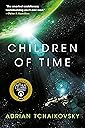
Children of Time
Product ID: 111035545
Desertcart purchases this item on your behalf and handles shipping, customs, and support to Spain.
Adrian Tchaikovsky's Arthur C. Clarke Award-winning novel Children of Time is the epic story of humanity's battle for survival on a terraformed planet. The last remnants of the human race left a dying Earth, desperate to find a new home among the stars. Following in the footsteps of their ancestors, they discover the greatest treasure of the past age -- a world terraformed and prepared for human life. But all is not right in this new Eden. In the long years since the planet was abandoned, the work of its architects has borne disastrous fruit. The planet is not waiting for them, pristine and unoccupied. New masters have turned it from a refuge into mankind's worst nightmare. Now two civilizations are on a collision course, both testing the boundaries of what they will do to survive. As the fate of humanity hangs in the balance, who are the true heirs of this new Earth? Review: Awe-inspiring! Brilliant! - This is a plausible and very entertaining book by Adrian Tchaikovsky, which I read as the Kindle edition. I will go so far as to say it is in the tradition of some of the finest classic science fiction, like that of Arthur C. Clarke. The science is all plausible by today’s anticipations of what will likely exist in the medium to long-term future. Earth has had its day; the Old Empire – near God-like in its capabilities – has fallen and the survivors on Earth succeed in only partially reclaiming their predecessors’ capabilities. Among such capacities were interstellar travel and terraforming distant planets within the galaxy. The story begins with Dr. Avrana Kern, eventually the last survivor aboard the Brin 2 satellite, an experimental station whose mission is to accelerate long-term evolution of life on “her”planet, which had been previously terraformed by the Old Empire; her goal was”to seed the universe with all the wonders of Earth” and become a god in so doing. She became progressively megalomaniacal over two millennia; her evolving status – both as perceived by herself and by others – is a twisting and interesting commentary in its own right, though not an essential to the plot. Her mission was to send a population of monkeys (which were suspended in cold stasis, as were all interstellar travelers) down to the surface, then accelerate and guide their evolution through use of an engineered nano-virus which was to be separately sent down, designed to infect the monkey population only. However, an unknown member of NUN in her crew (non ultra natura – a group which vehemently opposed seeding the universe with humans, engineered or not), sabotages the re-entry. The monkeys are all destroyed, but the flask containing the virus reaches the planet intact, and has long-term tremendous, unanticipated results. The creators of the virus never imagined it might infect other species. The effect of the virus on spiders – whose existence on the planet was unknown to Dr. Kern (she was unsure whether some of the monkeys might have survived the sabotage) was dramatic, indeed, and this forms the warp on which the entire compelling story is beautifully woven. Dr. Kern waited a thousand years or so in and occasionally out of stasis, to be awakened finally by the Brin 2’s AI when her monkeys finally “phone home,” i.e. contact her when they became sufficiently cognitively advanced. Told along with our introduction to Dr. Kern and the beginnings of her God complex, is the story of Earth’s destruction in a final war between the NUN’s and those who were about the business of seeding the universe with life. The fact that weapons had advanced but human restraint had not led to the end times. These events form merely the background for the story of what happens over a few millennia after Earth’s demise on and near “Kern’s planet.” Much of the tale is told from the point of view of Dr. Holsten Mason, the classicist of the Key Crew of the starship Gilgamesh. His role was to understand history of the Old Empire and translate its dead language as the need arose (with Dr. Kern, for instance). The ‘cargo’ consists of 500,000 humans in deep cold stasis. Key Crew, on the other hand, are intermittently awakened by the ship’s AI, when specified or unexpected events occur. Gilgamesh attains speeds a large fraction of light speed over two thousand years by virtue of compact and near-limitless fusion reactors which power the ship. Throughout, this book thoughtfully explores many aspects of human nature, both in the words of the well-fleshed-out characters and in their (and their society’s) deeds. Juxtaposition of human against the non-human nature of highly-evolved characters of different species, gives free reign to the author’s profound and literate insights into life’s possibilities and meaning generally and into various possible futures for humanity as well. As a ‘meanings junkie’ and one who cannot help but ponder the long-term future of humanity, I found this to be thoroughly entertaining and thought-provoking. It is truly awe-inspiring. A Must Read! Review: Truly epic! - Children of Time is certainly a science fiction epic in the sense of being impressive in size and scope. Originally written as a standalone, it became Tchaikovsky's best-selling novel and so, of course, has spawned sequels. This first book in the series is a chunky 600 pages, and the action of the story covers thousands of years of future history. The novel begins sometime in the far future aboard a space station orbiting a distant planet that has been terraformed and is on the brink of the next stage of development. Under the guidance of Dr. Arvana Kern, primates will be introduced into the ecosystem along with an uplift virus that will speed their evolution. (The station isn't named Brin 2 for nothing.) Being no fan of the directions that humanity has taken, Kern intends to nurture a new intelligent species that may perhaps avoid some of the mistakes her own has made. Things go catastrophically wrong during the setup stage, however, and through a series of events that strain credulity just a bit, the virus is introduced into the planet's atmosphere but the monkeys don't survive. Kern becomes the only surviving human member of the expedition after a coup attempt. Her own consciousness gets mixed up with the ship's AI, and she continues to watch over what she thinks of as Kern's World for thousands of years, not knowing that her primates are long since dead. No worries, however, as certain other species do respond well to the virus, foremost among them perhaps being, oddly enough, jumping spiders. Over the course of millennia the spiders grow rather large (dog-sized, I gathered) and much smarter, as do ants and some types of crustaceans. This is where the novel really shines. Tchaikovsky does a wonderfully entertaining job of projecting out what higher consciousness would be like for these unlikely species given their innate characteristics. At one point the spiders and the ants go to all-out war, and it looks bad for the spiders until they cleverly figure out a way to control the ants by manipulating the way they sense their environment. During this vast amount of time, humanity manages to destroy the Earth and pretty much wipe itself out everywhere in the galaxy except for one desperate starship (not even a ragtag fleet) searching for a habitable world. Ancient records lead them to Kern's World, but the misanthropic Kern-AI-thing wants nothing to do with humanity and warns them away. She is, after all, busy using radio transmissions to nurture the evolving intelligence of what she believes are her beloved primates on the world below. Unfortunately for the last remnants of humanity, the technologies of the old empire were far greater than those they now possess, so even their vast starship is no match for the weaponized countermeasures of the Brin 2 station. They are sent to the location of another terraformed planet, a quest that again takes thousands of years since no faster-than-light travel exists in this universe. But, before they leave, a band of mutineers manages to get past the Brin station and land on the planet for a brief moment in which the spiders unknowingly glimpse their creators and the humans witness a world that they view as a horror beyond words. If things went a little haywire on Kern's World, they went completely off the tracks on the second terraformed planet, which is covered with one vast fungal network. Things are getting desperate for the last hope of humanity by this point but the crew of the Galactica, er, I mean the Gilgamesh, are able to avail themselves of some old-empire technology at this abandoned outpost. Their leader believes that they have no alternative but to return to Kern's World and fight for possession of the planet. I'll skip ahead and assure you that the final battle is a scorcher! What I've described is just the bare skeleton (or perhaps I should say exoskeleton) of the novel. The really good stuff comes in the growing awareness of the spiders over the generations, and in the changing relationships and situations of the humans over the millennia as they go into and out of cryogenic sleep at different times and over varying periods during their ever-more-desperate search for a home. The novel is complete and satisfying in itself and flies by quickly despite its length.

| Best Sellers Rank | #3,536 in Books ( See Top 100 in Books ) #2 in Genetic Engineering Science Fiction (Books) #3 in First Contact Science Fiction (Books) #4 in Exploration Science Fiction |
| Customer Reviews | 4.5 out of 5 stars 51,711 Reviews |
R**L
Awe-inspiring! Brilliant!
This is a plausible and very entertaining book by Adrian Tchaikovsky, which I read as the Kindle edition. I will go so far as to say it is in the tradition of some of the finest classic science fiction, like that of Arthur C. Clarke. The science is all plausible by today’s anticipations of what will likely exist in the medium to long-term future. Earth has had its day; the Old Empire – near God-like in its capabilities – has fallen and the survivors on Earth succeed in only partially reclaiming their predecessors’ capabilities. Among such capacities were interstellar travel and terraforming distant planets within the galaxy. The story begins with Dr. Avrana Kern, eventually the last survivor aboard the Brin 2 satellite, an experimental station whose mission is to accelerate long-term evolution of life on “her”planet, which had been previously terraformed by the Old Empire; her goal was”to seed the universe with all the wonders of Earth” and become a god in so doing. She became progressively megalomaniacal over two millennia; her evolving status – both as perceived by herself and by others – is a twisting and interesting commentary in its own right, though not an essential to the plot. Her mission was to send a population of monkeys (which were suspended in cold stasis, as were all interstellar travelers) down to the surface, then accelerate and guide their evolution through use of an engineered nano-virus which was to be separately sent down, designed to infect the monkey population only. However, an unknown member of NUN in her crew (non ultra natura – a group which vehemently opposed seeding the universe with humans, engineered or not), sabotages the re-entry. The monkeys are all destroyed, but the flask containing the virus reaches the planet intact, and has long-term tremendous, unanticipated results. The creators of the virus never imagined it might infect other species. The effect of the virus on spiders – whose existence on the planet was unknown to Dr. Kern (she was unsure whether some of the monkeys might have survived the sabotage) was dramatic, indeed, and this forms the warp on which the entire compelling story is beautifully woven. Dr. Kern waited a thousand years or so in and occasionally out of stasis, to be awakened finally by the Brin 2’s AI when her monkeys finally “phone home,” i.e. contact her when they became sufficiently cognitively advanced. Told along with our introduction to Dr. Kern and the beginnings of her God complex, is the story of Earth’s destruction in a final war between the NUN’s and those who were about the business of seeding the universe with life. The fact that weapons had advanced but human restraint had not led to the end times. These events form merely the background for the story of what happens over a few millennia after Earth’s demise on and near “Kern’s planet.” Much of the tale is told from the point of view of Dr. Holsten Mason, the classicist of the Key Crew of the starship Gilgamesh. His role was to understand history of the Old Empire and translate its dead language as the need arose (with Dr. Kern, for instance). The ‘cargo’ consists of 500,000 humans in deep cold stasis. Key Crew, on the other hand, are intermittently awakened by the ship’s AI, when specified or unexpected events occur. Gilgamesh attains speeds a large fraction of light speed over two thousand years by virtue of compact and near-limitless fusion reactors which power the ship. Throughout, this book thoughtfully explores many aspects of human nature, both in the words of the well-fleshed-out characters and in their (and their society’s) deeds. Juxtaposition of human against the non-human nature of highly-evolved characters of different species, gives free reign to the author’s profound and literate insights into life’s possibilities and meaning generally and into various possible futures for humanity as well. As a ‘meanings junkie’ and one who cannot help but ponder the long-term future of humanity, I found this to be thoroughly entertaining and thought-provoking. It is truly awe-inspiring. A Must Read!
R**T
Truly epic!
Children of Time is certainly a science fiction epic in the sense of being impressive in size and scope. Originally written as a standalone, it became Tchaikovsky's best-selling novel and so, of course, has spawned sequels. This first book in the series is a chunky 600 pages, and the action of the story covers thousands of years of future history. The novel begins sometime in the far future aboard a space station orbiting a distant planet that has been terraformed and is on the brink of the next stage of development. Under the guidance of Dr. Arvana Kern, primates will be introduced into the ecosystem along with an uplift virus that will speed their evolution. (The station isn't named Brin 2 for nothing.) Being no fan of the directions that humanity has taken, Kern intends to nurture a new intelligent species that may perhaps avoid some of the mistakes her own has made. Things go catastrophically wrong during the setup stage, however, and through a series of events that strain credulity just a bit, the virus is introduced into the planet's atmosphere but the monkeys don't survive. Kern becomes the only surviving human member of the expedition after a coup attempt. Her own consciousness gets mixed up with the ship's AI, and she continues to watch over what she thinks of as Kern's World for thousands of years, not knowing that her primates are long since dead. No worries, however, as certain other species do respond well to the virus, foremost among them perhaps being, oddly enough, jumping spiders. Over the course of millennia the spiders grow rather large (dog-sized, I gathered) and much smarter, as do ants and some types of crustaceans. This is where the novel really shines. Tchaikovsky does a wonderfully entertaining job of projecting out what higher consciousness would be like for these unlikely species given their innate characteristics. At one point the spiders and the ants go to all-out war, and it looks bad for the spiders until they cleverly figure out a way to control the ants by manipulating the way they sense their environment. During this vast amount of time, humanity manages to destroy the Earth and pretty much wipe itself out everywhere in the galaxy except for one desperate starship (not even a ragtag fleet) searching for a habitable world. Ancient records lead them to Kern's World, but the misanthropic Kern-AI-thing wants nothing to do with humanity and warns them away. She is, after all, busy using radio transmissions to nurture the evolving intelligence of what she believes are her beloved primates on the world below. Unfortunately for the last remnants of humanity, the technologies of the old empire were far greater than those they now possess, so even their vast starship is no match for the weaponized countermeasures of the Brin 2 station. They are sent to the location of another terraformed planet, a quest that again takes thousands of years since no faster-than-light travel exists in this universe. But, before they leave, a band of mutineers manages to get past the Brin station and land on the planet for a brief moment in which the spiders unknowingly glimpse their creators and the humans witness a world that they view as a horror beyond words. If things went a little haywire on Kern's World, they went completely off the tracks on the second terraformed planet, which is covered with one vast fungal network. Things are getting desperate for the last hope of humanity by this point but the crew of the Galactica, er, I mean the Gilgamesh, are able to avail themselves of some old-empire technology at this abandoned outpost. Their leader believes that they have no alternative but to return to Kern's World and fight for possession of the planet. I'll skip ahead and assure you that the final battle is a scorcher! What I've described is just the bare skeleton (or perhaps I should say exoskeleton) of the novel. The really good stuff comes in the growing awareness of the spiders over the generations, and in the changing relationships and situations of the humans over the millennia as they go into and out of cryogenic sleep at different times and over varying periods during their ever-more-desperate search for a home. The novel is complete and satisfying in itself and flies by quickly despite its length.
M**A
This is a smart story, but it's also got a heart.
This book totally captivated me, and oddly enough, has lessened my dislike of spiders. In that way it's operated somewhat like the nanovirus responsible for uplifting the spiders at the centre of this story, as it had me rooting for these creepy alien, yet pragmatic, creatures throughout the book. They're no cuddly monkeys, but the speculations about how spiders might evolve intelligence and build a society are fascinating. The book is also a nice antidote for anyone, like me, who might sometimes view humanity as just not worth saving as we see global injustices and violence that humans appear so fond of inflicting on each other in the name of power. Also enjoyable for me are the well-developed female characters so often absent in epic science fiction stories. All in all it was a tremendously satisfying read. The exploration of different forms of intelligence: spider, human, ant & AI constitutes the background for this story, and all see changes over the course of the book, which should appeal to folks interested in cognition. There aren't tons of answers here, but a lot of fodder for thought experiments to help those work through various issues in an attempt to arrive a deeper understanding of intelligence. The smart interesting content unfolds within a unique and interesting narrative structure as well, which does much to enrich the story overall. Narratively speaking, there is a satisfying isomorphism between the unfolding of the tale of the spiders' evolution and the humans' journey. We see millennia unfold through the eyes of "key crew" or the same humans, who are awakened at ever widening intervals to help in times of crisis. Alongside this, the story is told from the POV of nearly the same set of spiders, but individual iterations described at different points in time are descendants of earlier spider characters. Obviously members of later generations aren't identical to their ancestors, but there are enough common threads spun across generations to provide a sense of character development. My lessened dislike of spiders is an interesting side-effect (although it's unclear the effect will be a lasting one). In fact, I saw one in the bathroom the other day, and stilled my immediate urge to just kill the little creepy crawly. At least it's not a nasty smart little hunting spider like the Portias Tchaikovsky writes about. While reading the book I looked up Portias and actually became a little obsessed with the wee creatures, who, when viewed from a particular angle, are actually kind of cute with their big giant eyes and furry little bodies. They're relatively harmless to humans, which probably didn't hurt insofar developing a certain fondness for these things. The real Portias are true to Tchaikovsky's descriptions of the ancestors of the beings I found myself rooting for while reading. They are smart, they exhibit object permanence and are stealthy patient hunters. So there's some good base material to work with while imagining how their intelligence might evolve.
B**R
Arachnids & Empathy
Children of Time is an incredible epic spanning thousands of years, tracking two concurrent storylines: the desperate remnants of humanity searching for a new home on a terraformed world, and the unintended evolution of a spider species on that very planet. SPOILER ALERT: Detailed thoughts and plot points follow below. This was a solid 5 star read for me, primarily because of how Tchaikovsky handles the "monsters." The way he describes the spiders - the Portiids - is done with such genuine affection and care. It would have been easy to make them grotesque, calculating beats, but instead, you find yourself rooting for them. I actually learned a quite a bit about spider anatomy along the way (I had no idea what "book lungs" were before this). The religious evolution of the spiders was arguably the most brilliant part of the book. Watching a primitive species turn a relatively insignificant event - the mathematical signal from the satellite probe - into the foundation of their theology was fascinating. Character-wise, the human side had its highlights too. Lain’s romantic relationship was perfectly written; it captured her pragmatic character but remained very sweet. The detail of her holding onto Holston’s named ship suit after all that time was a touching anchor in a story that spans millennia. I also have to mention Chapter 4.1. It felt like a total reimagining of the specific dread of being a preteen in the early internet era, exposed to violent footage of war in the Middle East -only here, it’s space footage and astronaut explorers. It hit a very specific, visceral note for me. I did have a few minor gripes, though they didn't ruin the experience: * I found the first chapter confusing and a bit hard to buy into. I’m not sure I believe a corporation would fund such a massive experiment and virus research just to create fancy monkey slave labor. * The author really likes the word "abortive." Overall, a masterclass in world building with empathy at the hearth of that world.
P**L
Brilliant, Unputdownable, and Well-Constructed, if Ultimately Disappointing—Read it!
About 15 years ago, after being disappointed by the ending of the Wachowskis' Matrix movies, it occurred to me that it would have been much more satisfying to learn that The Machines were not "machines" at all, but instead the engineered descendants of elite humans, whose will and consciousness they still embodied. That story could have been a powerful fable of the ways that people abuse and entrap each other into diseased social relations, and how true peace would have entailed a reunification of a species separated so long ago. Instead it was just a muddled and one-sided story of revolution against—what? Oppressive "systems" personified? So, after getting past the first few ham-handed pages of Adrian Tchaikovsky's Children of Time, and the bodily antics of the weirdly juvenile, unbelievably flat, and deeply unlikable Avrana Kern—who plays better as a garbled piece of software than as a physical person—I was excited for the possibilities implied by the setup. "Did Tchaikovsky have the same response to the Matrix movies that I did, but more productively?" I wondered. The book is extremely well-paced, with reasonably short chapters alternating between two narratives that are obviously racing toward each other. I mention the shortness of the chapters because, for me, there was hardly a likable character in the book, and the short chapters, alternating between such different stories, compensated for that. Of the spiders, the eccentric Bianca was probably the one I came closest to really liking. Among the humans, Holsten Mason, the "classicist," is about as likable as any of them got. But even he seems pretty drab, and not really believable as a classist, but seeming more as I suppose a scientist or an engineer might imagine a classicist. And that, unfortunately, is too often a weakness in this genre; It is difficult to find well-written students of the humanities in science fiction. There are excellent exceptions, and I might be painting with too broad a brush. But while writers and readers of science fiction like to hold out the genre as a way to explore the implications of science and technology, it seems to me far better as a vehicle to explore the implications for human persons not just of possible technologies and possible scientific facts, but of the cultural and economic structures for knowing and authority, and for the creation of meaning and morality, as those things are shaped by scientific and technological mindsets and practices. Which sets me on the path to unfolding the biggest disappointment of the book. But let me first qualify that the magnitude of the disappointment is directly proportional to the strength of Tchaikovsky's efforts—if I found the mountaintop lacking, it was only because he managed to scale the mountain. He clearly recognizes that science and technology only make sense when they are embedded in cultures, and has labored to create two distinct and contrasting cultures. The story of the nanovirus-infected spiders is brilliant, evocative, and stunningly well-imagined. I will come back to that. The story of the people on the generation ship Gilgamesh is a little less inspired, but solid. I would have liked to see a more penetrating examination of how exactly a "crew" hierarchy would be maintained (or make any sense at all) in such extreme circumstances. There are bits and pieces in the background of ideas about cult-like devotion, but those are tied to somewhat flat and less-than-credible foreground figures, like Vrie Guyen, who seems to be designed solely for the author to push him around mechanically and drive the plot forward (which makes his ultimate fate a little too on-the-nose, even if delightfully horrifying as a set piece). And the cult of Isa Lain just seems to appear out of nowhere, without much depth or explanation, for no persuasive reason except that it needs to be there. In other words, the parts of the book set on the Gilgamesh are standard fare for the genre, and not especially dazzling. The story of the spiders, however, is downright scintillating. If it were not so alien, it might have made a brilliant book in its own right. But it probably would have been difficult to hold readers' attention. This is another reason that Tchaikovsky was wise to set up the story so that the spider chapters are interspersed among the Gilgamesh chapters. Unlikeable though the human characters may be, their more recognizable antics are a helpful respite from the alienness of the spiders, and that allows Tchaikovsky to serve up this far more creative side of the story in manageable doses. I loved it. But for all their wonderful, web-like intelligence, and the communitarian ethic apparently instilled by the nanovirus (that somehow failed spectacularly to overcome rank sexism), all of which is vividly and persuasively imagined, the "religious" angle of their society is little more than a caricature. For all the sectarianism that happens mostly in the background (the way the cults happen mostly in the background on the Gilgamesh), I find it hard to believe that none of the spiders, in all their intricate wisdom, would have challenged the literalness of "God." Where were the spider mystics, in another words? Where the ones recognizing that, if ant colonies can be transformed into living machines, with the ability, even, to capture consciousness, and if there is such continuity in being that a "message" from beyond their world is even possible, that there must be some greater unity of existence? A "ground of being," perhaps? Maybe that is too much to ask. Maybe it would have made the book a thousand pages long, instead of just six hundred. But I think it would have been more satisfying. And it could have enabled a much more interesting version of the conflict that plays out in the final chapters of the book—more interesting, at least, than the one driven by a silly, shunted-in conversation about the Prisoner's Dilemma. A clash of civilizations precipitated by a logic game? Really? Despite having set up so much great potential for these weird, religious cultures? Just as I enjoyed but was disappointed by the Matrix movies, which could have been a piercing fable of class warfare and authentic humanity, I enjoyed but was disappointed by Children of Time, which could have been a far more interesting science fiction meditation on the "two greatest commandments"—love God, love your neighbor—and that old question, "And who is my neighbor?" Children of Time comes tantalizingly close to being that kind of a book, that uses the imaginative freedom of science fiction to press into the heart of what it means to be human in a complex, community at odds, or at least potentially at odds, with other complex communities. But it never quite crosses that line. Even so, it is brilliant, unputdownable, and definitely something that you should read.
A**R
An epic tale of the path of humanity that sweeps across millenia.
The bones of this epic story is a frighteningly realistic version of the potential path of humanity. It's scope is enormous and so well plotted. At its core is the question: can man survive his/her own human nature? It's a fantastic, enjoyable read and certainly leaves the reader with a lot to think about.
J**C
Half of a masterpiece
This could have been a great book, quite possibly one of the masterpieces of Sci-Fi had it not been for human storyline. This part of the book brought the quality of it down considerably. By half the book I decided to skip those chapters because they simply were not worth reading. It is full of sci-fi cliches: mutiny, boring action sequences, hollow characters, exceptionally dull conversations, your typical power hungry commander. I don't understand why the author couldn't come up with something more compelling, especially when the spider storyline was so brilliant. I see what he was trying to do--contrasting a fractured self-destructive humanity against the brilliance of the spiders, with their uncanny memory, remarkable sense of community, and ability to coexist relatively peacefully to solve big problems. But you don't need 200 pages of tedious human infighting to make that point. The author seems like he was trying to make a statement rather than just good story telling. Portia and her people's story would have made this book a masterpiece in its own right without too much of the human side as it is one of the most fascinating I've read in a while.
E**N
Children (out) of Time
I’m always a bit apprehensive about starting on a new author. To paraphrase Forrest Gump: it’s like a box of chocolate. It could be anything beneath the thin layer of chocolate, and I hate it when I can’t finish a book because the author felt it was necessary for the reader to know his or her political standpoint. A good example is Stephen King’s hatred for a certain former POTUS, which has ruined many a book. Also, many sci-fi novelists don’t even bother doing proper research, and that ruins it for me. Adrian Tchaikovsky did none of these mistakes, and I’m very happy I chose him. When I ran out of books to read by my established favorites: Alastair Reynolds, Peter F. Hamilton, Neal Asher, et al., I bought Children of Time as a Kindle book. And it was awesome! Old Earth is no longer habitable. It’s gripped by an ice age, and to survive humanity goes deeper into space and starts terraforming planets. One of these planets is Kern’s World, the object of a scientific experiment that involves apes and a retrovirus. Except the apes don’t make it, and … I won’t spoil anything, but I can assure you that this is definitely not a Planet of the Apes rip-off! In fact the voyage of starship Gilgamesh reminds me a lot about my own debut novel that came out in 2014, and I read the whole 600 page brick in just three weeks! Everything is great! The science is sound, and space stations work the way they would in reality, with artificial gravity through spinning sections. Tchaikovsky has a keen mind, and he writes well. The characters seem so real, and it never gets boring. The Kindle book is beautifully formatted, with a straight margin on both sides. There are almost no errors, and I could only spot two: «flammable» and «fossil fuels». The first should be written «inflammable» (check out Elements of Style by William Strunk jr. for the complete explanation) and the second «oil». It’s very doubtful that people in the future will use Rockefeller’s marketing term for oil (and gas) since we already today know that oil and gas is an abiotic renewable resource made deep inside the Earth and also exists elsewhere in the Solar System, like on Titan. The term was invented to create an illusion of scarcity, as was the global warming scare and fearmongering about nuclear power plants, all ploys to maintain the artificially high price on oil. The correct word here would of course be «hydrocarbons». I loved this book and will rate it five stars, while also recommending it to everyone who loves sci-fi. Furthermore I’ll be sure to pick up the sequel to Children of Time. This review ends with my favorite sentence from the book: «He had half expected them to be dressed in hides and skins, a doubly unpleasant thought given that the Gilgamesh had only one animal in abundance.»
B**D
Top Hard-SciFi
Tchaikovsky wie man ihn kennt: innovative Idee, spannend, ansprechend und Hard-SciFi mäßig umgesetzt! Sehr zu empfehlen! Man darf gespannt sein, wie es in der Serie weitergeht.
Y**R
If you don't hate yourself or humanity, skip this book
Overall, the book feels very anti-human. The author's "humanity is a plague" agenda is certainly not what I wanted to see in a sci-fi novel. The ending was deeply disappointing - while the author clearly intended for it to feel enlightened and hopeful, it actually makes it seem like he would simply prefer to be a spider himself. The only interesting part is on spider evolution - especially near the beginning. Those chapters were interesting to read. Still, it isn't worth going through a 600-page lecture on how terrible humanity is. If you don't hate yourself or humanity, skip this book!
T**S
Splendido libro fantascentifico
Le epopee spaziali, le opere che guardano a un futuro lontanissimo con la Terra ormai distrutta e l'umanità persa nello spazio, in lotta per la propria sopravvivenza durante archi di tempo lunghissimi, mi hanno sempre intimorito. Perché solitamente il risultato o è un capolavoro, o è un mattone indigeribile farcito di filosofia, politica, psicologia e quanto altro, noioso e infinito. Beh, questo libro ricade senza dubbio nella prima categoria. Ti cattura, ti costringe a procedere nella lettura, ti fa domandare di continuo quanto tempo passerà tra una parte e l'altra, quante generazioni saranno saltate, cosa sarà successo sul mondo di Kern e cosa sarà accaduto agli abitanti della Gilgamesh. Perché si, la Terra alla fine ha alzato bandiera bianca di fronte alla stupidità umana, e ormai è stata avvelenata oltre il punto di non ritorno. Fortunatamente però in passato l'umanità, all'apice del proprio splendore, aveva conquistato lo spazio e la genetica, iniziando missioni di terraformazione di molti lontani pianeti. Su uno di questi, la dotteressa Kern aveva preparato anche un nanovirus in grado di far evolvere rapidamente delle scimmie accellerandone il naturale sviluppo, così da poter avere in breve tempo una nuova specie di umani, che avrebbero potuto accogliere coloni terrestri. Poi le guerre, e sopratutto una sorta di guerra santa portata contro questi scienziati colpevoli di sovvertire l'ordine naturale delle cose, avevano rovinato tutto e precipitato l'umanità indietro di secoli. Fino alla sua fine. O quasi. Perché l'umanità è in qualche modo sopravvissuta, e ora i figli della vecchia umanità devono lottare per la sopravvivenza. L'unico problema è che i figli sono due. Il primo figlio è a bordo della nave stellare Gilgamesh, un'Arca contenente migliaia di umani in stasi, con un equipaggio pronto a essere risvegliato in caso di necessità, diretta verso mete lontane secoli, i sistemi dove un tempo gli antichi umani avevano preparato mondi dove spostarsi, prima che la guerra annientasse questi geniali scienziati. Qui troviamo il comandante in capo, il capo della sicurezza, gli ingegnieri esperti di sistemi informatici, l'umanista esperto di antichi linguaggi e di storia antica. Tutti a lottare per salvare la propria specie e la propria storia, alla ricerca di un pianeta abitabile dove risvegliare il proprio "cargo". Il secondo figlio invece è sul mondo della dottoressa Kern. Che non ha mai potuto portare a termine il proprio esperimento a causa di un sabotaggio, con le scimmie morte prima di arrivare al suolo, ma col nanovirus efficacemente sparso sul pianeta. Con un effetto imprevedibile, una volta entrato in circolo negli organismi che ha potuto trovare. Ragni senzienti in grado di ricordare il passato dei propri antenati e di accumulare conoscenze, formiche che operano con una grande mente collettiva. Insetti evoluti in grado di elaborare operazioni matematiche e concetti complessi, ma anche di usare la chimica e la fisica. E noi assistiamo prima alla morte della Terra, poi al viaggio della Gilgamesh e all'evoluzione della vita senziente sul mondo di Kern. Due figli della Terra, due specie totalmente differenti e incompatibili tra loro. Due forze destinate a incontrarsi, e a scontrarsi. Scritto benissimo, mantiene sempre vivo l'interesse (da una parte abbiamo lo stupore per la civiltà dei ragni e per le loro conquiste, dall'altro l'empatia per gli esuli terrestri e per le sfide che si ritrovano a fronteggiare) ed è emozionante. E in più, fino all'ultimo può finire in ogni modo. Spettacolare.
L**A
A clean, interesting read
My 13yo son is totally enraptured by this book and give me daily updates on the new developments with the characters. There is some profanity, but otherwise it is a clean read, free from on page romance
S**X
Now come on children, it’s time to settle down with a good book
What makes a "good book" is a very subjective thing. What makes a "great" book you could argue is even more subjective. Though others might try to distill the qualities of a great book down to highbrow facts as they try to intellectualise their emotional reaction, for me it is, "does it make me want to keep turning the pages?" Do I want to forgo sleep so I can feed the insatiable appetite of needing to know what happens next? Am I eager to sneak away on my lunch break so I can slip back into a world I so reluctantly had to abandon at the office door. This is fundamentally what tells me whether a book is good or not. But what makes me keep turning those pages... ah, now that is a very subjective matter. Children of Time is one of those books that you really don't want to give too much (if anything) away about the plot when speaking about it. Particularly if you want others to read it and get the same emotional experience as you did. I first heard about the book when doom scrolling through other peoples top 10 sci-fi books and saw this one kept popping up. So after over indulging in too many retro 90s detective books I decided a palate cleanser was in order. Without too much second guessing, I lept in and found myself entangled in a web of future imaginings and temporal sky hopping, that was nearly impossible to get out of. Now when reading other reviews you will hear people say that this book has "great evolutionary world building", is "massive in scope and ideas", and that it poses some deep human philosophical questions of the ages. And in fairness to those reviewers I agree, it does all that, it does all that and more! But for me it was the incredible story told through the many eyes of the incredible main characters. Following their stories and their emotional evolution, is what made me want to keep turning those pages and keep burning that midnight oil. I found myself leapfrogging alternate chapters as I was keen to know how certain characters' stories played out and could not bear the tension built up by the alternating chapter approach the author took to his storytelling. Of course I immediately went back to pick up the other story threads and found myself equally invested in what I had earlier pushed out of the way. That is how good the storytelling is, and how engaging his characters are. Now you will find you gravitate more to one set of characters in this book than another, as Adrian Tchaikovsky's skillfully uses them to carry forward different philosophical arcs, but he never lets that overwhelm his incredible ability to tell a very dramatic, emotional story. And it really was this that made me turn those pages. And ok, if I am being honest I did fall in love with 3 of the most delicately written characters that moved me to tears on so many occasions. And for me, particularly with this book, it was the emotional wranglings of the author that kept me hooked. The way chapters would end on a cliff hanger or with a dramatic reveal, that kept me saying "just one more chapter before I go to bed". The way he knew how to tug at the heart strings just as much as he knew how to spike those adrenaline levels. He knew what buttons to press and how best to calm those fraying nerves. Now if you are not a sci-fi reader, or are considering this book as a way to help alleviate the effects of a recent book hangover, then can I just say please give it a go. The science is accessible and the emotional storytelling is universal, no matter which characters you follow. You will find yourself challenged as well as entertained. It will make you think about our own evolution and how present our own world is in the future Adrian Tchaikovsky's writes about. And most important of all, it will stay with you long after you finish the final chapter... and that is for me what tips this book over from being "good" to being "great".
Trustpilot
5 days ago
3 weeks ago