📖 Unlock the secrets of the past — read, highlight, and conquer The Name of the Rose!
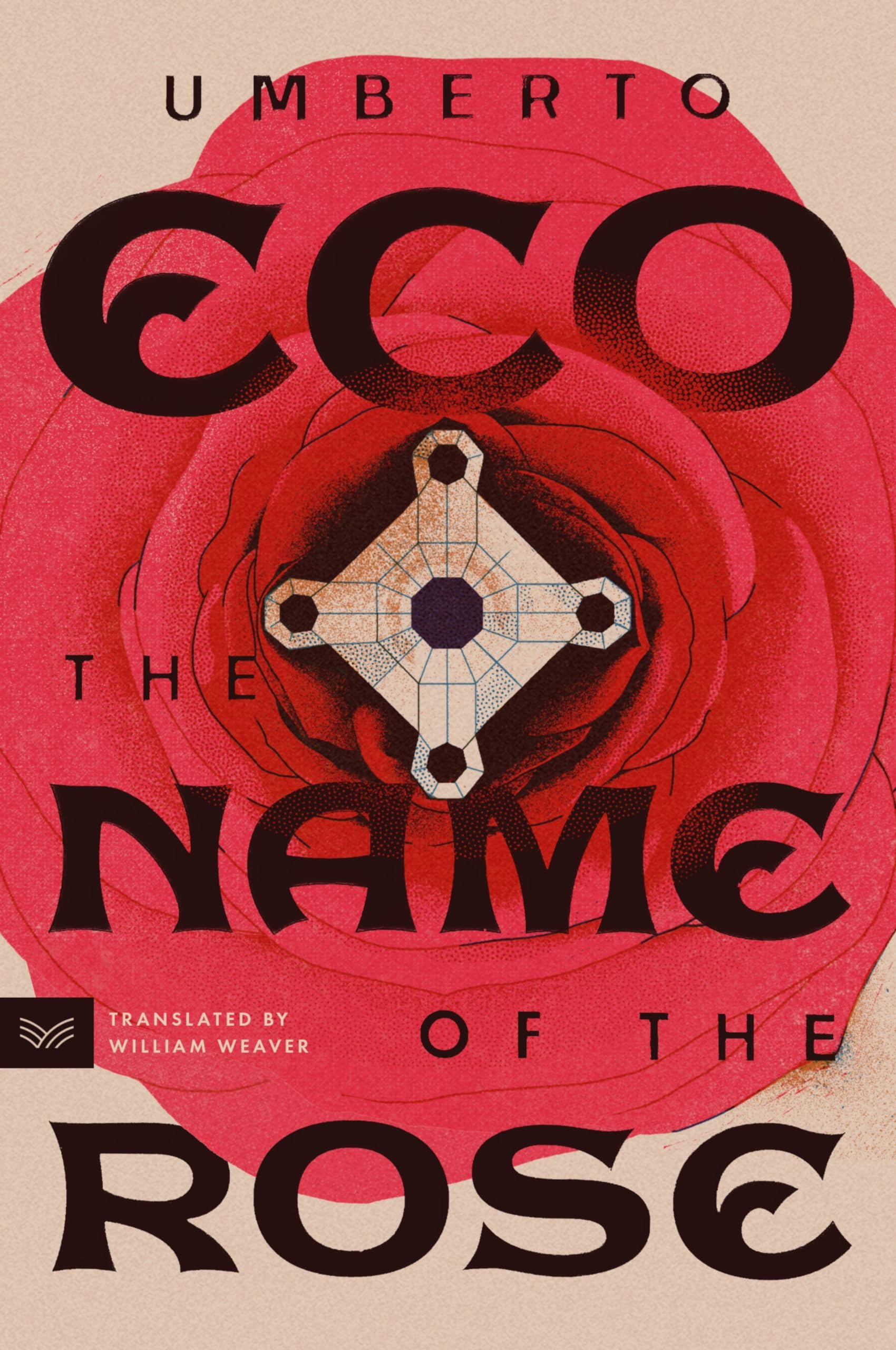
The Name of the Rose eBook by Umberto Eco is a critically acclaimed medieval mystery blending historical accuracy, theological debate, and literary homage. Featuring advanced Kindle tools, it allows readers to highlight, take notes, and search within the text, making this complex masterpiece accessible and engaging for the intellectually curious professional.


| Best Sellers Rank | #15,153 in Kindle Store ( See Top 100 in Kindle Store ) #12 in Medieval Historical Fiction (Books) #20 in Historical Mystery #65 in Mystery, Thriller & Suspense Literary Fiction |
D**N
A masterpiece
_The Name of the Rose_ is a challenging read: Eco infuses the dialogue with Latin, the primary plot doesn't really develop until after the first 100 pages, and he provides a superabundance of sub-plots and historical details. But where the journey is difficult, the rewards are tremendous - and I encourage readers who otherwise might consider leaving the book after the first dozens of pages to hang in there - the details Eco provides in the opening chapters are what make this such a marvelous, masterful work. Eco is writing on several levels: as a mystery, to be sure. Who is killing the monks at the abby and why? And why is there an apocalyptic theme to the deaths? What are the secrets being hidden by the monks, and how are they related to the crimes committed? But there is another level to the story: Brother William and his novice (Adso, the author of the story) are part of a larger theological mission regarding the nature of the Church - should it emphasize poverty? And if so, how does one reconcile this with the tremendous wealth and power the Church wields in the 14th century? (The backdrop of the story is set during the "Avignon Papacy" which resulted in two Popes claiming leadership of the Church). This conflict, in fact, may play a role in the murders; as a stand-alone issue, Eco not only shows remarkable historical accuracy, but also makes a commentary on the Church specifically and religion more generally. Yet Eco goes further still for those readers who are looking: while many of the characters and issues are drawn from history, Eco also gives a nod and wink to Sir Arthur Conan Doyle in several respects - Brother William is "William of Baskerville"; the methods used by Brother William are identical to those used by Doyle's creation (deduction, inference and Occam's Razor - in fact, Occam is cited as an acquaintance of William's) - in fact, as the pair arrive at the abbey, the deductions William makes are too reminiscent to be overlooked. Further, the narrator writes as did Dr. Watson - _The Name of the Rose_ is essentially an account written by the investigator's side-kick. Eco's brilliance is also demonstrated in the organization of the book: it opens with the same lines as Genesis ("In the beginning was the word ...") and is broken up into seven days, each day divided into the monastic measurement of time (Matins, Lauds, Prime,Terce, Sext, Nomes, Vespers and Compline). This not only reinforces the sense of authenticity of the story, but it also draws readers into the rhythms and pattern of monastic life. The details of the monastery - and especially the library around which the investigation revolves - speaks to the conflict between reason (as exemplified by Brother William) and faith (as exemplified by the monks). This is a conflict that continues to the present and is related to the other issue of wealth and Christianity that is at the heart of the internal conflict within the Church in the 1300s. Perhaps my analysis is more than the casual reader is interested in, in which case Eco provides a top-notch mystery that is complicated, difficult to solve and rewarding in its conclusion. The only complaint I have plot-wise is the resolution: I was frustrated at the way in which Eco chose to end the mystery, if only because of my tremendous reverence for and love of the written word. That being said, the conclusion certainly does point to the value of monastic work in the Middle Ages, and the miracle that we have so many texts from the ancient world still extant. _The Name of the Rose_ is dense and sometimes difficult to read (because of Latin, because of the historical details, and yes, because the mystery itself is a real challenge). But it is truly a masterpiece of writing - I highly recommend it.
A**K
Deep reading combined with mystery
Review of The Name of the Rose by Umberto Eco I bought this book after its title appeared three times in rapid succession in different articles I read. The most intriguing reference was in an article about one person’s pilgrimage along the Camino de Santiago, in which she mentioned she’d hoped the cathedral would be like the one in The Name of the Rose. As I began the book, I was very confused about what I was reading. Was this a translation of an ancient manuscript? On the ISBN label, the book is categorized as FICTION/Mystery & Detective. But there is a preface, a note, and a prologue at the start of the book that make it seem as if the book is at least based on an ancient account. I still don’t know if that’s true or not. The story is told from the viewpoint of Adso of Melk, a 14th century Benedictine novice monk, who is assigned to be a scribe for a Franciscan monk, William of Baskerville, who was to investigate accusations of heresy at an Italian monastery. However, when he arrives, the abbot tells him about the death of a young monk at the abbey a few nights ago, and hopes that William can determine what happened to him. Over the next few nights, there are additional deaths. Something very evil is going on. The abbey is also home to a famous library. Strangely, no one is allowed in it except the librarian. If anyone wants to see a book, they tell the librarian, who gets it for them. Throughout the book, much church and political history is discussed, as well as many theological arguments, which all served to make my head spin. I didn’t understand much of it. This was during the time of the Spanish Inquisition. I’m not going to tell you much more of the plot, but it was interesting how William, with Adso’s assistance, discovers the truth of what is happening in the abbey. The ending disturbed me greatly. An interesting addition to the book is a section about the author’s process, and his notes and sketches in preparation for writing the story. He drew sketches of all the main characters, and architectural diagrams of the buildings of the abbey, including a layout of the entire complex. There are multiple sketches of the Aedificium, the large structure that contains the scriptorium (where manuscripts were hand-copied and illuminated) and the library, which was laid out like a labyrinth and required many tries to get an arrangement that satisfied Eco. Although there were sections that were very hard for me to read (the aforementioned historical and theological discussions), other parts of the more-than-500-page book had me totally engaged. I understand why this book is considered a classic. I don’t recommend it as a beach read, but if you enjoy deep reading combined with mystery, The Name of the Rose might be for you.
J**N
Religion, history, philosophy, and a murder mystery
What’s not to like? A fabulous book to dawdle over and savor. I read a chapter a day and loved every day’s experience.
F**9
Interesting at points, but needs some editing
In Umberto Eco's The Name of the Rose, Adso of Melk, an eighty- year old is recalling events from many years ago when William of Baskerville arrived at a Franciscan monastery and began to investigate a series of bizarre murders of monks. Eco's fictional murder mystery has historical basis, set during the 14th century Inquisition, where power and politics of the Church caused conflict, strife, and corruption. In a way William is battling two elements--an apparent code or path to the murders which could be interpreted through the use of symbols and a mysterious book, but also the shady characters within the abbey's walls. With an apparent "twisted mind" loose causing mayhem, William and his young novice, Adso (the book's narrator), attempt to solve the riddle and thus put an end to the mischief within the monastery. Except for being in a monastery, The Name of the Rose has the premise straight out of And Then There Were None, which each day bringing more murders and our investigator, William, using his didactic reasoning to put the pieces together. A heavy dosage of symbolic references to the Bible, the Book of Revelation, and numbers take us deeper into the mystery. Eco also uses the symbol of a labyrinth as a basis for the confusion, as the abbey's main building, with strange passages and entrances, is more confusing to navigate than the Winchester Mystery House. While I enjoyed the mystery and the novel's depth, several aspects irked me and ultimately made this book less enjoyable. For one, the philosophical digressions were overdone and came off as a cheap way for the author to "show off" about his knowledge rather than adding anything of critical value. These could have been seriously edited. Philosophy for purpose is one thing, but here the discussions go in circles on end (or maybe it was my head), a semiotic version of Who's on First. Rather than progressing the story or giving richness to the mystery, it seemed to work in the reverse, stalling every event leading up to it. Secondly, attention to detail is fine, but Eco goes overboard with minutiae and unnecessary details, and this bogs the story down. For example, his geographic descriptions of the building's layout are overdone to the point of tedium. I realize he wants to paint a picture in the reader's mind to enhance the story, but ten page descriptions are too much. Eco tries to defend his choice not to edit specific passages, specifically the first one hundred pages, by stating in his postscript that he wanted to make the first part of the book "a penance" for the reader, and that if the reader chose to give up, "so much the worse for him." Please. Still, The Name of the Rose has some interesting elements. The two protagonists, William and Adso, alone make the novel a worthwhile read. William of Baskerville is a Sherlock Holmes-like character, clever and smart, a free thinker, and has a dry sense of humor that adds a level of comic relief that sorely needed in this book. Adso tells us the story through two lenses, as an eighty-year-old man who will soon pass, and as an eighteen year old who is a bit naïve to the world. His narrative gives dimension to a story that would have been much dryer in omniscient, third-person narration. Not only that, but, as an inexperienced and innocent person amid disgusting, slimy and grotesque characters, he is a likeable character who a reader can easily identify with and root for. The Name of the Rose does have a fascinating premise, but, at times, it reads more like a dissertation and than a novel.
L**.
It helps if you know Latin and the history of the Catholic Church
The Name of the Rose is a combination of historical fiction, mystery, and philosophy. William of Baskerville, a Franciscan monk, and his young scribe, Adso of Melk, a Benedictine, visit an abbey whose name is not revealed on some indeterminate business involving the major disputes within the church and among the various secular governments at the time. Shortly after their arrival, the abbot asks William, who apparently is also a former inquisitor, to investigate what is believed to be a murder at the abbey. Over the course of the next seven days, several more murders take place. They decide early on that the first victim was actually a suicide, but the subsequent victims have obviously been murdered, and they come to suspect that there is some connection to a mysterious book, and to some set of conditions set out in the book of Revelation. They think they will find clues in the monastery’s library, which only a few people are allowed to enter, and which, it turns out is built as a labyrinth. William and Adso visit the library several times and, with some difficulty, manage to discover its secrets, but that is little help in the end for helping them solve the murders. And solving the murders is no help in either saving anyone else (either physically or spiritually) or otherwise improving anything else in that environment. A large part of the book is spent in theological discussions and discussions of the religious and secular conflicts of the period. The story takes place toward the end of 1327. This was the time when there were two rival Popes, one in Avignon, France, and the other in Rome. Much is made of a philosophical difference between the Franciscans and the Benedictines. And at least half a dozen minor heretical movements are referenced. If you have an interest in the history of the Catholic Church, or a deep and detailed knowledge of it already, these parts of the book will doubtless make more sense to you. Also, a knowledge of Latin would be helpful, although it is not strictly necessary. One of the highlights of the book is the conference between the Avignonese (mostly Benedictines, I think) and the Minorites (mostly Franciscans). In the middle of this conference, there is a fight (a physical fight) between them. And then, only a little bit later, another of the Abbey monks is discovered murdered, and another monk, who is currently serving as the cellarer of the Abbey (and whom William and Adso have already discovered has a somewhat checkered past doctrinally) is found in the room with him. This man is taken into custody and one of the Avignonese party, who is currently an Inquisitor, immediately puts him on trial. He maintains he is innocent of the murder, and it appears that he is. But the Inquisitor keeps hounding him anyway and eventually manages to convict him of heresy because of the places he has been and the people he has followed in the past. This is a revealing look at how an Inquisitor would have operated. At the end there is a note from the author about how he wrote the book and such things as why all the complicated religious discussion. And keep an eye out – one of these religious discussions is actually pertinent to solving the mystery.
S**N
An eerie murder mystery set in ancient times
Name of the Rose by Umberto Eco, is a murder mystery set in the 14th Italy. A very gripping plot right from the first page there is something very eerie about monks and murders and that’s what keeps the story interesting until the very end. The plot is quite intriguing. Brother William of Baskerville, a Franciscan friar travels to a Benedictine Monastery in Italy to attend a theological discussion along with his novice Adso. Adso, the narrator of this story chronicles the death and the resultant events that happen thereafter. The abbot of the monastery welcomes his guests warmly but he is worried about the recent death of his illustrator and its implications on the theological debate for which many esteemed guests would soon descend upon his abbey . He requests William to intercede and investigate the matter. William sets to work along with his faithful novice. The story takes us right into the life of a monastery and the daily activities of the monks. It also gives us a rich description about the management of ancient libraries, ways by which manuscripts were procured, copied and preserved. Various chapters of this tale are full of theological discussions and questions that are quite insightful and interesting. For example, there is a whole chapter devoted to the question of whether Jesus laughed or not and whether it is advisable for man to do the same. References to this sort of debate brings home the fact that faith was an all consuming factor that governed every aspect of man’s life during this period. Umberto also gives very detailed descriptions and history about the various sects and intersects within the catholic faith. And it is also quite scary to read about how easy it was to denounce someone to be heretic in those days. William’s investigations lead him to believe that the clue to the murders lie in the secret library that the abbey is guarding most zealously. After many blind turns, William manages to secure entry into the library’s most secret passages to discover that it is a labyrinth designed to protect many treasures of knowledge. William’s investigations are hindered by an old enemy, an inquisitor who comes to the abbey for the debate and denounces two monks as heretics. But that does not stop the killings. As William races to find the answers to many of his eluding questions, Adso experiences many strange things. He falls in love with a peasant girl who later gets denounced as a heretic. The rumblings of his heart and the limitations laid upon him by his order makes his dilemma very poignant Plus Points: Fantastic plot and well maintained suspense. It is very difficult to guess the villain in this one. Well researched background, good prose and language. Minus Points: Though theology and its very many intricate discussions are interesting to read, this book devotes many pages to it, which might get a bit boring. I myself skipped through some pages to get to the plot again. I felt that these could have been trimmed. Verdict: Definitely a book to buy because you might want to read it again.
A**G
A brilliant rose of a tale!
Upon picking up this book for the first time, I received several comments to the effect that this is a difficult, or erudite, book. I was surprised, as the beginning of the book definitely didn't have that vibe, but was almost instantly interesting, the characters immediately engaging. I consider myself a pretty capable reader, so the suggestions of difficulty didn't put me off, but I never really ran into anything I would consider dense or erudite. On the contrary, this book is a smashing good yarn, with excellent pacing and many twists and turns. It is firmly placed within its historical period, and I was surprised at how well the characters and plot are driven by the real sociopolitical and religio-political movements and sensibilities of the time period. This doesn't feel like Michael Crichton, but like an actual historical document (if documents from the middle ages were written with the same skill and mastery as the best modern novels). Eco knew his stuff when it came to medieval church history, and I learned a lot as well as recognized much of what I already knew (admittedly, not all that much). Of course, Eco took some liberties with history, however they are all within the realm of believability. William of Baskerville, the Sherlock Holmes-esque Franciscan monk who is the centerpiece of the story, is astoundingly well-read for a medieval monk, and has a passion for empirical reasoning in addition to a very nuanced faith - in all he's much more "enlightened" than your typical monk, however as such he's a very complex and interesting character, whom I identified with in many ways. Eco explores the medieval consciousness through the way William and the narrator, a young Benedictine novice, Adso, interact. Often the dialogue is the most interesting thing that is happening, even in spite of grisly murders, monkish infighting, and a secret labyrinth that is jealously guarded by mysterious means. Next to the historical authenticity and the character development and interaction, the pacing is the standout feature. For such a meaty book it was surprisingly hard to put down, and this is something many experienced authors have a harder time doing. Up until the end, which had plenty of action and plot-drama, but was (to me) a little bit ambiguous concerning character arcs, probably by design. I grew so attached to the characters that I was sorry to see them go - which counts as a win for the author!
S**E
An excellent book -- one of my favorites
Umberto Eco's masterpiece, The Name of the Rose, has become one of my favorite books. I recommend this edition in particular due to the thirty plus pages of analysis and the author's response to feedback for the book. For anyone who enjoys mysteries, medieval Europe and/or religion (specifically Catholicism), this book is a must have. Please note, this is not an easy read: Latin phrases are placed throughout the novel (so if you don't know Latin you may want to keep a translator nearby), also some knowledge of the historical figures mentioned is helpful in better understanding the book -- but I believe it can be enjoyed even with out this. The story is told in the first person, by Adso a Benedictine Monk (who is recounting this story many years later) assigned as the assistant/scribe to Brother William of Baskerville. They have travelled to an Italian abbey to investigate reports of heresy and end-up investigating a series of bizarre murders. Eco has done a tremendous amount of research, resulting in a believable account of a ficitious event. He mentions historical figures and intertwines them with his fictional characters. Every detail of the abbey and its inhabitants has been meticulously crafted -- you won't find any annoying anachronisms here. In his postscript, the author himself notes that he was forced to move the story into the 14th century because, he "needed an investigator, English if possible, with a great gift of observation and a special sensitivity in interpreting evidence." Which was only possible in the Fanciscans only after Roger Bacon. You may be able to find a copy of the movie adaptation in your video store, starring Sean Connery as William and Christian Slater as Adso; but the book is so much better. Definitely pick-up a copy today.
G**T
Amazing story
This is a great yarn, although Eco slips into the Tolkien habit of long rambling musings, songs etc that really don’t move the story along.
K**I
Alabilirsiniz
Paketleme özenlice yapılmış, kitapta herhangi bir darbe izine rastlamadım. Aynı zamanda kitabın kağıt kalitesi de hoşuma gitti.
セ**ー
"stat rosa pristina nomine, nomina nuda tenemus." 拙訳すると、「バラは以前の名前を失くしている。我らの心に留めるのは裸の名前。」
映画を見て読んでみる気になりました。 しかし映画は、前半のクライマックスの1つを無理矢理に結末としたようで、本を読んでよかったです。 "Name of the Rose" とは何なのか興味を惹かれましたが、最後に出てくるラテン詩文の一節、"stat rosa pristina nomine, nomina nuda tenemus." 拙訳すると、「バラは以前の名前を失くしている。我らの心に留めるのは裸の名前。」 シビレました。 教会建築用語、草本学用語、鉱物染料用語の英語リストをつくり、何よりもラテン語を上達させて、また読んでみたいです。
M**L
A mirror of our time or all times. Terrific must-read.
Clearly in my top ten of 55 years reading all kind of books. Satisfying and enjoyable, interesting, thrilling, uncomparable. Languagewise a masterpiece. Historically correct. Wise and deeply human. A classic. Most noble laureats could only wish to reach this level. It is a little difficult to read and follow all the stuff especially in the first 30 to 50 pages. It surely takes a little more time and effort. But if you cry at the end, which is very likely, you will be a better mensch. Movie is quite ok, too, but only covers the surface of the plot. The best parts are missing.
E**I
Tradotto in inglese
Capolavoro, anche in inglese
Trustpilot
2 weeks ago
3 weeks ago