We remain fully operational. Our teams are working around the clock to ensure your deliveries continue safely.

DOWNLOAD THE APP


Copyright © 2025 Desertcart Holdings Limited
DOWNLOAD THE APP
Buy anything from 5,000+ international stores. One checkout price. No surprise fees. Join 2M+ shoppers on Desertcart.
Desertcart purchases this item on your behalf and handles shipping, customs, and support to Spain.
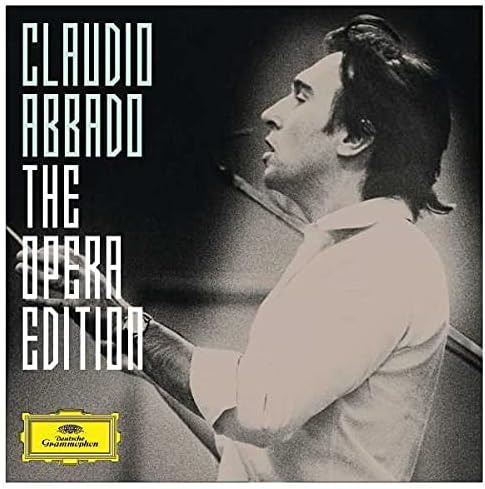
Opera Edition












U**R
Abbado thought that only composers are great, the task of conductors is to understand this greatness and turn it into sound
This set was obtained from Amazon .de because the carrier sent back my order to Brit Amazon, because it was not addressed properly or the parcel was ruined. However, it does pay to look around other Amazon's for you may pick up your CD's cheaper, but you can still review the order on your home Amazon.ABBADO:Abbado hated being called "Great" He was always open to new points of view and had an ability to listen carefully to those to whom he was talking to. Thus it may be these features that characterized Abbado's work with the orchestra, for he seemed to make no demands of his orchestra and appeared to want nothing in exchange. His secret was to let the orchestra make music. Conductor Daniel Harding explained "it was his idea to make himself superfluous as a conductor" Abbado created a atmosphere by which it reflected his ideal of" performing chamber music with an orchestra", by which he meant listening closely and reacting flexibly to each other. " Listening is more important then speaking" was one of Abbado's maxims. He often demanded in rehearsal that passages be repeated without explaining exactly what should be changed, initially left his players perplexed. But the results soon spoke for themselves, and the tone of the orchestra became warmer, more mellow and above all more soulful. Instead of offering an " interpretation" of the notes on the printed page with the airs and graces of a conductor to prove he knew it all already. He summed up his philosophy by stating " I am Claudio to everyone. No title."Musicians gave up their leading positions in some of the world's most famous orchestras in order to have sufficient time and leisure to work with Abbado in one or other of the ensembles that he helped to found, most notably the Lucerne Festival orchestra that he created in 2003. A hand picked ensemble that contained, at his core, the Mahler Chamber orchestra. It was a true " super-orchestra". He consulted the original manuscripts of the scores he was studying. He also absorbed the findings of other musicians working in the field of historically informed performance practice. Yet Abbado's view of the world was political, and his attempts to improve the world around him were down to earth and realistic. He was highly influenced by Furtwangler, who was inspired by Nikisch, the Hungarian Conductor, who believed the score was a blank page, to be interpreted subjectively, who in turn was influenced by Wagner's conducting values.BOX SET:The Cardboard box is made of thin cardboard, much like the DGG Boulez box set, and has a thick fold back top attached to the box, with Abbado's signature underneath. At the back of this box are the CD numbers, and the composers and their operas in the colours of their sleeves, with the orchestras. You can hold it with one hand. The Sleeves are not the originals, but are in coded colours, for example, Mozart light blue, Rossini, Olive green, Wagner ultramarine blue,Verdi Cobalt blue, Berg, Netrebko, Kauffmann arias, shades of orange. Orange and blue are complementary colours, which shows some thought has gone into the box set. Looking into the top of the box the spines produce a rainbow effect. The sleeve has the composer on the front, the opera and acts, on the back the CD number in white written in big letters.also the cast and the roles they are singing. The CD,s has the operas name and cast printed in black with big CD number in white. You cannot get lost. Four are DECCA CD's, the rest are DGG. A marvellous box set, with great singers, swift tempi and Abbado's unique way with the music, what more can you ask for.BOOKLET:Essay, "an extraordinary operatic legacy. Claudio Abbado: the opera edition". Black and white pictures of the conductor. No translations. Opera cast and track numbers and arias. Then Index, composer, opera, orchestra, CD number and page number.SOUND:ADD: Analogue tape recorder used during session recording, digital tape recorder used during subsequent mixing &/or editing and during mastering (transcription). DDD: Digital tape recorder used during session recording, mixing &/or editing, and mastering (transcritption). EMI. I do own the Abbado Simon Boccanegra stereo, from the originals, taken from LP's and transfered to CD. ADD. Original Bit processing, which makes it possible to remix older recordings in order to" recreate" the original sound image. thus the audible results will be greater presence and brilliance and a more natural spatial balance then previously attainable. Of course the question has to asked, has this entire box set been remastered. The answer is I do not know. There is no indication that it has. Many of the operas are in DDD, totally digital, the rest Analogue transfered to digital. But when?. I had the same problem with Karajan- the opera recordings. However the sound is good.THE OPERAS:MOZARTDIE ZAUBERFLOTE:( 2006) (LIVE) Rene Pape, Dorothea Roschmann, Christoph strehl, Hanno-Muller-Brachmann, George Zeppenfeld. Mahler Chamber orchestra. This recording obtained a rosette from Penguin classical guide.The freshness and charm , with ravishing playing from the Mahler Chamber orchestra, reminds us of our first encounter with the celebrated Fricsay recording. Griendl, Streich, Haefliger, Fischer-Dieskau, Otto. I own this Fricsay opera and choral works box set, A Hungarian conductor inspired by Nikisch. However, Abbado's cast is finer still, for here Pape's magnificent Sarastro dominates the opera, just as intended. Erika Miklosa's Queen of the night second aria, Der Holle Rache, is quite as dazzling as Rita Streich's celebrated version, and slightly filler in tone. Roschmann and Strehl are perfectly matched Pamina and Tamino, for both have lovely voices. Strehl is ardent, and Roschmann is infinitely touching when she thinks Tamino is lost to her for ever. The smaller parts are without flaw. Kurt Azesberger is a splendid Monsostatos, and even the speaker, George Zeppenfield, has a honeyed voice. But most magical of all are the little ensembles. Abbado revels in the lyrical beauty of Mozart's wonderful score.DON GIOVANNI: (1998) Simon Keenlyside, Matti Salminen, Carmela Remigio, Uwe Heilmann, Soile Isokoski, Bryn Terfel, D' Arcanegelo, Patrizia Pace. Abbado's pace is swift and this is a sparkling performance. Chamber Orch of Europe. Terfel as Leporello, Keenlyside as Don Giovanni complement each other. Carmela Remigio as Donna Anna sings her arias with emotion, but the Donna Elvira of Soile Isokoski is outstanding. D' Arcangelo as Masetto shows why he went on to to sing Leporello plus Don Giovanni found in W. A. Mozart 225 box set. Zerlina Patrizia Pace is inside her part. A good version of this opera. BONUS: (2005) Le Nozze di Figaro. Deh vieni, non tardar, o gioia bella. Idomeneo Oh smania! ah furie. Don Gioanni. Fuggi, crudele, fuggi with Strehl. Idomeneo. Zeffiretti lusinghieri. Anna Netrebko soprano. Orchestra Mozart.Authentic instruments.LE NOZZE DI FIGARO: (1994) Boje Skovhus, Cheryl Studer, Sylvia McNair, lucio Gallo, Cecilia Bartoli, Anna Caterina Antonacci, Ildebrando D' Arcangelo, Andrea Rost. Vienna Philharmonic.Abbado draws beautiful sounds from this orchestra with a cast of mainly young singers. His tempi are brisk, so the plot moves speedly. Mcnair, Studer, and Bartoli are all characterful and musically imaginative and it is worth hearing this recording for these three singers alone.BEETHOVEN:FIDELIO, ( 2011 ) (LIVE) Mattei, Struckmann, Kaufmann, Stemme, Harnisch, Strehl. Mahler Chamber orchestra/Lucerne festival.Orchestra. Kaufmann the greatest living tenor and Stemme the greatest living soprano team up. This recording was showered with awards. Slowish conducting by Abbado.ROSSINI:.OVERTURES. (1991) Il barbiere di Saviglia, Semiramide, L' italiana in algeri, Guillaume Tell, La Cenerentola, La scala di seta, La Gazza ladra. Chamber Orchestra of Europe.Il ITALIANA IN ALGERI: (1989). Raimondi, Pace, Gonda, Corbelli, Lopardo, Baltsa, Dara. Cond Vienna Philharmonic. Another Rosette by Penguin Classical guide 1993. Baltsa is a fire eater in the title role, and Raimondi with his massive bass gives weight to the role without undermining the comedy. The American tenor, Frank Lopardo, proves the most stylish Rossinian, singing with heady clarity, while both Buffo baritones are excellent too. This set has all the sparkle of Il viaggio a Reims and uses the authentic score. This is one of the most captivating of all the recordings of this opera. This recording was awarded a rosette by Penguin Classical guide.IL BARBIERE DI SIVIGLIA. (1972) (LONDON) Luigi Alva, Enzo Dara, Teresa Berganza, Hermann Prey, Paolo Montarsolo , Renato Cesari, Stefania Malagu, Luigi Roni, London Symphony Orchestra. Berganza is a agile Rosina and reliable, Prey is also good as Figaro, Alva is a Rossini tenor to the core. The playing has that extra degree of polish and sparkle. The text is not absolutely complete. IL BARBIERE DI SIVIGLIA.(1992). (FERRARI). Lopardo, Gallo, Battle, Domingo, Raimondi, Domingo is Figaro, after all he started out as a baritone years ago and is the recording's biggest success, the rest of the cast is good. Battle makes a minx of a Rosina, coy but full of flair, Lopardo is stylish.. Abbado is freer and more spontaneous-sounding, but misses much of the sparkle of his earlier set. Chamber Orchestra of Europe.LA CENERENTOLA: (1971) Luigi Alva, Renato Capecchi, Paolo Montarsolo, Teresa Berganza. London Symphony Orchestra. Recording made in conjunction with performances at the 1971 Edinburgh Festval. This is a sparkling rendition of the score with a lovely light touch and well-judged tempo's from Abbado and the LSO. The chief delight is Berganza's Angelina, creamy in tone and as warm as she's precise. The supporting cast is full of character, with Luigi Alva and Renata Capecchi, gleeful and mischievous as he takes on being prince for the day.IL VIAGGIO a REIMS (1985). Cecilia Gasdia, Lucia Valentini Terrani, Lella Cuberli, Katia Ricciarelli, Edoardo Gimenez, Francisco Arziza, Samuel Ramey, Ruggero Raimondi, Enzo Dara, leo Nucci. Rossini wrote this fizzing piece of comic nonsense as a gala piece for the coronation of Charles X in Paris. The opera has virtually no story, with the journey to Rheims never actually taking place, only the prospect of it. The wait at the Golden Lily Hotel at Plombieres provides the opportunity for the ten star characters to perform, each in turn. The recording was edited together from various performances which the DG engineers put on tape, the result is Abbado is freer and more spontaneous- sounding. Rossini used some of the material from this opera in Le Comte Ory. The established stars do not require any commendation. The inspiration never flags and Abbado's brilliance and sympathy draw the musical threads compellingly together with the help of the Chamber Orchestra of Europe.SCHUBERT:FIERRABRAS:(1990).(LIVE) Holl, Mattila, Hampson, Gambill, Polgar, Studer, Chamber Orchestra of Europe. There are jewels in plenty in this score. Many solos and duels develop into delightful ensembles, and the influence of Beethoven's Fidelio is very striking. Abbado directs an electrifying performance. Both tenors Gambill and Protschka are on the strenuous side, but have a fine feeling for Schubertian melody. Studer and Mattila sing ravishingly, and Hampson gives a noble performance as the knight.WAGNER:ORCHESTRAL MUSIC: (2003) Tannhauser overture. Parsival Prelude Act 1. (LIVE) Suite from Act 3. Good Friday music. Transformation music and procession. Tristan und Isolde. (Prelude Act 1. Isolde's Liebestod. LIVE.)LOHENGRIN: (1994) . Moll, Jerusalem, Studer, Welker, Meier. Vienna Philharmonic. Abbado's Lohengrin adds another magnificent reading to set alongside such classic performances as Solti and Kempe. Whereas Solti takes a very measured view, Abbado keeps Wagner's square rhythms flowing more freely, allowing himself a great measure of rubato. That in turn reflects his experience with these same performers at the Vienna State opera and the recording reflects this. Abbado's speeds are faster then Solti's. Studer is at her sweetest and purest, bringing out the heroine's naivety touchingly. Jerusalem's voice is not as fresh as it once was, he sings with beauty and a true Heldentenor quality. Meier and Moll are both superb. But for me the greatest Lohengrin is that conducted by Kempe with the VPO, Thomas, Grummer, Ludwig and Fischer-Dieskau.BRYN TERFEL;(2002) Berlin Philharmonic. The Overture and Die frist ist um from the flying Dutchman are live, the latter is on the slow side. But the illumination of words is as revelatory here as elsewhere on the disc. All the items are vividly realized, such as the two Hans Sachs monologues from Die Meistersingers and the expressive portrait of Wotan in Die Walkure monologue. Not forgetting the two Amfortas items from Parsifal.GALA.(1994) (LIVE). Soloists Jerusalem, Meier, Studer and Terfel. Berlin Philharmonic. Tannhauser overture. Dich teure Halle. O du mein holder Abenstern. Lohengrin. In ferner Einsamkeit des Waldes, Um Gott, was klagest du mich an. Meistersinger. Prelude to Act 1. Abbado brings to the forefront the lovely melodies with fast Speeds. A different rendition to what we are generally use to. Fliedermonolog. Die Walkure. Winterstume wichen dem Wonnemonde. The ride of the Valkyries. Lighter then usual and you can hear the interwoven melodies very clearly. Abbado would have conducted an interesting Ring cycle. Hearing these singers live is better then on studio CD's.VERDI:VERDI OVERTURES & PRELUDES.(1997) Berlin Philharmonic. CHORUSES (1975-1985)Teatro alla Scala.When this recording was first issued in 1975 it was awarded a rosette by penguin classical guide for excellence.Apart from Falstaff with the Berlin Philharmonic, the rest of the Verdi operas are with La Scala orchestra from the 1970's-1984 which were immediately acclaimed, with his company of singers, Freni, Ricciarelli, Domingo, Cappucilli and Verrett. For Abbado inspired levels of commitment and communication from the singers and players that resulted in performances and recordings that have stood the test of time.MACBETH:(1976). Cappucilli, Ghiaurov, Verrett, Malagu,Domingo, Orchestra Teatro alla Scala. The Penguin guide states that Abbado's speeds are slow but he springs the rhythm. They are wrong, his speeds are fast. Each of the principles is meticulous about observing Verdi's markings. Verrett, powerful above the stave, makes a virtue out of necessity in floating glorious half-tones, and with a characterful a voice she makes a highly individual Lady Macbeth. Cappuccilli has never sung with a finer range of tone or more imagination on CD then here. However Callas live recording of Lady Macbeth captures Verdi's idea of a she-devil, as does Mara Zampieri with a biting voice rather then beautiful,she matches Verdi's request for the voice of a she-devil. With a fine Macbeth of Renato Bruson. Deutsche Oper, Berlin Cond Sinopoli, who creates dramatic intensity by his preference for extreme dynamics, DVD.SIMON BOCCANEGRA: (1977). Cappuccilli, Freni, Ghiaurov, Carreras, Van Dam.. 2008 Penguin Classical Guide gave it a Rosette. They say that Abbado's 1977 recording of this opera is one of the most beautiful sets ever made. The playing of the orchestra is brilliantly incisive as well as refined, so that the drama is underlined by extra sharpness of focus. Cappuccilli, always intelligent, gives an intense and illuminating performance. Ghiaurov sings beautifully, Freni sings with freshness and clarity, while Van Dam is impressive. This is a set states Penguin to even outshine Abbado's Macbeth.UN BALLO IN MASCHERA: (1981). Domingo, Bruson, Ricciarelli, Obraztsova,Gruberova, Raimondi, Abbado's reading is powerful, admirably paced and with a splendid feeling for the comedy. A real theatrical experience. The cast is very strong, with Ricciarelli (Spinto soprano) at her very finest and Domingo sweet of tone. Bruson sings magnificently. Obraztsova and Gruberova are voices that are suited to their roles. A traditional staged 1990 DVD has Domingo, Nucci, Barstow and Sumi Jo, Vienna Philharmonic orchestra cond Solti, who took over from Von Karajan who had just died. Good performance, especially Josephine Barstow, the under recorded soprano. DON CARLOS: (1985). Five act version of 1886. (the four -act revision of 1882-83 preceded by the revised Fontainebleu act of 1867). Includes a Appendix: Six of the pieces dropped before the first performance of 1867, eliminated in the four-act revision of 1862-83, or recomposed in that revision. Raimondi, Domingo, Nucci,, Ricciarelli, Ghiaurov Corbelli. Valentini Terrani, Murray, Auger. Abbado's set was the first recording to use the language which Verdi originally set, French, in the full five act text. The cast is a strong one. All the major singers are outstanding.AIDA: (1982) Raimondi,Obraztsova, Ricciarelli, Domingo, Ghiaurov, Nucci, de Palma, Valentini Terrani. Abbado's speeds are quick and adds to the excitement, and brings freshness to the score which I felt I was hearing for the first time. Domingo gives a superb performance as Radames, and the two bass roles are cast from strength in Raimondi and Ghiaurov. Leo Nucci makes a dramatic Amonasro. Ricciarelli in many ways is an appealing Aida, she approaches the role differently to Leontyne Price in the Solti version, and Caballe in the Muti recording, and makes you rethink the role. Aida -Teatro alla Scala Milan, cond Carlo Sabajno. Pertile, Duolina Giannini, Irene Minghini-Cattaneo, Giovanni Inghilleri. Recorded 1928. Cedar-Audio restoration.Digitalized. Phonographe. 1994 Nuova Era Records italy.FALSTAFF: (2001). Bryn Terfel. Adrianne Pieczonka, Hampson Roschmann, Diadkova. Berlin Philharmonic. Abbado's is a big scale view of Falstaff, helped by the weigty recorded sound and upfront balance of voices, matching the larger then life characterization of the fat knight by charismatic Bryn Terfel. he gives a three dimensional reading. The final fugue at a very fast tempo is thrillingly precise, thanks to Abbado's strong, thoughtful direction. Adrianna Piecczonka is a superb Alice and Roschmann a charming Nannetta with Larissa Diadkova a fruity Mrs Quickly. The male characters are well contrasted too. Bernstein's version with Fischer-Dieskau based on a production of the Vienna State opera, and the fleetness of execution at hair-raising fast speeds suggests that Bernstein was intent on out-Toscanini-ing Toscanini, but they never sound rushed, and always Bernstein conveys a sense of fun. Panerai, Resnik Sciutti and Oncina are first rate. My favourite Falstaff.ALAGNA: (1998) Berlin Philharmonic. Arias from Luisa Miller, I Lombardi, Aida. Ernani. Un ballo in maschera, Othello, Lr Forza del destino, Macbeth, Jerusalem, Il trovatore. He shows in the most demanding programme imaginable, that there is little if anything wrong with his technique and a great deal right with his sense of Verdian style.GHIAUROV: (1969) London Symphony Orchestra. Great scenes from Nabucco, Macbeth, I Vespri siciliani, Simon Boccanegra. These are arias for a Bass. He produces marvellous tone and stylish phrasing. Excellent accompaniment.BIZET:CARMEN:(1978) Based on original sources by Fritz Oeser. This recording benefits from being made after the 1977 Edinburgh Festival stage production. Berganza, Domingo, Milnes, Cotrubas, Kenny (Australian),LLoyd. Milnes and Domingo are outstanding. Abbado is in tune with the music. But the problem is that Berganza has made a wild gypsy, who for the part must be extremely sexy and treat men as play things, into a Suburbian sophisicated woman. Her reasoning was that the Carmen of tradition is a slight on Spanish womanhood. Forgetting that this was about a particular gypsy woman and not all gypsies either, and certainly not about Spanish womenhood. I like Maria Ewing's version as Carmen at the Royal Opera house cond Mehta. She is sexy and wanton .Also the filmed version by Rosi with Julia Migenes portraying Carmen as she should be. Even the Carmen produced at Earls Court in the late 1980's with Ewing, Gauci, Alain Fondary which shows what Carmen must be, with authentic flamenco singers and fast tempi. DVD'sBONUS: Berlin gala 1997. (LIVE) A Salute to Carmen. Soloists Alagna, Gens, Otter (Carmen), Terfel. Berlin Philharmonic. Abbado's conducting is fast. Otter is another who cannot get into the true character of Carmen. After all Bizet had never been to Spain, so it was a Frenchman's concept of Spanish life. But at the time he wrote it and it was shown at the theatre, the public were outraged for it was too realistic. But now it is one of the most beloved operas, for it is timeless. I mean today, we could not care if a single lady likes to sleep around, but in those times Carmen was composed it was a scandal. Even the ending when Jose kills Carmen for he cannot take being rejected is not uncommon today, with the violence against women which I profoundly disagree with. I know in Australia that a few men in a fit of jealousy kill. But we must remember this was a opera written by a young man, he was 36 when he died before it became famous in Vienna, and has all the energy of youth. Therefore we must never be conservative about this opera as some critics can be.DEBUSSY:(1992) Pelleas et Melisande. Maria Ewing, Francois Le Roux, Jose Van Dam, Christ Ludwig, Pateizia Pace. Vienna Philharmonic. 2008 Penguin Classical guide states that Abbado's outstanding version broadly resolves the problem of a first CD recommendation in this opera. If among modern versions the choice is hard to make between Karajan's romantic account, and Dutoit's clean cut, direct one, Abbado satisfyingly present a performance more sharply focused that the one and more freely flexible than the other; altogether more urgently dramatic. The casting is excellent with no weak link. Ewing's Melisande is unconventional and strikingly seductive.Le Roux as Pelleas sounds younger and more ardent then his rivals. Golaud Van Dam is a biting yet beautifully sung portrait.The first performance in 1902 symbolizes Pelleas et Melisande's standing at the junction of two centuries, it grandly surveys a complex tradition of French opera which had always been intensely literary in character, and it transformed at a stroke the most potent operatic force of the age, the work of Wagner. At the same time it opened up a new musical language which became the basis for many far reaching ideas right up to out time.KHOVANSHCHINA. (1990) (LIVE) Vienna Staatsoper. Haugland, Atlantov, Kotscherga, Burchuladze, Lipovsek, Zednik, Vienna Staatsoper orch. Abbado's live recording brings the most vivid account of this epic Russian opera yet on disc, giving cohesion to a sequence of scenes even more episodic than those in Boris Godunov. With the text left incomplete and in a fragmentary state at the composer's death, there is no clear answer to the work's textual problems, but Abbado's solution is more satisfying than any other: he uses the Shostakovich orchestration (with some cuts) darker and harmonically far more faithful than the old Rimsky-Korsakov version. Yet Abbado rejects the triumphant ending of the Shostakovich edition and follows instead the orchestration that Stravinsky did for Diaghilev in 1913 of the original, subdued ending as Mussorgsky himself conceived it. Lipoviek's glorious singing as Marfa, the old believer sets the seal on the performance. Aage Haugland is a rocklike Ivan Khovansky and, through Burchuladze is no longer steady of tone as he once was. he makes a noble Dosifei.To Paul Rosenfeld , this opera is a "glowing portrait of the collective entity... the Russian people...executed with a feeling and truthfulness and a power matched by no other of its musical portraitists and by only a few of the composers who have enriched the world..The music of Khovantchina is vocal of the very essences of the people, its forces, its sense of the starkness of life, and of the inevitability of suffering, its Asiatic fatalism" BONUS: JOSHUA. (1994) (LIVE) Elena Zaremba mezzo soprano. Berlin Philharmonic.BERG:WOZZECK:(1988) (LIVE) Phillip Langeridge, Heinz Zednik, Aage Haugland, Hildegard Behrens. vienna Philharmonic. Recorded live in the opera house, is very compelling in its presentation of the drama, given an extra thrust through the tensions of live performance. The cast is a good one, headed by a clear toned yet lightweight Wozzeck in Frank Grundheber, Hildegard Behrens sings affectingly as Marie.ANNA NETREBKO. (2004) Mahler chamber orchestra. Verdi La traviata E Strano! e strano! Sempre libera. Bellini La Sommambula, I Puritiani, Donizietti Lucia Di Lammermoor, Verdi Othello, Arias from these operas. She came to fame via 2004 Salzburg production of La Traviata with the tenor Villazon. Vienna Philharmonic cond Carlo Rizzi. DVD or Bluray.JONAS KAUFMANN:(2009). Lohengrin. Die Zauberflote, Fidelio. Die Walkure. Parsifal. The greatest tenor of his generation. Mahler Chamber Orchestra.BERLIN GALA 1999. (LIVE). Alvarez, Freni, Keenlyside, Schafer. A marvellous performance from all concerned. A fitting end to a great set especially with all the clapping.If you enjoyed this set, you may like Claudio Abbado the complete RCA and Sony Album collection. read my review. Symphonies, concerto's and Mussorgsky Boris Godunov the original score. Berlin Phil. Verdi Simon Boccanegra. Vienna Staatsoper LIVE. The second version of Rossini' Il viaggio a Riems. Berlin Phil. LIVE. New Years Eve concert 1992. Richard Strauss. Berlin Philharmonic. Music inspired by the Poet Friedrich Holderlin. Berlin Phil. Prometheus-the myth in Music. Live. Berlin Phil.I feel honoured to be able to review the operas of such a great conductor, he would have hated me saying that. Yet you may notice, it is as though he has cleaned the dirty glass and made it shine again, for we often hear the opera as if for the first time.
S**M
Pretty good box some great recordings
Great set. Love the mozart, not so keen on the Rossini.
G**E
Cheap at the price
Exceptional value for money, and wonderful goodies added in the form of Kaufmann recitals - get it while it lasts!
J**N
good!
good!
S**R
A missed opportunity (The Jessye Norman ELEKTRA)
Wonderful set. But the record company missed an opportunity to include their long-shelved and never-released studio recording of Strauss' ELEKTRA with Claudio Abbado, the Vienna PO, Jessye Norman (Elektra), Cheryl Studer (Chrysothemis), Helga Dernesch (Klytaemnestra), and Victor Braun (Orest). Why? When will it see the light of day?
J**N
Buy!
Claudio Abbado was one of the great postwar conductors, with a remarkable capacity to nurture and inspire musicians, and to communicate the essence of a score to audiences. His recorded operatic legacy is remarkable for its range, as well as its sustained quality. This welcome compilation brings together all of his complete DG opera recordings from the late 1960s until just before his death, and includes a number of related galas, concerts and recitals. There are no detailed notes about the operas, let alone libretti and translations, but at the current price this offers superb value for money. It's a Limited Edition, and deserves to sell out quickly.These recordings offer outstanding standards of musicianship and fresh, unaffected interpretation. At their best, they demonstrate Abbado's rare ability to fuse refinement of orchestral tone with dramatic point and impetus; to evoke the unique colour of each moment while generating the pulse and shape of the whole. Many of them are derived from theatrical stagings, at La Scala, Vienna, Edinburgh and elsewhere, and benefit from Abbado's close collaboration with great directors such as Ponelle, Stein and Strehler.One recurrent feature is Abbado's interest in up-to-date scholarship to inform decisions about text and interpretation: for example, his early Rossini recordings used Zedda's recently-published critical editions of the scores. Later, he made the first recording (included here) of the newlyreconstructed Rossini masterpiece Il Viaggio a Reims - arguably one of his most important achievements. This pioneering spirit also informs his espousal of Schubert's Fierrabras, even if the committed performance doesn't convince us that this intermittently fine music constitutes great music drama. His recording of Khovanshchina used Stravinsky's version of the final scene rather than that of Shostakovitch - a sound dramaturgical choice based on analysis by the musicologist Richard Taruskin, whose article accompanied the original release and is sadly missed here. Musicological research also helped him to renew himself creatively - for example, his interest in HIP had huge (in my view, positive) impact on his later recordings of works like Figaro, Fidelio and Zauberflote.But Abbado was not a purist, sometimes to a fault. His first recording of Barbiere cleans up the musical text but omits Almaviva's climactic aria (perhaps Luigi Alva couldn't or wouldn't sing it). In the second Barbiere recording we get this aria, but the title role is sung by a tenor (well, Domingo), and we have a soprano Rosina, one of the stage traditions previously swept aside. The Don Carlos is performed in (often dubious) French in a hybrid version that was never itself performed in Paris - though the textual choices do make good dramatic sense. Abbado's fidelity to composers' texts doesn't always extend to the work of their librettists: there is no dialogue included with Fierrabras, and the Fidelio dialogue is cut so heavily a newcomer might struggle to follow all of the action. Carmen and Die Zauberflote fare better in this respect - indeed, the spoken text for Zauberflote is extensive.These recordings indicate the range of Abbado's interests: those of Carmen, Khovanshchina, Pelleas and Wozzeck are all of five-star quality, even though some listeners may finally prefer other casts and approaches. The Lohengrin, also five-star, is a fleet, exhilarating account with strong performances in almost all the principal roles (only the Telramund sounds below par); and the (mainly orchestral) extracts from Parsifal make one regret he never recorded the complete work - which he conducted successfully in Salzburg and Edinburgh. The Fidelio is an absolutely inspirational performance from the entire Lucerne Festival ensemble, responsive to the richness of the score's orchestral detail, and with at least one outstanding vocal performance, from Kaufmann as Florestan; it doesn't supplant Klemperer's more muscular, monumental approach but supplements it excitingly.In my view, the Mozart opera recordings have been seriously underrated - and there are highly critical views of the individual releases to be found here on Amazon. The Zauberflote is a warmly human account with a generally young cast of gifted singing actors, sober rather than weighty in the Masonic elements. The Figaro is an intimate, fresh reading, with light orchestral textures that expose the invention of the inner parts, a strong cast and an exhilaratingly precise approach to ensemble. Abbado's treatment of Don Giovanni is darker, more spacious: he doesn't foregroundthe buffa elements, nor does he drive the action forward; but he shapes the opera effectively number by number. One of the fillers with this set is Netrebko singing Electra's final recitative and aria from Idomeneo; Abbado would have conducted this work superbly, and his approach to this extract complements the rather seria spirit in which he conducts Giovanni.Finally, four operas by Rossini and six by Verdi provide the core of this collection. The Rossini recordings are marvels of wit and precision, with outstanding ensemble and classic performances from the likes of Teresa Berganza and Agnes Baltsa. For me, the Viaggio is a desert island choice, with its stunningly inventive score, and assured performances across its extensive vocal piste. The La Scala Verdi recordings draw on an ensemble of regulars who have this music in their blood (Ricciarelli, Freni, Carreras, Domingo, Cappuccilli and Ghiaurov amongst others). The outstanding performances here are Macbeth and Simon Boccanegra, where Abbado demonstrates a unique ability to realise the distinctive tinta of each work; although they both combine material from different phases of Verdi's career, Abbado's dramatic vision is decisive: they emerge as the cohesive, atmospheric, psychologically-rich masterpieces they really are. The later Berlin recording of Falstaff with Terfel is also first-rate: Abbado's brisk, flexible reading is responsive to the constantly-changing moods of this mercurial score, and the cast is strong. Again, you may ultimately prefer Karajan or Solti (not to mention Gobbi or Evans in the title role), but Abbado's recording is richly enjoyable.Choruses, overtures and scenes from Rossini and Verdi provide some attractive bonuses here - and there are further tantalising glimpses of Abbado's interpretations of composers as diverse as Bellini and Wagner with some of the leading singers of the era. I only heard Abbado conduct four operas in the theatre (Don Carlo and Ballo at the Royal Opera House; Parsifal and Zauberflote at the Edinburgh Festival), but many of these recordings have been much-played and much-loved items in my CD collection for years. In my experience, they repay repeated listening, and I trust that this edition will win new admirers for Abbado's operatic legacy.
Trustpilot
2 weeks ago
3 weeks ago