We remain fully operational. Our teams are working around the clock to ensure your deliveries continue safely.

Descargar la aplicación


Servicios al cliente
Sobre nosotros
Copyright © 2025 Desertcart Holdings Limited
Descargar la aplicación
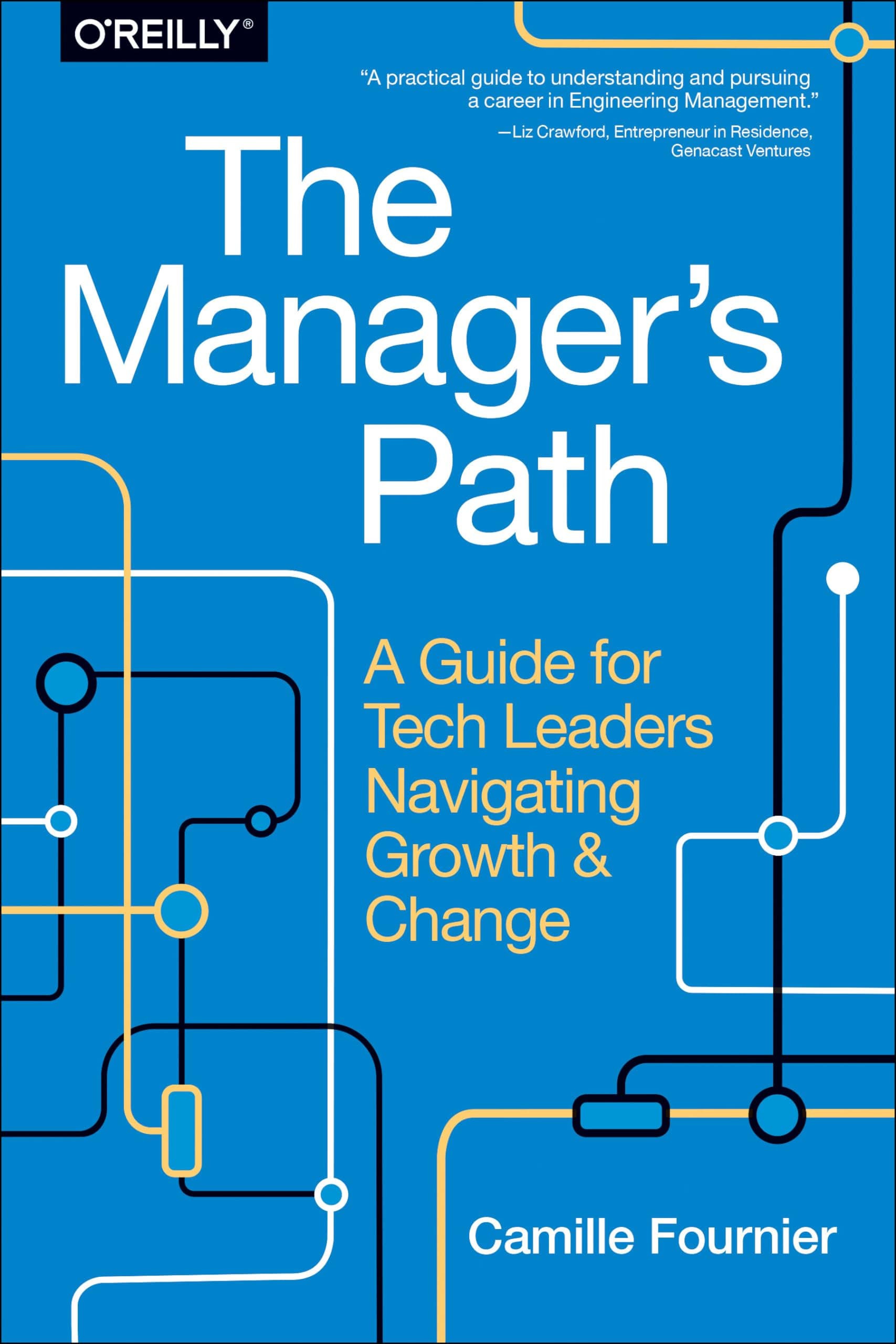
The Manager's Path: A Guide for Tech Leaders Navigating Growth and Change [Fournier, Camille] on desertcart.com. *FREE* shipping on qualifying offers. The Manager's Path: A Guide for Tech Leaders Navigating Growth and Change Review: Real practical advice you can use to become better at your job - I am an experienced technology executive and consultant for engineering managers and execs. Based on my experience, this book is now the best book you can buy to learn modern engineering management. Previous contenders have included Peopleware, High-Output Management, The Mythical Man-Month, Good To Great, and others you've probably heard of. They are fine books, but they are either somewhat out of date, overly general, or a combination of both. This book is different. Fournier's book is a comprehensive overview of all the roles on the career path of modern technical management (starting from "senior engineer mentoring an intern" all the way up to CTO) and how to deal with the challenges at every step of the way. What sets this book apart, other than being comprehensive, is that it is the product of direct and highly relevant experience. Fournier has worked at huge companies, small startups, and medium-sized companies, all in hyper-competitive industry settings. You've probably read other management books and it always goes like this: they give you a piece of general advice about how to deal with an issue. You try it (assuming it is even specific enough to put into action and isn't just a feel-good HR platitude), you run into a snag, and now the advice is useless because the rosy assurances in the book about how employees were going to act reasonably didn't really work. You throw the book away and think there is something wrong with you because everyone keeps on talking about how the book is great and it's just your fault that you couldn't make this great advice work. Fournier's advice is not like that. She starts with the general outlines of the strategy, but then tells you about times when she had to confront the issue herself, how she tried to apply the strategy and screwed up (there are instances in the book where she openly admits "The first time I tried this I fell flat on my face"), what kinds of problems kept the strategy from working, how she modified the strategy and overcame the problems, and finally and most importantly, wraps up with a summary about how context and trade-offs affect how you apply the advice. Acknowledging and explaining how common variations and implementation details determine how a general strategy will play out is what makes this book unusually useful and relevant. Because everyone's job and situation are a little bit different, Fournier does an excellent job of breaking down broad strategies into their core principles, while separating out which details you can change based on individual situations, so that you can choose between trade-offs when you apply the strategy to the specific challenge you are confronting. Lastly, this book will give you confidence. Confidence that you're not alone, that others have faced the same problems and surmounted them, that you can do it too. Confidence that you can screw something up but still pick up the pieces and try again, that you'll still get it right the second or third time, and that you are going to get to where you want to go. This book is the product of years of tough lessons and hard-won success. Buy it. You won't regret it. Review: Ok book but mostly 101 - Not a bad book. My favorite part is on pages 40-42 where the author explains the imaginary vs. real life of an individual contributor vs. manager. Other things I liked are e.g., tips like developing some redundancy so that no one is indispensible and that when you get into the big leagues you might need to reach out to someone externally for coaching - you no longer have a manager, you have a boss. I mostly learnt (and still learning) much of the advice in the book through practice rather than formal training or education. I take off one star from the book because its mostly 101 and skips the really difficult parts of management much of which I think has to be learnt from coaching and experience. It does not skip them entirely but IMO lacks better coverage and explanation through specific real-world examples. * How to handle disagreements and conflict? The answer to this varies depending upon who you are dealing with in the organization. * How to handle insubordination or someone undermining you? * How to handle non-performing individuals and teams? Often management has two sides - the one that is taught in books etc. and the one that is practiced. In short, I feel management is closely tied to understanding human psychology and psychology of collective individuals (teams). To become effective manager you have to master human psychology. That is what its all about. Overall recommended.







| Best Sellers Rank | #14,316 in Books ( See Top 100 in Books ) #10 in Software Development (Books) #69 in Business Management (Books) #116 in Leadership & Motivation |
| Customer Reviews | 4.6 4.6 out of 5 stars (3,297) |
| Dimensions | 6 x 0.6 x 8.9 inches |
| Edition | 1st |
| ISBN-10 | 1491973897 |
| ISBN-13 | 978-1491973899 |
| Item Weight | 11.9 ounces |
| Language | English |
| Print length | 244 pages |
| Publication date | May 2, 2017 |
| Publisher | O'Reilly Media |
Y**G
Real practical advice you can use to become better at your job
I am an experienced technology executive and consultant for engineering managers and execs. Based on my experience, this book is now the best book you can buy to learn modern engineering management. Previous contenders have included Peopleware, High-Output Management, The Mythical Man-Month, Good To Great, and others you've probably heard of. They are fine books, but they are either somewhat out of date, overly general, or a combination of both. This book is different. Fournier's book is a comprehensive overview of all the roles on the career path of modern technical management (starting from "senior engineer mentoring an intern" all the way up to CTO) and how to deal with the challenges at every step of the way. What sets this book apart, other than being comprehensive, is that it is the product of direct and highly relevant experience. Fournier has worked at huge companies, small startups, and medium-sized companies, all in hyper-competitive industry settings. You've probably read other management books and it always goes like this: they give you a piece of general advice about how to deal with an issue. You try it (assuming it is even specific enough to put into action and isn't just a feel-good HR platitude), you run into a snag, and now the advice is useless because the rosy assurances in the book about how employees were going to act reasonably didn't really work. You throw the book away and think there is something wrong with you because everyone keeps on talking about how the book is great and it's just your fault that you couldn't make this great advice work. Fournier's advice is not like that. She starts with the general outlines of the strategy, but then tells you about times when she had to confront the issue herself, how she tried to apply the strategy and screwed up (there are instances in the book where she openly admits "The first time I tried this I fell flat on my face"), what kinds of problems kept the strategy from working, how she modified the strategy and overcame the problems, and finally and most importantly, wraps up with a summary about how context and trade-offs affect how you apply the advice. Acknowledging and explaining how common variations and implementation details determine how a general strategy will play out is what makes this book unusually useful and relevant. Because everyone's job and situation are a little bit different, Fournier does an excellent job of breaking down broad strategies into their core principles, while separating out which details you can change based on individual situations, so that you can choose between trade-offs when you apply the strategy to the specific challenge you are confronting. Lastly, this book will give you confidence. Confidence that you're not alone, that others have faced the same problems and surmounted them, that you can do it too. Confidence that you can screw something up but still pick up the pieces and try again, that you'll still get it right the second or third time, and that you are going to get to where you want to go. This book is the product of years of tough lessons and hard-won success. Buy it. You won't regret it.
S**J
Ok book but mostly 101
Not a bad book. My favorite part is on pages 40-42 where the author explains the imaginary vs. real life of an individual contributor vs. manager. Other things I liked are e.g., tips like developing some redundancy so that no one is indispensible and that when you get into the big leagues you might need to reach out to someone externally for coaching - you no longer have a manager, you have a boss. I mostly learnt (and still learning) much of the advice in the book through practice rather than formal training or education. I take off one star from the book because its mostly 101 and skips the really difficult parts of management much of which I think has to be learnt from coaching and experience. It does not skip them entirely but IMO lacks better coverage and explanation through specific real-world examples. * How to handle disagreements and conflict? The answer to this varies depending upon who you are dealing with in the organization. * How to handle insubordination or someone undermining you? * How to handle non-performing individuals and teams? Often management has two sides - the one that is taught in books etc. and the one that is practiced. In short, I feel management is closely tied to understanding human psychology and psychology of collective individuals (teams). To become effective manager you have to master human psychology. That is what its all about. Overall recommended.
L**O
Good book for newly promo manager
A gift for my friend, he just just change his role from individual contributor to manager. hope he like it
J**S
Great for all levels of management
I got this book because Ithought i wanted to go into management, and now I am sure I want to do it.
J**E
A great guide to help you improve yourself and your workplace
This book contains an incredible wealth of coaching for all sorts of technical employees - both in formal and "informal" management. If you *have* a manager, and want some kind of criteria to gauge how well she's doing, this book illustrates the sorts of traits and behaviors successful managers exhibit. If you're in a (non-management) lead technical role, this book offers several ideas of how to level up your effectiveness in that role, including empowering you to understand the sorts of expectations your manager and the organization have for those sorts of positions. And if you are a manager, new or experienced, this is the sort of book which can kickstart your own self-improvement. There are tips about collaborating with other teams, how to engage effectively with non-technical management, navigating the politics of the office, how to be an effective leader down, laterally and upward. If you aspire to go into management, this is a perfect "how-to" guide. If you're considering leaving most of your technical role behind to go into management, this book will show you succinctly what sorts of challenges you'll face - how to manage your own expectations of how management will be versus the reality of how management will be. The book closes with the advice to "get curious." This is a powerful idea which drives the book forward from role to role, topic to topic. In summary, this is a book which is well worth your time and money to read.
N**N
This is not IT project management book, this is purely for software engineering managers. I have completed first 4 chapters so far and can see how much thoughts have gone into writing. Author offers practical advise on career progression from software engineer to tech lead, manager and CTO. A recommended read for IT professionals.
A**D
This is an incredible book, and I would highly recommend it for anyone who is at all interested in technical leadership at any level. It focuses very specifically on the challenges of combining technical focus with leadership and/ or management, and steps through roles from hands-on development, through mentoring, tech lead and various levels of engineering manager all the way up to CTO. Along the way, it gives a realistic and well-thought-out sense of what these roles are (and are not), how they differ from lower roles and from subtly different roles at a similar level, and how to succeed at them. The most interesting thing I took from it though was that the understanding you can gain about the hierarchy of technical leadership roles is useful at all levels, including what we would call "individual contributor" roles (i.e. doing technical work with no direct reports). Engineers at a relatively early stage in their careers can benefit from the first few chapters, which cover what to expect from your own manager, how to start mentoring and how to consider whether long-term you are more interested in management or technical tracks. Equally, having done some low-level management over the last couple of years and now seeking to return to more of a senior technical/ architecture role, I still found the later chapters (about senior tech management roles) fascinating, because I know that even if I never take on those exact roles, understanding the responsibilities and thought processes of those who have them will make me much more effective in working with them and advancing my own ideas.
M**L
it is highly recommended for not only who wants to be a manager, entry level engineer also should read the book too to conduct with his manager. And if you are japanese read this book and stop idiotic procedure in your company!!!
M**S
Delivered amazingly fast, a few chapters in impression is that it's an awesome read and provides lots of insights into the Manager's path.
M**A
Fui recentemente promovida a Tech Lead e foi-me recomendado este livro. Tenho a dizer que tem sido bastante útil a sua leitura para me ajudar a adaptar melhor a este cargo. Gostava de ter lido isto antes, por isso mesmo que ainda não sejam Tech Leads, vale a pena lerem.
Trustpilot
Hace 1 mes
Hace 3 semanas