We remain fully operational. Our teams are working around the clock to ensure your deliveries continue safely.

Descargar la aplicación


Servicios al cliente
Sobre nosotros
Copyright © 2025 Desertcart Holdings Limited
Descargar la aplicación

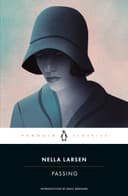
desertcart.com: Passing (Penguin Classics): 9780142437278: Larsen, Nella, Davis, Thadious M., Bernard, Emily: Books Review: Exceptional, about so much more than Passing - Author, Nurse, and Librarian, Nella Larsen was part of the Harlem Renaissance. Her mother was a white Danish Immigrant, her father, a mixed-race Afro-Caribbean immigrant from the Danish West Indies. She said he died when she was very young. Her mother married again, to a white Danish immigrant, and they had a daughter, Nella’s sister, Anna Elizabeth. Larsen was Nella’s stepfather’s name. Nella encountered discrimination in the white communities but was also somewhat excluded from African American communities because her background and life experiences were different. Her struggles to find a place to belong transferred over into her writing and added an extraordinary power to it that is picked up by all of us readers who feel of have felt lost and out of place in the world. In this way, she transcends mastering the craft of writing and takes it to the exceptional and magical level of art. This was written in the 1920s so some of the word choices and sentence structure choices are more formal and not quite as clear to some modern readers. However, that is one of the many things about the book that I liked. In the book, the main character, Irene, is married to a prominent doctor in Harlem. Nella was also married to a prominent doctor in Harlem. Even though the plot is about passing and that's something that is not dealt with today, this book is about so much more which is fully relevant today. The protagonist and antagonist are African-American women who have a very different outlook on their race. Irene feels loyalty and pride to her race and Clare has loyalty and pride only to what she wants out of life. Nothing else matters to her at all. This is the source of conflict. Clare, the antagonist, is not a likable person but she is one you are drawn to, the train wreck kind. You want to watch her just to see what will happen to her. On the other hand, most women regardless of their race, will not only like Irene, but will be able to easily step into her shoes. It’s a novella and to the author's credit, that’s all it needs to be due to her expert mastering of the craft of writing. And the ending …is absolutely superb. A must read. Review: Don’t pass on this book - I was unaware of this book and found it when I was searching for a “classic by an author of color” for a reading challenge. At 95 pages this is more of a novella than a novel. It was written in 1927 during the Harlem Renaissance. Given the time period, it is a remarkable book that is still relevant today. The story is narrated by Irene Redfield, a light-skinned black woman. She is married to a black physician and they have two sons. She is living in Harlem with her family but grew up in Chicago. During a trip home, she meets a childhood friend named Clare Bellew. Clare is also light-skinned but has decided to “go native,” living her life as a white woman. She is married to a wealthy white man who is an overt racist. He has no idea that his wife and their young daughter are black. Clare insinuates herself into Irene’s life and even comes to New York City for an extended stay. Irene is both fascinated and repelled by Clare. The book examines each woman’s approach to passing for white. Irene, who is insecure, seems to envy Clare’s confidence and also resent it. She also fears that Clare has made a dangerous mistake by lying to her husband about her heritage. There are several tense moments in the book when Irene has the opportunity to out Clare. She always chooses to keep her secret. Irene’s internal struggle between being proud of her heritage and protecting her friend is painfully drawn out to a horrible conclusion. Though the book is short, as are the sentences and paragraphs, it packs a big punch. You can read this quickly, but the book is better when you savor the words and think about the implications. To me, the novel is about mixed feelings and blurred lines. You can feel Irene’s ambivalence. The author does not provide any “right” answers and the book ends with even more questions. Some literary critics suggest that there is a lesbian element to the relationship between Irene and Clare. I wondered about that myself, but that is not a central part of the book in my opinion. Passing was not a part of my college reading list, but I am so glad that I found it.








| ASIN | 0142437271 |
| Best Sellers Rank | #31,694 in Books ( See Top 100 in Books ) #43 in Black & African American Historical Fiction (Books) #440 in Classic Literature & Fiction #1,060 in Literary Fiction (Books) |
| Customer Reviews | 4.2 4.2 out of 5 stars (7,070) |
| Dimensions | 5.08 x 0.43 x 7.76 inches |
| Edition | 1st |
| ISBN-10 | 9780142437278 |
| ISBN-13 | 978-0142437278 |
| Item Weight | 4.6 ounces |
| Language | English |
| Part of series | Modern Library Torchbearers |
| Print length | 160 pages |
| Publication date | February 4, 2003 |
| Publisher | Penguin Classics |
C**I
Exceptional, about so much more than Passing
Author, Nurse, and Librarian, Nella Larsen was part of the Harlem Renaissance. Her mother was a white Danish Immigrant, her father, a mixed-race Afro-Caribbean immigrant from the Danish West Indies. She said he died when she was very young. Her mother married again, to a white Danish immigrant, and they had a daughter, Nella’s sister, Anna Elizabeth. Larsen was Nella’s stepfather’s name. Nella encountered discrimination in the white communities but was also somewhat excluded from African American communities because her background and life experiences were different. Her struggles to find a place to belong transferred over into her writing and added an extraordinary power to it that is picked up by all of us readers who feel of have felt lost and out of place in the world. In this way, she transcends mastering the craft of writing and takes it to the exceptional and magical level of art. This was written in the 1920s so some of the word choices and sentence structure choices are more formal and not quite as clear to some modern readers. However, that is one of the many things about the book that I liked. In the book, the main character, Irene, is married to a prominent doctor in Harlem. Nella was also married to a prominent doctor in Harlem. Even though the plot is about passing and that's something that is not dealt with today, this book is about so much more which is fully relevant today. The protagonist and antagonist are African-American women who have a very different outlook on their race. Irene feels loyalty and pride to her race and Clare has loyalty and pride only to what she wants out of life. Nothing else matters to her at all. This is the source of conflict. Clare, the antagonist, is not a likable person but she is one you are drawn to, the train wreck kind. You want to watch her just to see what will happen to her. On the other hand, most women regardless of their race, will not only like Irene, but will be able to easily step into her shoes. It’s a novella and to the author's credit, that’s all it needs to be due to her expert mastering of the craft of writing. And the ending …is absolutely superb. A must read.
S**S
Don’t pass on this book
I was unaware of this book and found it when I was searching for a “classic by an author of color” for a reading challenge. At 95 pages this is more of a novella than a novel. It was written in 1927 during the Harlem Renaissance. Given the time period, it is a remarkable book that is still relevant today. The story is narrated by Irene Redfield, a light-skinned black woman. She is married to a black physician and they have two sons. She is living in Harlem with her family but grew up in Chicago. During a trip home, she meets a childhood friend named Clare Bellew. Clare is also light-skinned but has decided to “go native,” living her life as a white woman. She is married to a wealthy white man who is an overt racist. He has no idea that his wife and their young daughter are black. Clare insinuates herself into Irene’s life and even comes to New York City for an extended stay. Irene is both fascinated and repelled by Clare. The book examines each woman’s approach to passing for white. Irene, who is insecure, seems to envy Clare’s confidence and also resent it. She also fears that Clare has made a dangerous mistake by lying to her husband about her heritage. There are several tense moments in the book when Irene has the opportunity to out Clare. She always chooses to keep her secret. Irene’s internal struggle between being proud of her heritage and protecting her friend is painfully drawn out to a horrible conclusion. Though the book is short, as are the sentences and paragraphs, it packs a big punch. You can read this quickly, but the book is better when you savor the words and think about the implications. To me, the novel is about mixed feelings and blurred lines. You can feel Irene’s ambivalence. The author does not provide any “right” answers and the book ends with even more questions. Some literary critics suggest that there is a lesbian element to the relationship between Irene and Clare. I wondered about that myself, but that is not a central part of the book in my opinion. Passing was not a part of my college reading list, but I am so glad that I found it.
S**Y
Fascinating portrayal of women, marriage, and the Harlem Renaissance, in a psychological suspense thriller
The title of this book refers to a group of light-skinned African-American women who can "pass" for white during Jim Crow. I give this book five stars, with one reservation. I found the book fascinating, with some amazing writing, and a riveting plot line that you are dropped into without the slightest suspicion, and blindsided by the depth of the psychological drama that unfolds. My criticism is that the book ends too quickly, and too abruptly. I would have read three times as much about this astounding world, and all of the multiple characters, black and white, that are brought to life so vividly, along with the glamor of the Harlem Renaissance. It should have been a much longer book. This writer got a Guggenheim and then couldn't get her subsequent book published. I heard about this book because it was the subject of a discussion at the Waterstones bookstore in London, and since it was an American writer, it made me curious. I suspect the author's life, as a black woman in those days, led her into the kind of poverty and obscurity that Zora Neale Hurston ended up living, as a hotel maid, at the time of her death. We lost out on the kind of body of work they might have produced had they been of a race, class and gender that offered more support for their literary gifts.
V**I
Don't buy from this publishing house . Lots of errors in punctuation. Difficult to read
F**J
This book is brilliant, if painfully sad. The edition is gorgeous.
M**I
はじめに:このレビュ-であらすじ等を述べるつもりは全くありません。 “Passing”それは、分かり易く表現すれば「黒人と白人との混血である人間がカラーラインを越えて生きていくこと。 ふとしたことから、大学時代に読んだこの本をもう一度手に取ってみた。新たに何を感じ、何を問題視するのだろうと考えながら読んで気づいたのは、悲しいかなほとんどあの頃と変わっていなかったこと。“どう生きるか”ただそれだった。 この日本において多くの人はこの問題に対してそれ程深く考えた事がないのではないか。今や、多くの外国人や二世とやばれる人達がこの国にもいるにもかかわらず、島国根性丸出しのこの国民性を街を行交う人を通して見るだびに胸が痛くなる。 だからこそ、この本を読んで「人間」とは「人種」とは、更に「人はどう生きるべきなのか」という問題に目を向けてみてはいかかでしょう。 必ず新しくなった自分に出会える作品です。
M**A
I loved the book, and the edition is good. Honestly it can be read really fast. It's worth it.
C**D
Joya y drama en tres actos que debería se más conocido en España-y supongo, todavía imprescindible, a casi un siglo de distancia, para comprender uno de los temas más espinosos de los Estados Unidos.
Trustpilot
Hace 3 semanas
Hace 1 mes