We remain fully operational. Our teams are working around the clock to ensure your deliveries continue safely.

Descargar la aplicación


Servicios al cliente
Sobre nosotros
Copyright © 2025 Desertcart Holdings Limited
Descargar la aplicación
Buy anything from 5,000+ international stores. One checkout price. No surprise fees. Join 2M+ shoppers on Desertcart.
Desertcart purchases this item on your behalf and handles shipping, customs, and support to Spain.
🦇 Own the legend that redefined Batman’s origin — don’t miss out on the comic that started it all!
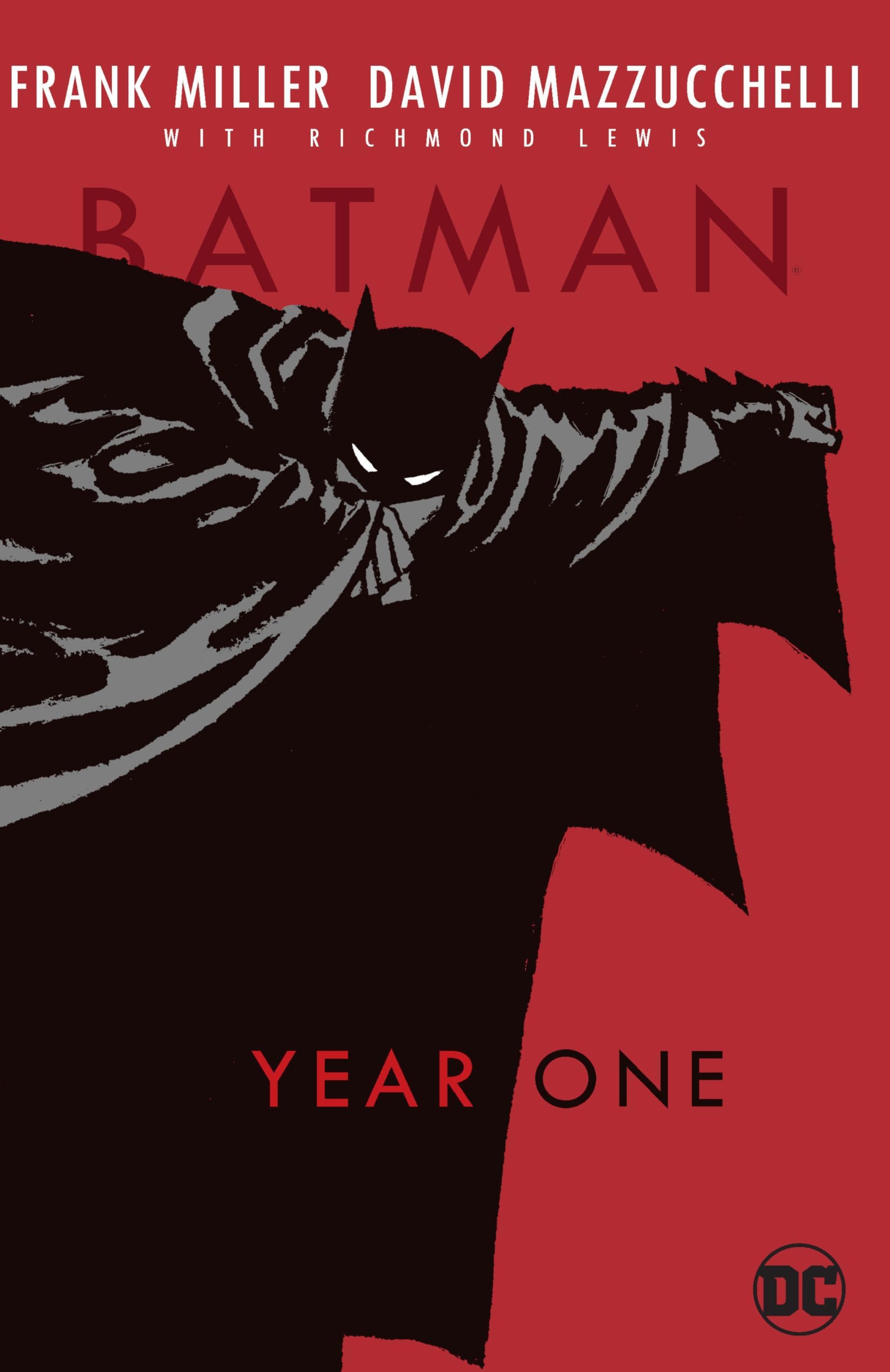
Batman: Year One is Frank Miller’s critically acclaimed graphic novel that chronicles the dark, realistic origin of Batman. Featuring David Mazzucchelli’s atmospheric artwork and enriched with bonus content like original sketches and scripts, this edition offers a premium reading experience. Highly rated and a top bestseller in superhero comics, it’s the essential starting point for any Batman fan or collector.


| Best Sellers Rank | #3,110 in Books ( See Top 100 in Books ) #1 in Teen & Young Adult Superhero Comics #5 in DC Comics & Graphic Novels #42 in Superhero Comics & Graphic Novels |
| Customer Reviews | 4.8 out of 5 stars 10,909 Reviews |
C**2
Beneath the Shadows of Gotham City Are Legends Born...
During the 1980s there was a real attempt in the comic book industry to cater to the interests, maturity, and cynicism of adults rather than to the naivete, innocence, and adventurous spirit of children. Many classic comic book superheroes were resurrected into the world of the '80s and given very grim contemporary story lines to make them more realistic and compelling. Perhaps one of the most compelling of these story lines is that written by Frank Miller. In the late '70s and into the early '80s, Miller had made a real name for himself while working at both Marvel and DC, and his revitalization of the Daredevil and Punisher characters for Marvel Comics had proven to be a major success with fans and critics. But perhaps Miller's greatest achievement in comics came when he created two very different and very dark depictions of Batman for DC Comics. In the now legendary "Batman: The Dark Knight Returns" , Miller turned Batman into a Dirty Harry-like vigilante, whose brutal methods were only matched by the brutality of the crumbling futuristic Gotham that he lived in. The book was somewhat controversial as it changed or rather embellished certain characteristics of the Batman and pushed the envelope as to the amount of violence and killing that could occur within mainstream superhero comics. Personally, I have not read this particular Batman tale since I don't care for some of Miller's overly authoritarian depictions of heroism, but I will admit that the man is a great talent, as both a writer and an artist, and that his macho-noir vision was groundbreaking in the comic book medium. For me, Frank Miller's shining moment of creative genius came when he revisited Batman's past and how it was that he came to be the Dark Knight of Gotham City that we all know and love. As mentioned earlier, DC Comics wanted to update their characters by retelling their origin stories with a new level of depth and complexity in order to attract more intelligent and sophisticated readers. To do this, they often challenged the idealized version of the superhero which had been so prevalent in the past by placing them in corrupt societies where their methods of enforcing order became increasingly harsh and their morality began to wane. When writer/editor Denny O'Neil (who had, along with editor Julius Schwartz and artists Dick Giordano and Neal Adams, reinvented many of DC Comics' great characters during the late '60s and '70s) asked some of the writers and artists at DC who would be interested in tackling Batman in a realistic and psychologically grounded story that would explore the character's past, it became clear that the job would have to go to a collaborative team that knew how to deal with the character. Enter Frank Miller and David Mazzucchelli. In "Batman: Year One", which was originally published as a four-issue miniseries in 1987 before being collected into a bestselling graphic novel, Frank Miller told readers a tale of how Bruce Wayne became Batman in a way that was ultimately definitive. In terms of character origins, the story emphasized the psychology of the protagonists, Bruce Wayne and Jim Gordon, and showed them as truly heroic albeit sometimes flawed figures. Miller took what had come before in comics and elaborated on it and in doing so established a new version of the Batman mythos which has been an inspiration and influence to almost every writer who has set out to tell a Batman story since. David Mazzucchelli had been a talented artist with a very unique visual sense. Hand-picked by Miller, Mazzucchelli created a stunning depiction of Gotham replete with gothic settings, film noir atmosphere, and stark contrasts between light and shadows, monochrome and color. Mazzucchelli modeled his version of Bruce Wayne on young Gregory Peck and Jim Gordon is reminiscent of many of the iconic hard-boiled police and detective characters found in illustrated pulp magazines of the '30s and '40s. The cityscape of Gotham is a strangely believable combination of modern New York with a distinctly retro-noir look to it. What sets "Year One" apart from other Batman stories is the way that it so efficiently juxtaposes Bruce Wayne's journey into becoming Batman with Jim Gordon's rise in the Gotham City Police Department as one of the few honest cops amidst all the corruption. I really love the fact that as much time is spent with Bruce Wayne/Batman as is spent learning about Gordon, who had up until this point never really been given the focus that he deserved as a character. The story itself is also unique since it doesn't rely on Batman's colorful enemies to flesh it out or engage readers. Selina Kyle, also known as the femme fatale Catwoman, is given an introduction as prostitute who turns to cat burglary and the last page of the comic introduces the Joker as a new threat to the citizens of Gotham, but all in all, there are no supervillains. This more down to earth approach allows for Miller to display Wayne's evolution as Batman and to show him learning how to apply his keen intelligence, martial arts training, and detective skills to costumed crime-fighting. Without the presence of theatrical megalomaniac villains, the focus returns to corrupt politicians and police officers, to street-level crime and poverty, which really shows the social crusader aspects of the Batman and Gordon characters brilliantly. My only complaint as far as the writing goes is that the Alfred character is so under-utilized and is left merely to make dry humorous comments and that Selina Kyle's appearances are so few. However, these are very minor qualms with what is truly a masterpiece of superhero fiction! All in all, "Batman: Year One" is perhaps the best Batman graphic novel ever written in that it so carefully adheres to the moody detective roots of the character created by Bob Kane and Bill Finger, while injecting the world of Gotham City with a vitality that was both refreshingly modern and yet timeless. Of all Frank Miller's work, this manages to stand out in my memory as his most intelligently scripted, most dynamically drawn, and most memorably heroic.
M**.
Great Introduction to Batman for Young Readers.
This Batman comic is a wonderful choice for kids who are starting to explore superhero stories. The content is age appropriate, engaging, and easy to follow, making it perfect for young readers who enjoy action without anything too dark or intense. The illustrations are colorful and dynamic, which really helps keep kids interested, and the story flows smoothly, making reading feel fun rather than challenging. My daughter enjoyed it from the first pages and stayed engaged all the way through. What I appreciate most is that it introduces the world of Batman in a way that’s suitable for younger audiences. The themes focus on bravery, problem-solving, and doing the right thing, which makes it both entertaining and positive. The book is well made, with good print quality and sturdy pages, so it holds up well to repeated reading. Overall, this is a great purchase for parents looking to introduce their children to Batman in a fun, safe, and enjoyable way.
A**.
The answer to,"Where do I start reading Batman comics?"
So you want to start reading Batman comics? I bet you've searched all over the internet, on sites such as comic vine, youtube, yahoo answers, and they all tell you the same thing: Start with Batman: Year One. Why start with this book? Well, this review will explain everything: The cover, the artwork, the extra features, the story, and what I recommend you read next. Without further ado, let us begin. Once upon a time, there was a man named Frank Miller. In 1986, Frank wrote a little story called The Dark Knight Returns. This critically acclaimed alternate-universe novel featured Miller's revolutionary interpretation of Batman. Shortly after, he was asked to write something else. Anything. He took a very general route: a Batman origin story. Little did he know, this 4-issue story would become a classic, essential Batman collection. Batman Year One collects Batman issues 404-407 into one remastered collection, complete with bonus features of extra artwork, preludes, afterwords, etc. Here is a breakdown of the book's contents: - A one page long newspaper clipping titled The Crime Blotter written by Slam Bradley, the original star of Detective Comics #1, perhaps as a homage to him. - A 2 page introduction by Dennis O'Neil from March 1988 explaining how the idea for Batman Year one was introduced. - The 97 page long story itself. More on that later. - A 37 page afterword(s) complete with original sketches, the process of remastering the color, original scripts, black and white artwork, etc. - An advertisement at the end for other graphic novels, The Long Halloween, Dark Victory, Haunted Knight, and Catwoman: When in Rome, all by the Dynamic Duo of comics whose names aren't Batman and Robin, Jeff Loeb and Tim Sale. Perhaps DC is trying to tell us something... The story itself is phenomenal. I'm not going to spoil anything, but here's a little opening to draw you in: Lieutenant James Gordon has been called in to work in Gotham City. During the train ride there, we learn of his opinions towards his new workplace. He complains about the long ride, the scummy people, the lousy effort of the police force in a mob-ruled city, how he knows it will be difficult to raise his family. Think Detroit. While there, he learns of the corrupt Gotham police force, and the return of Bruce Wayne, a millionaire playboy who inherited his dead parents' wealth by default. Bruce himself is struggling mentally. He wants to become a vigilante, a self-appointed crime fighter, but he lacks one minor thing: others simply won't fear him. It finally dawns to him that he should become what he feared, a bat. Cover art for the book is basic. That's all it has to be. A red book with a sketch of Batman that stretches from front to back cover (I purchased the paperback version) The story hits everyone differently. If your memory of Batman is the Adam West, joke-cracking pun-filled crime fighter, this story will come as a shock to you. You may have to read the story a second time before you can really appreciate it. It is very dark, filled with blood, cheating, alcohol, prostitutes, and drugs. What I'm trying to get at here is that this isn't a story to read to your kids at bed time. Nevertheless, it is still a masterpiece. Speaking of masterpieces, David Mazzucchelli absolutely nails it on the artwork. It focuses a lot on lighting and shadows, perfect for the noir mood of the story. It also focuses on little, tiny details, the lining of the bricks of the apartment building being staked out by a psychopath, the raindrops on Gordon's car window, the debris of the collapsed house Batman uses to hide from the police (yes, I just said that, Batman hiding from the police) The story occasionally switches narration between Batman, Jim Gordon, and Catwoman. The amount of use of this tool can be what makes or breaks a story. Miller balanced it perfectly. There are no "supercriminals" so to speak, no Joker, Poison Ivy, Mr. Freeze; just the mob, police force, and some no-named petty thieves. After all, it's just Batman's first year. It broadcasts the successes, failures, and luck of Batman. All-in-all, it was a fantastic read. It's really something you can read again and again. This book will start you comic/TPB collection, and hopefully it will be a long one. You will see some connections to the Nolan films in this book, as it played a vital role as inspiration for Batman Begins. Upon putting this book down, it immediately poses another question: Where to next? Perhaps you didn't like this new spin on the Batman. Maybe you want a more vibrant kid friendly version. I would suggest picking up Batman: Chronicles Volume 1 or Batman: Archives. They are a collection of older Batman comics from the Gold, Silver, and Bronze age. Perhaps you did like this Batman and what to further oversee his development into the Dark Knight. Batman Year One in my opinion is the starting point for the modern age Batman. If this interests you, I'd pick up at least one of the following graphic novels: - Batman the Long Halloween - a murder-mystery spanning over a year - Batman: Dark Victory - an intended sequel for The Long Halloween, introduction of Dick Grayson AKA Robin - Batman Haunted Knight - a collection of 3 Batman short stories - Catwoman: When in Rome - further reading on Catwoman - Batman: The Man who Laughs - introduction to the Joker - Batman and the Monster Men - my recommendation if you want to read Batman in a chronological order. However, it is very expensive at this time on amazon. - Legends of the Dark Knight - a comic series consisting of several batman short stories, no order is required, though some are sequels to others. - Anything you firggin' want - no explanation needed. I payed $8 for the book via Amazon, and it was a steal. If you see the book for under 10 bucks, don't hesitate to pick it up. I hoped I helped all you new readers, or veterans who never read this your time around. 5/5 stars, 100/5 stars, actually. It doesn't matter. Read it if you haven't. You won't regret it.
C**.
A great start for a great hero.
Batman:Year One is a story, which, as the title suggests details the first year of action for Batman and the inspiration for many of his methods, and, also, his mentallity, but it doesn't just foccus on a single character; a noticable part of the book is centered on James Gordon, the police comissioner we all know and love, and how he came to be where he is, and how his alliance with Batman was forged. Of both characters I found myself rooting the most for the comissioner, who Frank Miller managed to make into a compelling, interesting, multilayered and, most importantly, flaved and humane character, and his segments in the comic, atleast I personally, found to be the most interesting(to say the thruth, this comic actually made Gordon my favourite character of the Batman mythos, yes, that's right, I prefer him to Batman). Not to say that the Batman sections in the novel were bad or uninteresting, but his story is one most Batman fans(excluding some of the more specific details upon which this comic expands) by now pretty much know by heart, so it was James Gordons part of the story, that, atleast for me, had the most impact and had the most interesting setpieces, which I refuse to spoil here. What I can say is that, you'll witness some truly memorable moments, the transformation and evolution of both protagonists before your eyes and some new information regarding both characters, that will shed them in a much different light. The story itself is structured over the time spane of a single year and shows how Batman was inspired to create his costume, how Catwoman(who also is an important part of the story) choose to lead a life of vigilantism and first met(perhaps not strictly in perosn)Batman, and just quite how deep did the corruption run in Gotham city. Frank Millers writing is as good as always, ussualy portrait in the inner monologs of many characters, that create a new and interesting angle into the characters mentallity. The story is riddled with many intense set-pieces, that, worry not, I will not spoil in this review, as much of their impact relies on surprise(also worth of mentione is the dark and brooding atmosphere which envelops much of the story and greatly helps the immersion). I will say, however, that it is refreshing to see Batman actually be in mortal danger for once in a story and not just steam-roll his way through the opposition, relying on the "prepared for anything" gimmic, that he has been relying on so much in many modern comics(I know "being prepared" is part of Batmans character, but it destroys much of a tension a story can have, if you know that Batman just happened to be prepared for the exact type of trap The Riddler had for him, six years ago). My only criticism of the story comes from the fact that, do to the stories structure which spans an entire year, it can often be the case, when entire months are given just one or two pannels of exposition , and the story often insists on jumping from character to character a bit too often, which can make the story feel a bit disjointed. For these flaws I deduct the comic a star. Sppeaking of the art, I have heard many people calling it too simplistic, uninteresting or just plain simply bad, but I beg to differ with these oppinions - yes the art isn't overtly detailed, and the coloring may seem very simplistic and perhaps even primitive, but I think it does the story a favour, in the sense that it portrays a more simple time in Gothams history were there weren't no supervillains and hardly any superheroes or vigilantes. The colloring also helps enchance the depresing mood of the city, that suits the story well. I also didn't particullary mind the simplicty of the art, to say the truth I even prefered it to many modern, overly detailed comic art, which may seem great individualy, but as a part of a coherent whole, they often can ruin the pacing of the story. That wasn't the case in Batman:Year one, the art had a great pacing(despite the loose nature of the story) and was always portrayed from a great angle, and, most importantly it always had a great impact and punch to it, be it scenes of action or drama, the art seemed always able to portray the required emotion and power of them. As far as the purchase recommandation goes, the question stands: should you buy this comic? In short - yes! It doesn't matter if your a long time Batman fan or new to the whole mythos, or, perhaps, the whole comics genre; Batman:Year One is as good of a place to start as any. In fact Batman:Year One is one my highest recommandations as a starting point for comics(alongside Watchmen, The Joker and Kick-Ass), for people who are new to the genre:it contains great art, inteligent story, humane characters and great writing(and that is discounting all the bonus materials, such as scetches and parts of the script), and I believe almost anyone could find something worth of interest inside this great story!
T**.
Perfect Place To Start
Frank Miller's take on the origins of Batman is a refreshing and well paced story from start to end. I'm not great at reviewing in the traditional paragraph form so I've decided to do pros and cons and to keep this review as short and concise as possible. PRO: - The story is as simple as they come all the while still leaving a fulfilling feeling at the end of it. There was never a dull moment and I really enjoyed myself throughout the whole thing. - The art is amazing. David Mazzucchelli brings a unique and bold art style to the world of Gotham. He uses bold strong lines with shades and contour that should be admired. I don't want to spoil it but it's great and quite possibly the best part of this piece. - The story is half Batman and half Jim Gordon. This works out extremely well because somehow they manage to make Gordon's arrival at the Gotham PD and Wayne's transformation into Batman equally interesting. Just as you're beginning to tire of one of them, the other takes over the panels and by the end when they are sharing panels it seems like a great pay off. - One thing I despise in comics is when the writer turns to dialogue and makes the whole thing too wordy. Frank Miller excels in showing not telling and I really wish that more comic writers would work close with their illustrator to achieve this. Never did I look at a page and feel daunted by the amount of dialogue or wordiness on the page. Comics are meant to tell a story but they are not meant to be books with a picture fighting a text bubble for attention. - An after word by artist David Mazzucchelli is a very nice way to wrap up the book and provides a nice insight into what he was trying to achieve in illustrating year one. CON: - It is short. I wish there was more to read but that's just because it is so well done. It is 96 pages of pure genius and I wish it were that plus a couple zero's at the end of that number. - There is a catwoman origin stuck in their that seemed rushed and not so great. I think given time and space it could have grown and become something substancial but it seemed cut off and no closure was brought to the character. - The beginning is abrupt and doesn't give as much background that I would have liked but that's a small complaint in an otherwise perfect story structure. Overall the comic is a great addition to anyone's collection and Miller should be commended for his simplistic yet deep style of telling a story. All in all, perfect Batman origins comic and a great comic for a person to get started in the character.
A**E
Perfect Batman Comic
A must read for batman
D**R
Beautiful Work
This book is enormous, which is what we want. The detail is exquisite and the introduction very informative of the creative process. The sketches are very telling of the process also. As far as I can tell, this edition has every page of the original comic which blows my mind. You can follow the story page by page as we would expect while many artist additions are missing pages, understandably.
S**S
Arguably the Best Batman Story Ever
There's likely nothing more that can be written about how fantastic this Batman story is. Frank Miller published this very soon after his monumental Dark Knight Returns series, except this story was to take place within the main DC continuity. Following in the vein of TDKR, Year One reinvented and rejuvenated the Batman mythos. However, I think this book outclasses Dark Knight Returns on a few levels. Firstly, the art is vastly superior to TDKR. Frank Miller can write, but his art talent has rarely appealed to me. It's inconsistent, messy, and filled with many bizarre figures. His Batman looks imposing and dark, but is surrounded with mediocrity. David Mazzucchelli, on the other hand, draws everything with stunning, sleek realism, capturing Miller's troubled Gotham and the young Bruce Wayne like no other. While not the most detailed work, it works efficiently and propels the reader through the story with gripping visuals. Despite the simplistic style, it's never cartoonish. This is some mature material, and the art reflects this. Included in this title are several early renderings from Mazzucchelli, as well as some of his commentary. It is almost enough art to be considered a second Year One. The writing is, of course, superb. Miller's TDKR Batman is gruff and callous, befitting of an older Wayne. Miller writes the young vigilante just as well, showing that he is driven in his mission by pain, yet still carrying a sense of empathy for others, even criminals. Gordon is the other highlight of this story, showing the yet-to-be commissioner as tough, vulnerable, and not as squeaky clean as his ideals. Jim Gordon has always been an important character in Batman, likely in the top four, following only Alfred, Joker, and Robin. Jim experiences, and is susceptible to, temptation. Showing that he is human does not take away from his heroic nature, but rather makes him more of a three-dimensional character. Wayne and Gordon both begin their time in Gotham intent on cleaning up the city, but obviously in very different manners. This parallel journey introduces the bond these two will forge, and the eternal boundary that will separate them. This is my favorite Batman story, surpassing TDKR with ease. Here, Batman's a hero, plain and simple. He's not afraid to use intimidation and violence, but he's undoubtedly one of the good guys. the writing and art is top notch, the standard for which all good comics should be held. Yes, it's an origin story, but it's an origin story like no other. At less than $10, I can't think of a better Batman comic to be purchased.
Trustpilot
Hace 1 mes
Hace 5 días