We remain fully operational. Our teams are working around the clock to ensure your deliveries continue safely.

Descargar la aplicación


Servicios al cliente
Sobre nosotros
Copyright © 2025 Desertcart Holdings Limited
Descargar la aplicación


Buy anything from 5,000+ international stores. One checkout price. No surprise fees. Join 2M+ shoppers on Desertcart.
Desertcart purchases this item on your behalf and handles shipping, customs, and support to Spain.
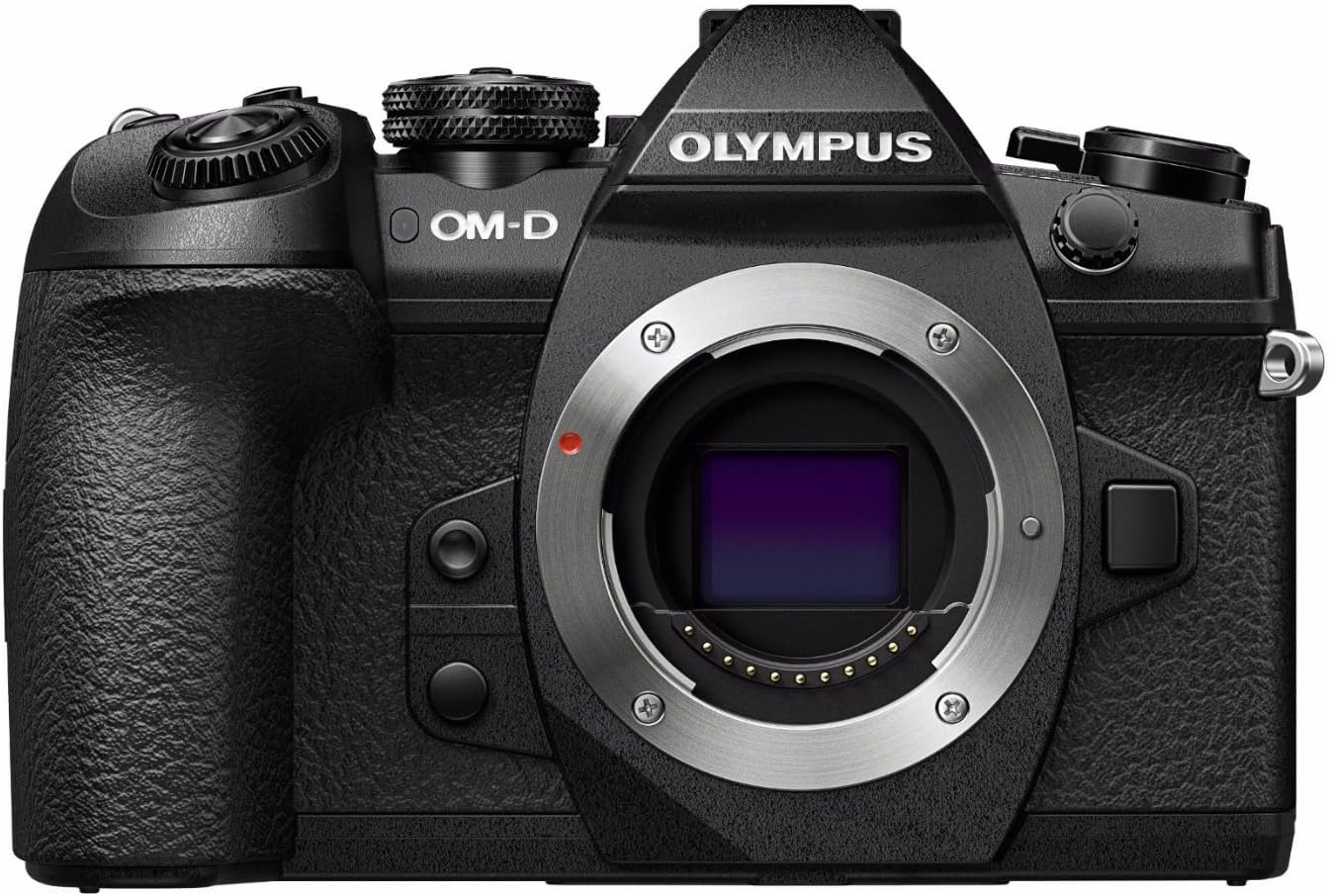
🚀 Elevate your craft with speed, precision, and pro-grade durability
The OM SYSTEM OLYMPUS OM-D E-M1 Mark II is a professional-grade mirrorless camera featuring a 20.4MP Live MOS sensor, a powerful TruePic VIII dual quad-core processor, and an advanced 121-point cross-type autofocus system. It delivers ultra-fast continuous shooting up to 18 FPS with silent shutter, 5.5 stops of in-body image stabilization, and a rugged weather-sealed magnesium alloy body. Perfectly paired with Olympus M.Zuiko PRO lenses, it offers 4K UHD video capture and a 50MP high-res shot mode, making it a top choice for demanding photographers and content creators seeking speed, precision, and durability.


| ASIN | B01M4MB3DK |
| Age Range Description | Adult |
| Aperture modes | Aperture Priority |
| Are Batteries Included? | Yes |
| Aspect Ratio | 4:3 |
| Auto Focus Technology | Contrast Detection, Phase Detection |
| Autofocus | Yes |
| Autofocus Points | 121 |
| Available Memory Slots | 2 |
| Bit Depth | 12 Bit |
| Box Contents | Camera Body Only |
| Brand Name | OM SYSTEM |
| Camera Flash Type | Built-In |
| Camera Lens | Macro lens for Micro Four Thirds mount |
| Colour | Black |
| Compatible Devices | Olympus cameras and lenses, certain accessories with hot shoe mount |
| Compatible Mountings | Micro Four Thirds |
| Continuous Shooting Speed | 18 FPS |
| Country of Origin | United Kingdom |
| Crop Mode | Micro Four Thirds |
| Customer Reviews | 4.6 4.6 out of 5 stars (178) |
| Digital Scene Transition | False |
| Digital Zoom | 0.44 x |
| Digital-Still | Yes |
| Display Fixture Type | Fixed |
| Display Type | LCD |
| Dots Per Screen | 2.36E+6 dots |
| Effective Still Resolution | 20.4 MP |
| Expanded ISO Minimum | 64 |
| Exposure Control | Aperture Priority, Auto, Manual, Program, Shutter Priority |
| External-Memory Size | 256 GB |
| File Format | MOV |
| Flash Memory Bus Interface Type | UHS-II |
| Flash Memory Installed | 256 |
| Flash Memory Speed Class | V90 |
| Flash Memory Type | SD |
| Flash Memory UHS Speed Class | U3 |
| Flash Memory Video Speed Class | 3 |
| Flash Modes Description | Automatic, On/Fill, Off, Slow Sync, Rear Curtain |
| Flash Sync Speed | 1/200 - 1/250 |
| Focus Features | Autofocus |
| Focus Mode | Continuous-Servo AF (AF-C) |
| Focus Type | Auto Focus |
| Form Factor | Mirrorless |
| HDMI Type | Type D Micro HDMI |
| Hardware Interface | AV Port |
| Has Color Screen | Yes |
| Image Capture Type | Stills & Video |
| Image Stabilization Type | Sensor-shift |
| Item Type Name | Olympus om-d e-m1 mark ii (black) micro four thirds digital camera. |
| Item Weight | 499 g |
| JPEG Quality Level | Normal |
| Lens Construction | 12 UK |
| Lens Correction Type | Peripheral Illumination|Chromatic Aberration|Diffraction |
| Lens Type | 8.66 inches |
| Manufacturer | Olympus |
| Maximum Aperture | 6.3 f |
| Maximum Display Resolution | 1,037,000 |
| Maximum Image Size | 5184 Pixels |
| Maximum Shutter Speed | 60 Seconds |
| Metering Methods | Matrix" or "Evaluative |
| Minimum Shutter Speed | 60 Seconds |
| Model Name | Olympus OM-D E-M1 Mark II |
| Model Number | V207060BU000 |
| Model Series | OM-D |
| Movie Mode | Yes |
| Network Connectivity Technology | USB 3.0, HDMI, 3.5mm audio |
| Night vision | No |
| Number of Diaphragm Blades | 7 |
| Optical Zoom | 1 x |
| Photo Filter Size | 72 Millimeters |
| Photo Filter Thread Size | 72 Millimetres |
| Photo Sensor Size | Micro Four Thirds |
| Product Features | Brightness Control |
| Real Angle Of View | 18.2 Degrees |
| Rear Webcam Resolution | 20.4 MP |
| Recording Capacity | 29 Minutes |
| Remote Included | No |
| Screen Size | 3 Inches |
| Self Timer | 12 Seconds |
| Sensor Type | CMOS |
| Series Number | 1 |
| Shooting Modes | Aperture Priority, Landscape |
| Skill Level | Professional |
| Specific Uses For Product | Photography |
| Supported Image Format | JPEG, RAW |
| Total Still Resolution | 20.4 MP |
| Total Video Out Ports | 1 |
| Touch Screen Type | Capacitive |
| UPC | 050332191181 |
| Unit Count | 1.0 count |
| Video Capture Resolution | 4K UHD 2160p |
| Video Output | HDMI, USB |
| Viewfinder Magnification | 1.0x |
| Viewfinder Type | Electronic |
| White Balance Settings | Auto |
| Wireless Technology Type | Bluetooth |
| Write Speed | 312 MB/s |
| Zoom | Other |
S**T
Great quality, even better than the OM-D E-M4 Mark II
Slightly heavier and bulkier than the OM-D E-M5 Mark II but has upgraded features. This is still a lot lighter than equivalent full frame cameras. The main difference is in the focusing system although performance seems similar. The buttons and menus are virtually identical to the E-M4 but the battery is bigger.
L**E
Great camera just overpriced
I love the camera and had previous models but in truth I saw it and bought it and then realised that many other places were selling it for nearly half the price. The return was such a long winded process that I just didn't bother and kept it
B**N
Es el producto tal y como decía la descripción, la obtuve a buen precio respecto a otros provedores. Buena cámara aún la estoy probando. La durabilidad de la batería está por debajo de mis expectativas. Sin embargo, llevo pocas semanas de uso y no la he configurado al 100%. Pude registrar el producto y actualizar el firmware sin problemas. Tenia entendido que lo menús de configuración no eran tan sencillos, pero siguiendo el manual digital (el cual hay que descargar en la pagina de olympus, pues el impreso que viene con la cámara es un resumen o una guía rápida) y otros tutoriales pude moverme por los menús con más facilidad. Lo lógico es tener un lente para micro 4/3, no siempre se piensa esto y me incluyo.
K**K
Shipment & delivery took longer as it was during the festive season. Packaging was good. Items were as described. EM1-ii came with newer 3.1 firmware (bought in Dec'20). Solid handling, excellent stabilization & build quality. Video focus was swift & accurate when compared to my previous Panasonic (slow & hesitant). All functions were tested good! Great discount (compared to msrp) as it's an older model (newer release EM1-iii). I'm happy with the purchase!
A**S
Having used the EM1.2 for a while, I write down my first impressions, related to Olympus EM10.2, from my feeling experience rather than a scientific view. I get raw images to be processed later with RawTherapee and do not make movies. Note: I know this is nothing new but an end user experience with a still perfectly capable camera... and may help you if you are thinking to move on to an EM1.3 or EM5.3. Ergonomically, is a delight to use. It is more comfortable than EM10.2 in hand, especially with large lenses like 75-300mm. Has many extra buttons, all configurable so all handy options are at a button press far (FN1 = Manual Focus, FN2 = Multi Function with ISO, Front Top Button at left = peaking, Front Bottom Button at left = zoom, etc.). AEL/AFL is more handy to be configured as Back Button Focus (BBF) but I think I'll stick to shutter button because I have the feeling that my hit rate is higher having auto focus there. Front dial on EM10.2 is more comfortable, being the EM1.2 front dial smaller (and rear too). But I'll get used to it, no doubt; I guess it is smaller because it's located on grip instead of body. Weight, almost the same feeling, minimum perceptible extra 180g. Battery life, lasts a little longer. Noise and dynamic range, looks a little better when stretching shadows. Auto focus, see no difference with good light (according to EM1.2 advertising, C-AF mode is PDAF only and S-AF mode is hybrid: PDAF + CDAF). Stabilization, no perceptible difference to me. Over 100mm I haven't found a reliable standing position and breath technique while pressing the shutter so I still adhere to the 1/focal_length speed rule with m43 and 2x crop factor. Below 100mm, I can relax the rule significantly on both cameras as much as 1/2s with 25mm. Menu System is the same as EM10.2. No change here but with some extra options; same complexity but functional. Super Control Panel the same ;-) Shutter feels more silent or quiet; don't know if it is different or a compact metal housing absorbs shutter shock more efficiently. I see a difference with EVF (being LCD instead OLED), liking more OLED in low light situations. I set to OFF 'View Boost - Manual' in order to EVF resemble exposure and WB at first sight. Letting View Boost ON (e.g. when flash is used) in both cameras, they look the same. In good light situations, both OFF, behave similar or equal. Now, pictures aren't worse than with EM10.2... to my relief ;-). But I must say I have the feeling that at pixel level (being myself a pixel peeper) they are softer, using same lens and being both CDAF in S-AF mode. Looking at pictures from both cameras at the same size, they look equal to me so I guess that having the EM1.2 25% more pixels (20MP against 16MP) is less forgiving with motion blur at pixel level. Or perhaps I'm reaching lens capability with this resolution. Tested with several lenses got almost same result. A Pro lens would make a difference? Adding a sharpness notch at post-process solves the situation (fortunately, just a little without producing artifacts or halos). I don't make large prints so I guess I wouldn't take advantage from the resolution increment. C-AF with PDAF, no chances to test it yet. I find this a useful feature because I do some BIF pictures. CDAF does not behave well in this area but I found a technique with EM10.2 that helps. Update: had a chance to try it, and behaves very well and have many pictures in focus where to choose from. Does not hunt and locks focus very fast. C-AF works fine following the subject with a good contrast area and a proper AF target mode. A weather sealed body would make me feel more relaxed in rough environments. Sometimes, I left my EM10 in the bag when faced rough weather - now I know it can handle it but I'm not sure I'll take the camera off the bag :-). Anyway, I own only one weather sealed lens. Both cameras can do focus bracketing. EM1.2 has the ability to produce a stacked jpeg using then internal engine (some lenses only). As I use raw, I post-edit them outside camera and later stack them with Zerene Stacker. As I said before, I still think EM1.2 is an EM10.2 in a better and comfortable weather sealed housing, adding auto focus PDAF, a little more dynamic range and less noise, an extra stabilization stop, two cards slots and a fully articulating monitor screen (plus a high speed sequential shooting and facilities related to continuous/tracking auto focus - that would be of great relevance in action events). All these extra attributes make EM1.2 even better than my highly regarded EM10.2 ;-)
R**E
Great camera to buy while you still can get one, due to being replaced by the mark3. I see many reviews comparing to the new EM5mk3 and my advice would be to check out the differences and think about if you really need them. I have the EM5mk3 and the EM1mk2 is better made, battery life alone is at least 3 times longer. Long heavy lenses are a treat with this camera due to the grip fitting your hand. The EM5/3 you will have buy a grip anyhow if you going get a lens like the 12-100 pro and even then its front heavy and cant be tri pod mounted unless you wont to break the plastic base.
D**F
I'm an Oly E-M10 Mk I shooter, so this is a huge upgrade. These are only preliminary impressions, which I'll edit as time goes by with longer term tests. Currently testing some of the more vaunted features with my 12-40 F/2.8 Pro lens while waiting on the 12-100 to be in stock somewhere. I'm writing from a perspective of a somewhat experienced photographer. Not a master by any means, but I shoot in manual, raw, and do a lot of OCF work, mostly portraits. It may also amuse you to read my older camera reviews and see my, er, growth (?) as a photographer over the years. :) Onto the review! The exterior is very solid. The grip is much, much improved. There's no gap between my fingers and the grip like there was with the M10, and I know with the M1-I. Everything feels more solid too. I know it's weather sealed, and have seen many reviews and videos of early, promo shooters in Iceland, dropping their body & lens in freezing water with no ill effects. The M10 always felt a bit flimsy to me, and in fact have had some parts come off/fall apart (eye piece, hot shoe plate). All the flaps for the battery, SD Cards (2! Thank you, Olympus!), USB 3 (and type C), mic & headphone (again, thank you , Olympus!) jacks have a good feel to them, as is the fully articulated (3rd thanks!) LCD screen. Only potential downside is if you have the mic and/or headphones plugged in, you won't be able to flip the screen over for selfie-mode on the fly. Fair IQ tests will have to wait, since I don't have a raw converter yet (still on LR 5.7, LR CC has early support, no lens correction as of this writing). DxO Mark had some tests done, and it looks like a tiny increase in high ISO quality over the M1-I, nothing huge, but going from 16 MP to 20 MP will net you a bit more resolution. Maybe a bit more noise if you pixel peep, but if you compare, say, an 8x10 to 8x10, you'll find a better overall image. But I'm not too worried about high ISO shoots, because... The stability is a giant leap over my M10, since it only had 3-axis IBIS. I can't say for sure how much better the M1-II is over the M1-I, but I did some 1 sec hand held exposures at 12mm no problem. (Edit: I've now pulled off an 8 sec (!!!) hand-held shot with my 25mm 1.8, while leaning against a doorframe). I've seen on YouTube a 10sec(!) and a 20sec(!!) hand held exposures with just the body braced against a wall. That latter was paired with the 12-100mm F/4, which gives you an extra stop of stability, but even with a "mere" 5.5 stops of stability, you should be able to get a 12mm, 1 sec exposure for still scenes just by following the reciprocal rule. That is frankly mind blowing. So maybe if you're shooting action in low light, you'll miss having a FF camera, but for still scenes or even portraits, I don't think you'll have issues with image quality. The menu system is, well, it's Olympus. If you're used to previous Oly models, you'll be able to figure things out. The controls are fairly instinctive (again, for Oly shooters) and very customizable--far more than the M10. Some people complain about the mode dial lock, but I absolutely love it, since I rarely take it out of M, but sometimes I'll brush the dial by accident and then wonder why I can't set my shutter or aperture properly. I do have to get used to the power switch being in a new location. New battery is huge. Should last most people a day easily.I got a spare anyway. I'll next update this review when I get a fully supported raw converter, and also when I can pair it with the 12-100mm for the added stability, especially for video shooting, but I'm expecting very good things. There's also a ton of action photography features I need to test, including the ludicrous 60 FPS shooting and the Pro Capture mode where it starts buffering when you press the shutter 1/2 way down. I'm planning on an ice skating shoot in late January (2017), so stay tuned. For now, my initial findings are: Pros: Solid, weather sealed exterior Ridiculous stability, makes up for the need for high ISO shooting for many situations Dual SD slots Video-friendliness: 4K, mic & headphone jacks, fully articulating LCD Tons of excellent Olympus glass with which to pair, and now some combined lens stability too, Really looking forward to testing the 12-100mm F/4 and the 25mm F/1.2 (no lens stability though). 18 FPS with C-AF, 60(!) w/S-AF, all in raw. Bigger, better battery. Faster charging too. Cons: Price. Only you can determine if this camera is "worth it". To me, yes, absolutely. but $2K USD is a lot of money. For this price, you may honestly expect better high ISO performance. Base ISO is 200. There's extended, but I really wanted a 100 or even 64 base ISO. Only 1 SD slot is UHS-II. Kinda bad placement for the mic/headphone jacks for the articulating LCD. Can't reuse old battery. Other: This is probably THE flagship micro 4/3 camera body, with maybe an edge for video to the Panasonic GH series, but for stills, or even combining stills & video, the M1-II is the new king. Whether M4/3 works for you is a different story, and way too long to write about here.
Trustpilot
Hace 2 semanas
Hace 4 días