We remain fully operational. Our teams are working around the clock to ensure your deliveries continue safely.

Descargar la aplicación


Servicios al cliente
Sobre nosotros
Copyright © 2025 Desertcart Holdings Limited
Descargar la aplicación
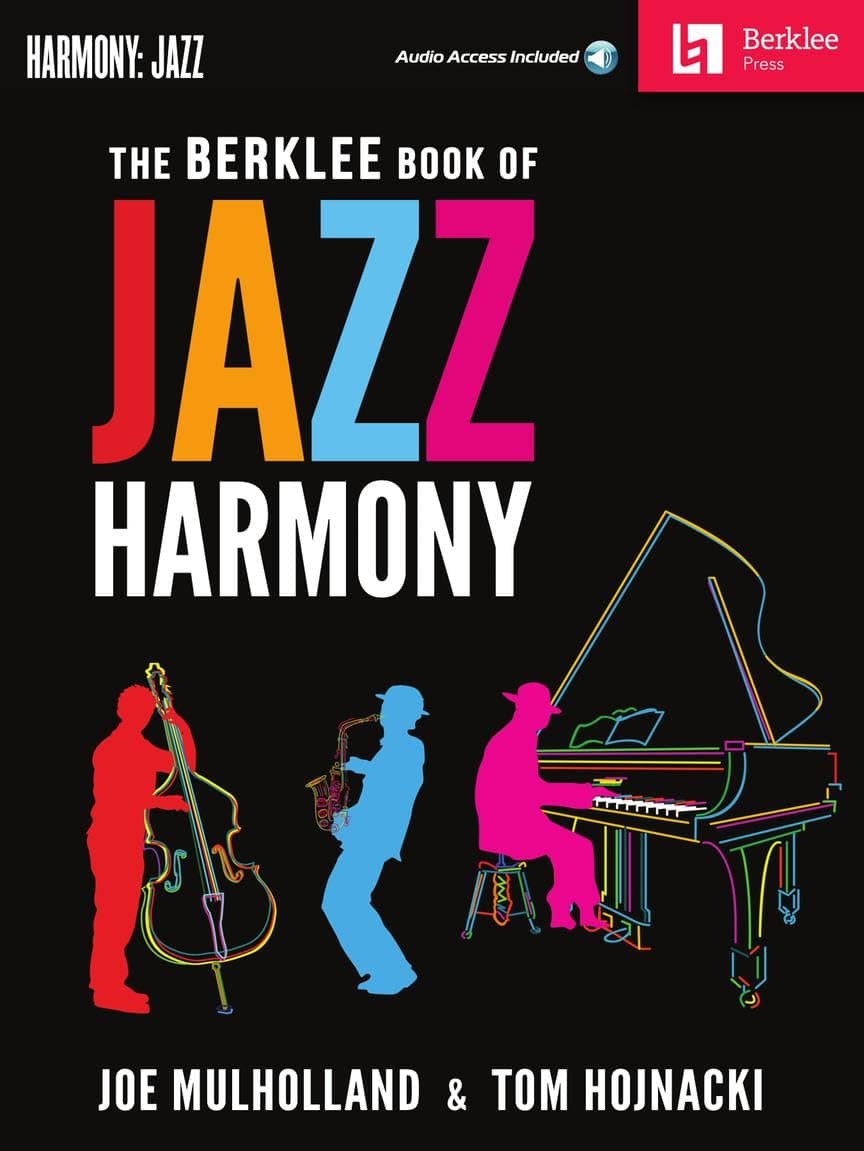


The Berklee Book of Jazz Harmony | Music Theory and Chord Progression Guide for All Instruments with Online Audio Access | Learn Jazz Composition and Improvisation |Workbook for Students and Teachers [Mulholland, Joe, Hojnacki, Tom] on desertcart.com. *FREE* shipping on qualifying offers. The Berklee Book of Jazz Harmony | Music Theory and Chord Progression Guide for All Instruments with Online Audio Access | Learn Jazz Composition and Improvisation |Workbook for Students and Teachers Review: Great book, but! - This book has been very helpful but there are sections, like related II's that I feel could have been elaborated on. Very confusing. Maybe a chart showing the chord scales for both the m7b5 and m7 related II's for each of the secondary dominants would have clarified what scale to actually use would have helped. I am still unsure of what scales to use. Especially on the V/II where the Emin7 uses an aeolian scale out of the blue, which is not a subdominant scale, but alternate tonic scale in the key of C Major. E mi7 to A7 to Dmi7, Emi using E phrygian I understand, but E Aeolian? Yes, E Aeolian has a b13 (C), and the II V7/II is resolving to a minor chord, I get that too, and the cycle 5 root motion from A7 to Emi7 works. But still, I do not and cannot fathom the E Aeolian scale as a subdominant of A7 unless the key is Gmajor or F major 7. I am missing some valuable info that was not explained in your book. Review: Great book - For those who want to lebel up their game in jazz harmony understand how it works ,this is the right book,i am professional composer arranger and we had this book in our jazz school,so its so recommended!


| Best Sellers Rank | #123,529 in Books ( See Top 100 in Books ) #70 in Music Theory (Books) #417 in Music Instruction & Study (Books) |
| Customer Reviews | 4.7 4.7 out of 5 stars (521) |
| Dimensions | 9 x 0.61 x 12 inches |
| Edition | Pap/Com |
| ISBN-10 | 0876391420 |
| ISBN-13 | 978-0876391426 |
| Item Weight | 2.31 pounds |
| Language | English |
| Print length | 264 pages |
| Publication date | August 1, 2013 |
| Publisher | Berklee Press |
B**Y
Great book, but!
This book has been very helpful but there are sections, like related II's that I feel could have been elaborated on. Very confusing. Maybe a chart showing the chord scales for both the m7b5 and m7 related II's for each of the secondary dominants would have clarified what scale to actually use would have helped. I am still unsure of what scales to use. Especially on the V/II where the Emin7 uses an aeolian scale out of the blue, which is not a subdominant scale, but alternate tonic scale in the key of C Major. E mi7 to A7 to Dmi7, Emi using E phrygian I understand, but E Aeolian? Yes, E Aeolian has a b13 (C), and the II V7/II is resolving to a minor chord, I get that too, and the cycle 5 root motion from A7 to Emi7 works. But still, I do not and cannot fathom the E Aeolian scale as a subdominant of A7 unless the key is Gmajor or F major 7. I am missing some valuable info that was not explained in your book.
S**A
Great book
For those who want to lebel up their game in jazz harmony understand how it works ,this is the right book,i am professional composer arranger and we had this book in our jazz school,so its so recommended!
A**Y
Could not be more helpful or clear
It's almost inconceivable to me that for less than $30, you can learn this much about jazz harmony, a notoriously complex and difficult discipline of music theory. I saw another very visible review say that there was no way to hear the examples without playing them on a piano, but that's not true, as Hal Leonard hosts recording of the tracks on their website which are accessed by a code found in the very first page of the book. Additionally, I had no trouble finding ways to play the examples on guitar, and felt like I was able to understand the material based on this alone. I'm only on page 84 (beginning of chapter 4), but this book is very dense, and it takes a very long time to work through the examples and properly understand the material in a way that becomes second nature. You end up with a very thorough understanding of the elements of jazz harmony, with a basis in major key harmony. I've learned about secondary ii Vs and subVs before reading a page about minor key harmony, but I like this approach, as it provides a simpler foundation for understanding these more complex topics. All in all, I haven't made it through the entire book yet (and won't for a good while), but I feel that everything I've learned in the first third of the book was worth well more than $30. So I would definitely recommend.
K**M
Not For Everybody
I will preface this review by saying I'm not a music student or a professional musician. I'm just a guy who wants to learn about playing jazz guitar. I do have a reasonable background in music theory and can read music (if you can't read music this book is definitely not right for you). I don't play piano. That said, I found this book interesting and densely filled with information. It is well organized and presented in a way I could understand. I learned a lot by going through the entire book, but in the end, it probably wasn't the right book for me. The book is called "Jazz Harmony". and that is truly what it is about. If you want to write music, this understanding of harmony will really help you. It certainly can also help someone who wants to learn to improvise, but more in the sense of understanding which scales could be used to create lines around harmonic structures. The book doesn't delve into creating lines or how melody emerges from harmony, so it didn't give me great insight into improvisation. I have to emphasize that a more experienced musician may be able to make those kinds connections and I may just not be at that point my my development. One other very important point to make is this book contains hundreds of musical examples. I don't think anyone can work through the book without hearing the examples. As I said at the beginning of this review, I'm not a pianist. Most of the examples don't appear to be particularly difficult to play on the piano. It was possible for me to pick them out on a keyboard, but it was such a slow process, that I was not able to hear what the examples really sounded like - I needed too much time to go from chord to chord in a progression and I'd forget the sound to the previous chord. The chords and scales were too complicated for me to play on the guitar, so I resorted to re-creating each example using a piece of software meant for writing guitar music. This took a huge amount of time, but in the end it enabled me to hear the examples. The bottom line is unless you can play piano, you will need to figure out a way to hear the examples or play them on your instrument because just reading about them isn't sufficient to understand them. In summary, this is an excellent book for someone who wants to understand jazz harmony. It is not a book that intends to teach improvisation. And unless you already know how to play piano at more than a beginner level, you will need to come up with a way to hear the examples. I'm glad I completed studying the book, but in the end I don't think it helped me with improvisation.
K**W
If you have a background in theory and like Jazz, I recommend this book!
I am currently a senior in high-school. My freshman music fundamentals teacher originally got me interested in theory, and hence got me interested in learning about music. I then took a music theory class my junior year, where I later developed a need-like passion to learn about Jazz and it’s remarkable use of harmony. So today, with covid going on, and my passion for learning about jazz still roaring, I bought this book. I have just started it, I’m at the end of the introduction pages, and I’ve already learnt a lot more about music, even down to the phrasing. (For example, I’ve always seen and been curious about the meaning of tensions, and with this book I have finally been able to understand tensions, with the help of the example used in the book as-well: B7(b9,#11,b13) (apologies if that sentence was wordy.)) Even though I am just starting out the book, and I can tell it is a phenomenal book, (that with the right willpower and background knowledge on theory,) WILL ENHANCE my understanding on Jazz, and further enhance my passion for music!
D**Y
Dhi Harmony this side, apart from being a Music Graduate, Im also the winner of India Film Project 50 hours music challenge. This book was suggested by Meghdeep Bose (Bollywood composer) and what Can I say this book is amazing if you are in to Jazz harmony. It literally took 25 days to deliver cz it directly comes from US. But its worth waiting.
R**Y
This is a marvellous book, if a little stiff. I am a little concerned that the authors seem to have closed the door on the possibility that the m7b5 chord is part of the dominant family (especially as Randy Felts appears to disagree). However, I understand that this may be a rationalisation connected with order within the system that they propound. They also get their b5's and b9's mixed up on page 139: ''SECONDARY DOMINANTS/RELATED II'S AND SUBV'S''. Having said that. I suspect that this is a very important book and, if we really are interested in jazz harmony, we should all of us, most definitely, own a copy. A marvellous effort and highly recommended!
F**O
Forse il miglio libro di armonia dedicato al jazz che mi sia capitato di leggere. Lo stile è tipicamente americano: immediato e facile da comprendere. Richiede ovviamnente un po' di dedizione, nonchè il possesso di alcuni rudimenti di teoria., Consigliatissimo. Spedizione ineccepibile.
H**O
まだ読み始めたばかりですが、Berklee流のJazz Harmony理論を学ぶには好適な書ではないでしょうか。記述は全て英語ですが、全ての学習項目に楽譜実例と簡潔な解説文が添えられており、英語表現も平易ですので読み進めるのに大きな困難はありません。 Chapter 1で例示すれば、各コードスケールにおいてAvoid Noteがどのような理由で決められているのかが、学習者にとってしっかりと腑に落ちる形で解説されています。 また、日本で俗にコンディミと呼ばれるスケール(Symmetric Dominant Scale)とAltered Scaleとの和声機能的相違についても、簡潔かつ的確に記載されていると感じます。 勿論ながら、私自身がJazz Harmonyを詳細・正確に理解している訳ではありませんので、これらはあくまでも学習者の実感でしかありませんが、地に足が着いた学習を望む人にはお勧めの一冊だと思います。
L**A
Et si easy rimait avec Harmony ? En tout cas, ça nous change des traités d'harmonie des classes de conservatoire où le mot "interdit" revient à chaque ligne. Comme je viens à peine de recevoir l'ouvrage, je ne l'ai lu qu'en diagonale. La présentation est très agréable. Elle donne envie d'apprendre dans la joie plus que dans la douleur... et puis Berklee n'est pas n'importe qu'elle université. C'est un gage de sérieux.
Trustpilot
Hace 1 mes
Hace 3 semanas